ImmoMulti — a direct buyer of income properties on the North Shore — breaks down a strategy that appeals to investors: the assignment of contract (in French, cession de contrat). The idea is to resell your right to buy a property before closing, without ever becoming the owner, and pocket a profit on the assignment price. Attractive on paper, but tightly framed by conditions (assignment clause, seller consent) and by unforgiving tax rules: according to the Canada Revenue Agency and Revenu Québec, this profit is generally fully taxable business income — not a capital gain taxed at 50% — and GST/QST may be added on top. This guide is for the investor considering the move and for the plex owner who wants to understand who they are really selling to.
What is the assignment of a purchase promise?
An assignment of contract means transferring your right to buy a property to a third party before closing. The original buyer (the assignor) never becomes the owner: they resell their contractual right to the assignee, who buys directly from the seller at the notary — usually for an assignment price that is the assignor's profit.
The assignment of contract is a legal operation whereby the original buyer of a property, the assignor, transfers to a third party, the assignee, their right to buy that property. The key feature: the assignor never becomes the owner. They sign the purchase promise, then, before closing at the notary, they simply resell the right to acquire the property.
In concrete terms, if an investor signs a purchase promise on a triplex at $600,000 and the market rises, they can assign their right to another buyer for, say, $630,000. The assignee pays $600,000 to the seller (the originally agreed price) and $30,000 to the assignor: that is the assignment price, the profit on the deal. The seller receives exactly what was agreed.
This mechanism rests on the assignment of contract set out in the Civil Code of Québec. It is common in pre-construction and on income properties whose value can climb between signing and closing. But it is never automatic: without the right clauses, it is simply impossible.
Source: OACIQ — The Promise to Purchase.
What conditions allow you to assign a purchase promise?
The assignment is only valid if the purchase promise contains an explicit assignment clause, or if the seller consents. Most forms target a named buyer: without an assignment clause negotiated from the outset, substituting another buyer can constitute a default.

The first condition is contractual. A standard purchase promise binds a specifically named buyer. To assign it, the contract must expressly provide an assignment clause — sometimes phrased as "X and/or assigns." Without this clause, trying to introduce another buyer amounts to changing an essential term of the contract.
Seller consent: the tipping point
The second condition, absent a clause, is the seller's consent. The seller has a legitimate interest in knowing who they are selling to: ability to pay, financing, the assignee's seriousness. Many sellers — and their brokers — refuse an assignment that was not planned, or accept it only with guarantees. That is why the assignment clause must be negotiated at signing, never afterward.
Before signing an assignable promise
- Have a clear assignment clause ("or assigns") drafted by a notary or broker
- Check whether the seller accepts assignment or requires written consent
- Set out who remains liable if the assignee defaults before closing
- Document in writing the assignment price and the handover of documents (leases, inspection, financing)

Is the profit from a contract assignment taxable in Québec?
Yes, and often at 100%. According to the Canada Revenue Agency, profit from buying real estate to resell for a gain — including through assignment — is generally fully taxable business income, not a capital gain taxed at 50%. In Québec, selling a right to acquire held under 365 days falls under the flipping (revente précipitée) rule.
This is the point investors most often misunderstand. Many assume an assignment profit will be taxed as a capital gain (only part of which is taxable). But the Canada Revenue Agency is clear: when real estate is bought with the intention of reselling it for a profit, that profit is generally fully taxable business income. The CRA specifically includes assignment sales in this category.
Source: Canada Revenue Agency — Tax effects of buying real estate to sell for a profit.
The flipping rule (Revenu Québec)
Québec adds an explicit layer. Since January 1, 2023, the flipping rule (revente précipitée) deems a resale "precipitated" when an owner sells, before 365 consecutive days of ownership, a residential property — including a rental property or a right to acquire such a property — with no qualifying life event to justify it. The profit then becomes fully taxable business income. A speculative assignment of a purchase promise falls squarely within this target.
Long holding guarantees nothing
Even beyond 365 days, a profit may be found fully taxable as business income. Whether income is business income or a capital gain remains a question of fact that depends, among other things, on the intention to keep or resell. For a contract assignment, the intention to resell is hard to deny.
Source: Revenu Québec — Flipping of your property (house or residential property).
Do GST and QST apply to the assignment of a contract?
They may apply. The Canada Revenue Agency proposed making all assignment sales of a newly constructed or substantially renovated residential unit taxable. The tax then applies to the consideration for the assignment. Because treatment varies with the nature of the property, GST/QST status must be validated and declared in the purchase promise.
Indirect tax is the second trap. Assigning a purchase promise is not neutral for sales taxes. The Canada Revenue Agency proposed making all assignment sales of a newly constructed or substantially renovated residential unit — including a residential condominium unit — taxable. In those cases, the GST/HST — and, in parallel, the QST — applies to the consideration paid for the assignment, that is, the assignment price itself.
For an existing, already-occupied income property, the treatment differs and depends on the nature of the property. That is why every purchase promise form must declare whether the property is subject to GST and QST, and in what proportion. An oversight here can turn an anticipated profit into a net loss once the tax is claimed.
Sources: Canada Revenue Agency — Notice 323: Proposed GST/HST Treatment of Assignment Sales; OACIQ — Residential immovable: subject or not to GST and QST.
What are the risks of assigning a plex purchase promise?
Main risks: no assignment clause and a seller who refuses; an assignee who fails to obtain financing and defaults, leaving the assignor liable; a tax reclassification of the profit as business income; unforeseen GST/QST; and loss of the deposit if closing fails.

A contract assignment concentrates several risks the hurried investor underestimates. The first is legal: without an assignment clause, the move is blocked, and an unhappy seller can invoke a default. The second is counterparty risk: if the assignee fails to secure financing and defaults at closing, the assignor often remains liable to the seller until the sale is completed. They may then have to buy the property themselves — or lose their deposit.
The third is tax, as above: reclassification into fully taxable business income and possible GST/QST on the assignment price. The fourth concerns transparency: the assignor must hand over all documents (leases in place, inspection, financing conditions). On a plex with leases, a latent defect or a poorly documented rent can come back to bite them.
| Risk | Consequence for the assignor | Safeguard |
|---|---|---|
| No assignment clause | Assignment impossible; seller refusal | Negotiate the clause at signing |
| Assignee default | Liability maintained toward the seller | Verify financing; substitution clause |
| Tax reclassification | Profit 100% taxable (business income) | Validate with a tax specialist; compute net tax |
| GST/QST on the assignment | Tax on the assignment price | Declare tax status in the promise |
"The profit realized on the resale is considered fully taxable business income."
— Revenu Québec, on the flipping of a right to acquire a property (rule in effect since January 1, 2023)Assignment or direct sale: what to do with your North Shore plex?
Assignment is an investor-buyer strategy, not a seller-owner one. If you already own your plex, you are not assigning a promise — you are selling the building. A direct sale to a specialized buyer avoids the chain of uncertainty of an assignment and delivers a firm price quickly.
Two positions must be distinguished. That of the investor who has signed a purchase promise and seeks to resell it before closing — they are the one handling the assignment, with all the risks described. And that of the plex owner who already owns their North Shore income property: they assign nothing, they sell their building, with its leases and its capital-gains tax treatment (and not business income, in most long-holding cases).
For the seller-owner, a contract assignment brings no advantage: it adds intermediaries, conditions and uncertainty. Conversely, a direct sale to a specialized buyer like ImmoMulti offers a firm price within 48 hours, with no broker, no commission, no public listing and no assignment chain that could collapse if one link defaults.
ImmoMulti: direct buyer of income properties on the North Shore
You own a plex in Terrebonne, Blainville, Boisbriand or Saint-Eustache and you are considering selling? We make a direct, confidential offer, with no commission and no intermediary. Get a proposal within 48 hours.
To dig deeper into the tax side of your sale, see our guide on capital gains on the sale of your plex in 2026, along with our analysis of the anti-flipping rule: reselling a plex within 12 months. And if you are still preparing your transaction, revisit the purchase-promise clauses that protect the seller.
How does a purchase-promise assignment unfold, step by step?
A contract assignment follows a precise sequence: negotiate the assignment clause at signing, find an assignee, draft the assignment agreement, obtain the seller's written consent, transfer documents and deposit, then close at the notary where the assignee buys directly from the seller. Each step has a breaking point if one link fails.

On paper, a contract assignment looks simple: you sign, you resell your right, you pocket the difference. In reality, the operation chains together several legal and financial steps, each with its own deadlines and risks. Understanding the full sequence lets both the plex owner and the investor gauge why this move is far more fragile than a direct sale.
Step 1 — Negotiate the assignment clause in the purchase promise
Everything starts at the signing of the purchase promise. If the initial buyer anticipates a resale before closing, they must insert an explicit assignment clause ("the buyer or their assignee"). This clause is negotiated before signing, never after: once the contract is concluded, adding an assignment right requires the seller's consent, which they have no reason to grant for free. This is the most decisive step, and the one most assignors neglect.
Step 2 — Find a solvent assignee
Once the assignment right is secured, the assignor must find an assignee willing to pay the assignment price and, above all, able to finance the purchase. On a North Shore income property, the buyer pool is narrower than for a single-family home: the assignee must qualify for a commercial or residential mortgage depending on the number of units, and have the down payment. A poorly prepared assignee puts the assignor at direct risk.
Step 3 — Draft the assignment agreement
The assignment agreement is the contract that formalizes the transfer of the right. It sets out the assignment price (the assignor's profit), whether GST/QST applies, how the deposit already paid is handled, and each party's liability if closing fails. This document should always be prepared by a notary or lawyer: a vague agreement leaves the assignor exposed.
Step 4 — Obtain the seller's written consent
Even with an assignment clause, it is prudent — and often required — to obtain the seller's written consent confirming they accept the assignee as substituted buyer. The seller may ask for proof of the assignee's mortgage pre-approval. Without this consent, the assignor remains legally bound to the seller.
Step 5 — Transfer documents and deposit
The assignor hands the assignee the full file: the original purchase promise, the leases in place, the inspection report, the property's financial statements, the location certificates and any outstanding conditions. The deposit already paid is generally reimbursed to the assignor by the assignee, a point that must appear clearly in the agreement.
Step 6 — Close at the notary
At closing, the assignee buys directly from the seller. The notary prepares the deed of sale in the assignee's name, pays the agreed price to the seller, and the assignor receives their assignment price. The assignor never appears in the land registry as owner: they merely transferred a contractual right.
| Step | Key action | Breaking point |
|---|---|---|
| 1. Assignment clause | Negotiate "or their assignee" at signing | Absent = assignment blocked |
| 2. Assignee | Find a solvent buyer | Financing not qualified |
| 3. Agreement | Formalize price, taxes, deposit | Vague clauses = dispute |
| 4. Seller consent | Written seller approval | Seller refusal |
| 5. Documents + deposit | Transfer the complete file | Undisclosed latent defect |
| 6. Notary closing | Assignee buys from the seller | Default at closing |
At every step, the assignor stays exposed until the sale is signed. It is this chain of uncertainty that makes assignment unattractive for an owner who already holds their plex: a direct sale removes most of these breaking points.
A worked example: how much is really left after tax?
On an assignment profit of $30,000 reclassified as business income, an investor at a high combined Québec marginal rate may keep only about half, versus far more had the same gain been a capital gain. Add possible GST/QST and professional fees, and the net profit shrinks fast.

Nothing illustrates the tax trap of a contract assignment better than a worked example. Take an investor who signs a purchase promise on a triplex in Terrebonne at $600,000. Six months later, before closing, they assign their right to another buyer for $630,000. Their assignment price — hence their gross profit — is $30,000.
Scenario A: the profit is a capital gain (rare for an assignment)
If, exceptionally, the operation were treated as a capital gain, only half the gain would be included in taxable income (50% inclusion rate for an individual). On $30,000, that means $15,000 added to income. But beware: according to the CRA, a profit from a property bought with the intention of reselling it — precisely the case of an assignment — is generally business income, not a capital gain. This scenario is therefore largely theoretical for a speculative assignment.
Scenario B: the profit is business income (the usual case)
In the realistic scenario, the $30,000 profit is fully taxable business income: the entire amount is added to income and taxed at the taxpayer's marginal rate. Québec's flipping rule reinforces this treatment when the right to acquire was held under 365 days. At a high combined federal-provincial marginal rate, tax can absorb a very substantial share of the profit.
| Item | Capital gain (theoretical) | Business income (assignment) |
|---|---|---|
| Gross assignment profit | $30,000 | $30,000 |
| Taxable portion | $15,000 (50%) | $30,000 (100%) |
| Possible GST/QST | Depends on property | On assignment price if new unit |
| Usual treatment for an assignment | Unlikely | CRA default position |
Capital-gains inclusion rate and tax rates vary; always validate your situation with a tax specialist. Sources: CRA — Tax effects of buying real estate to sell for a profit; Revenu Québec — Flipping of your property.
GST/QST can eat into the profit on a new unit
If the assignment concerns a newly constructed or substantially renovated unit, the CRA proposed that GST/HST apply to the consideration for the assignment. An important technical point: for agreements entered into on or after May 7, 2022, if the agreement states in writing that part of the consideration is attributable to the reimbursement of the deposit paid to the builder, that amount is excluded from the taxable consideration. In other words, only the assignment margin is taxed, not the reimbursed deposit — provided this is spelled out in writing.
Source: CRA — Notice 323: Proposed GST/HST Treatment of Assignment Sales.
The headline profit is never the real profit
Between tax on business income at 100%, possible GST/QST, notary and tax-specialist fees, and the risk of assignee default, a "paper" assignment profit of $30,000 can shrink by half — or vanish if the chain collapses. Always compute the after-tax net before committing.
Assignment in pre-construction or on an existing plex: two realities
Contract assignment was born in pre-construction (condos, new projects), where value rises between reservation and delivery. On an existing, already-leased plex, the mechanics differ: GST/QST is handled differently, leases in place change the value, and the buyer thinks yield, not speculation. Confusing the two leads to poor decisions.

Most articles on contract assignment actually describe pre-construction: you reserve a condo or new unit off-plan, pay staggered deposits, then resell your right before delivery. That is the market the CRA's Notice 323 on the GST/HST of assignments directly targets. But assigning a purchase promise on an existing plex — a duplex, triplex or quadruplex already built and leased on the North Shore — follows a different logic.
In pre-construction: speculating on value appreciation
In the new-build market, the assignor bets on appreciation between signing and delivery, sometimes over several years. The profit comes from a rising market. GST/HST applies almost systematically to the consideration for the assignment (with a possible exclusion of the reimbursed deposit), and the new housing rebate may be affected. It is a pure investor play, tightly regulated for tax.
On an existing plex: yield comes first
For an already-occupied income property, the buyer is not speculating on new construction: they assess yield, the rents in place, the building's condition and the optimization potential. An assignee taking over a promise on a plex inherits the leases in place, the obligations toward tenants and the financing conditions. Value does not depend on a future delivery but on current cash flows.
| Criterion | Pre-construction assignment | Existing-plex assignment |
|---|---|---|
| Source of profit | New-build appreciation | Yield and optimization |
| GST/QST | Almost always applicable | Depends on the property |
| Leases in place | None (new building) | Transferred to the assignee |
| Horizon | Often > 1 year | Short, promise to closing |
| Buyer profile | Speculator / investor | Yield investor |
This distinction is crucial for a North Shore plex owner. If you already own your building, neither of these mechanics applies to you: you are neither a new-build speculator nor an assignor. You are a property seller, and your transaction falls under the classic firm sale, with its own capital-gains tax treatment in most long-holding cases.
Source: CRA — Notice 323 on the assignment of a sale contract.
Which life events waive the flipping rule?
The flipping rule does not apply if the sale results from a qualifying life event: a death, an addition to the household (birth, adoption, an elderly parent moving in), or the breakdown of a marriage or common-law union with separation of at least 90 days. Outside these cases, a right to acquire held under 365 days triggers a fully taxable profit.

The flipping rule is not absolute. Revenu Québec provides a set of qualifying life events that, when they motivate the sale, waive the presumption of fully taxable business income — even if the property (or the right to acquire) was held under 365 consecutive days. These exceptions target real human situations, not workarounds.
Death
The death of the owner or a person related to them is a qualifying event. An estate that must dispose of a property quickly is not treated as a speculative flip.
Addition to the household
A person related to the owner joining their household — for example the birth or adoption of a child, or taking in an elderly parent — or the owner joining the household of a related person, is a recognized life event.
Breakdown of a marriage or common-law union
The breakdown of a marriage or common-law union is qualifying, provided the person lives separately from their spouse or partner for at least 90 days before the resale. This duration requirement prevents opportunistic claims of separation.
The main qualifying life events
- Death of the owner or a related person
- Birth or adoption of a child, or an elderly parent joining the household
- Breakdown of a marriage or common-law union (separation of at least 90 days)
Revenu Québec also recognizes other situations (notably related to safety, health or an involuntary change of employment) — the full list and precise conditions must be verified directly with the tax authority. For a speculative purchase-promise assignment, these exceptions generally do not apply: the intention to resell for a profit is clear, and no life event justifies it.
Source: Revenu Québec — Flipping of your property (qualifying life events).
"The profit realized is not considered business income if the resale results from at least one qualifying life event."
— Revenu Québec, on the exceptions to the flipping rule (in effect since January 1, 2023)The 8 most common mistakes in a contract assignment
The classic mistakes in a purchase-promise assignment: forgetting the assignment clause, assuming a capital gain, ignoring GST/QST, poorly checking the assignee's solvency, under-documenting the leases, skipping the seller's consent, confusing deposit and assignment price, and failing to compute the after-tax net. Each can turn a profit into a loss.

A contract assignment rarely fails for a single big reason: it is the accumulation of small mistakes that derails the deal. Here are the eight faults assignors commit most often — and how to avoid them.
1. Forgetting the assignment clause
The fatal error. Without an assignment clause negotiated at signing, the assignment is simply impossible without the seller's consent. Many assignors discover too late that their purchase promise does not let them assign.
2. Assuming a capital gain
Believing the profit will be taxed at 50% as a capital gain is the costliest illusion. The CRA generally treats an assignment as fully taxable business income, especially under the flipping rule.
3. Ignoring GST/QST
On a newly built or substantially renovated unit, GST/QST applies to the assignment price. An assignor who did not plan for it sees their profit cut — or worse, pays the tax out of pocket.
4. Not checking the assignee's solvency
If the assignee fails to obtain financing, closing fails and the assignor remains liable to the seller. Requiring a mortgage pre-approval is essential.
5. Under-documenting the leases and building condition
On a plex, passing on incomplete leases or a thin inspection report exposes the assignor to claims from the assignee for latent defects or misrepresentation.
6. Skipping the seller's written consent
Even with an assignment clause, the seller's written consent secures the deal. Its absence can trigger a last-minute refusal that collapses everything.
7. Confusing reimbursed deposit and assignment price
The deposit paid to the seller and the assignment price (the profit) are two distinct amounts. Mixing them in the agreement creates confusion over GST/QST and over what the assignee actually owes.
8. Not computing the after-tax net
A gross assignment profit is never the real profit. Without computing the after-tax net, including sales taxes and fees, the assignor systematically overestimates their gain.
| Mistake | Consequence | Prevention |
|---|---|---|
| No assignment clause | Assignment blocked | Negotiate at signing |
| Assuming a capital gain | Tax underestimated | Treat as business income |
| Ignoring GST/QST | Profit cut | Declare tax status |
| Unqualified assignee | Default at closing | Require a pre-approval |
| Under-documented leases | Latent-defect claims | Complete, verified file |
For a North Shore plex owner, the lesson is clear: these eight mistakes belong to the world of speculative assignment. By selling your building directly, you eliminate them all at once.
Contract assignment, option to purchase or firm sale: the right tool
Three mechanisms are often confused. Assignment transfers an already-signed right to buy to a third party before closing. An option to purchase grants the right — without obligation — to buy at an agreed price during a period. A firm sale transfers ownership directly. For a plex owner who already holds their building, only the firm sale applies.

A contract assignment is often confused with other real-estate structures. Distinguishing them clearly avoids costly misunderstandings, especially when an owner wants to understand to whom — and how — they are really selling their income property.
The contract assignment
It presupposes an already-signed purchase promise. The assignor transfers their right to buy to an assignee before closing. The seller receives the initial price; the assignor pockets the assignment price. It is an investor tool, framed by the assignment clause and the flipping tax rule.
The option to purchase
An option to purchase grants the right — but not the obligation — to buy a property at a set price, for a defined period, in exchange for consideration. Unlike the purchase promise, the option does not firmly commit the buyer. It is a distinct mechanism, sometimes used to secure a future right to buy without committing immediately.
The firm sale
The firm sale transfers ownership directly from seller to buyer at the notary, with payment of the price. It is the mechanism of the owner who already holds their plex: there is no right to assign, no option, only a building to sell. Taxation then falls under capital gains in most long-holding cases.
| Mechanism | Object | Who uses it | Usual taxation |
|---|---|---|---|
| Contract assignment | Transfer of a signed right to buy | Investor before closing | Business income |
| Option to purchase | Right to buy, no obligation | Cautious buyer | Depends on exercise |
| Firm sale | Transfer of ownership | Selling owner | Capital gain (often) |
The practical takeaway for a North Shore plex owner: if you already own your building, forget assignment and options. Your only real lever is the firm sale — and the most direct way to achieve it is to sell to a specialized buyer without going through a chain of intermediaries.
Why a direct off-market sale beats an assignment chain
For a plex owner who already holds their building, a direct off-market sale to a specialized buyer removes every breaking point of an assignment: no clause to negotiate, no assignee to qualify, no financing chain to hope for, no business-income reclassification. You get a firm price quickly, confidentially, with no broker and no commission.
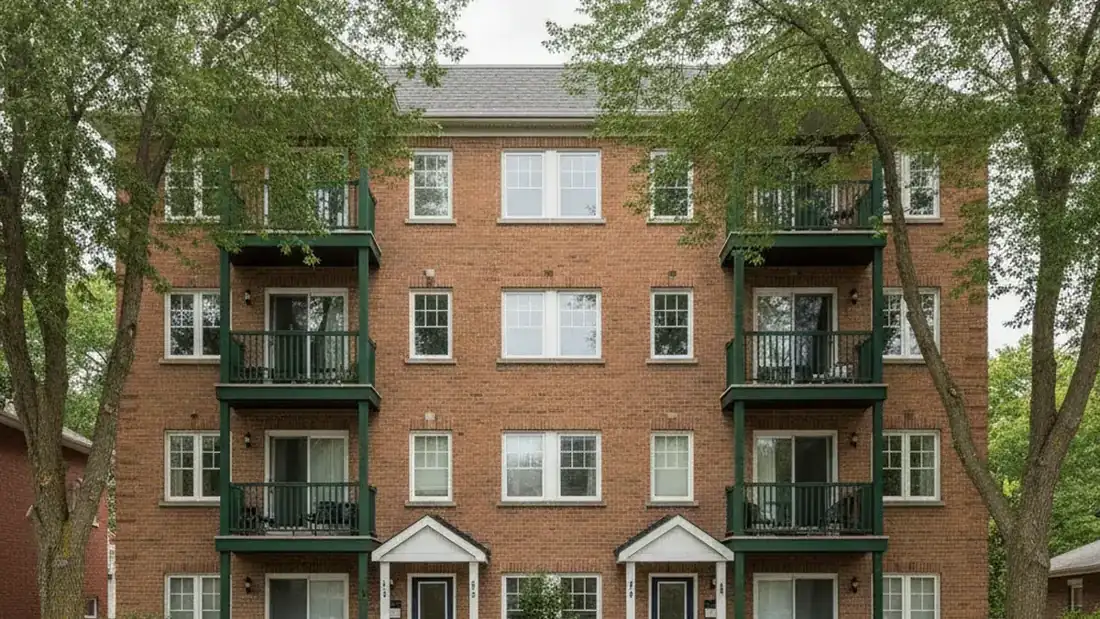
Everything in this guide points to one conclusion for the North Shore plex owner: contract assignment is a tool for investors speculating before closing, not for someone who already owns an income property. When you hold the building, your real question is not "how do I assign a right" but "how do I sell with the most certainty and the least friction".
No chain, no breaking points
An assignment stacks conditions: a clause to negotiate at signing, an assignee to find and qualify, financing to secure, a seller's consent to obtain, documents to transfer, and a closing that can still fail. A direct sale collapses all of that into a single transaction: you and the buyer, straight to the notary. Every intermediate point of failure disappears.
Confidentiality and speed
A public listing exposes your multiplex, alerts tenants, and invites lowball chains. An off-market direct sale keeps the transaction discreet: no sign on the lawn, no listing history, no parade of visits through occupied units. For a busy owner, a firm price within 48 hours often beats months of uncertainty.
The tax picture is simpler too
Because you are executing a firm sale of a building you have held — usually for the long term — your gain is generally treated as a capital gain, not the fully taxable business income that dogs a speculative assignment under the flipping rule. You still owe tax, of course, and any recaptured depreciation applies; a tax specialist should confirm your numbers. But you avoid the harsh default reclassification that hits assignors.
What a direct sale removes from an assignment
- The assignment clause you must negotiate at signing
- The assignee whose financing you must verify
- The GST/QST guesswork on the assignment price
- The business-income reclassification of your profit
- The public listing and the parade of visits
When an assignment still makes sense
To be fair, assignment is not useless — it is simply the wrong tool for a seller-owner. It genuinely serves the investor who tied up a property early, watched the market move, and wants to exit a signed promise before committing capital to a closing. In a rising pre-construction market, a well-structured assignment with a proper clause, a qualified assignee and clean tax planning can crystallize a gain without ever taking title. The key is that this profile is an active real-estate operator, not a passive owner selling a building they have held for years.
If you own a plex in Terrebonne, Blainville, Boisbriand, Saint-Eustache or elsewhere on the North Shore, the simplest path is rarely the assignment chain. It is a direct, confidential offer from a buyer who closes — no clause, no assignee, no chain that can break.
Informational content only. Does not constitute tax or legal advice. Tax treatment of assignments depends on the nature of the property and your situation. Consult a notary or tax specialist for advice specific to your transaction.