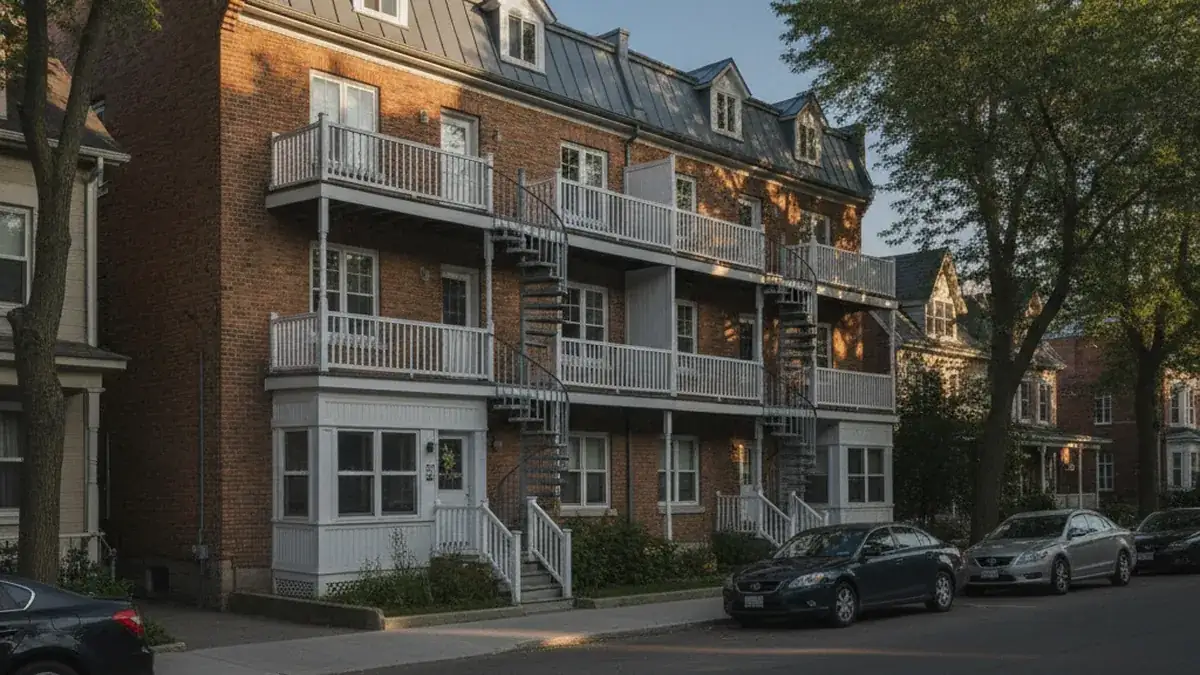
ImmoMulti — a direct buyer of multi-unit income properties on the North Shore — regularly hears the same question from plex owners: "Can I convert my building into condos to sell the units individually?" The short answer: it's possible, but heavily restricted. Converting a rental building into divided co-ownership requires authorization from the Administrative Housing Tribunal (TAL), and it is outright prohibited in Montréal without a waiver from the borough council. Where the vacancy rate is low — such as in Québec City below the 3% threshold — conversion is effectively frozen. This article explains why the legislator locked down this mechanism, how tenants in place are protected, and why selling your plex as-is, with its leases, is often the simplest and fastest route.
Divided co-ownership: what are we talking about?
Divided co-ownership ("condos") lets each dwelling in a building be sold separately, with a distinct title registered at the land registry. Converting a rental plex into divided co-ownership therefore turns a single income property into several individually sellable units — an operation Québec law regulates very strictly to protect the rental stock.
In a fully owned plex (duplex, triplex, quadruplex), the owner holds the entire building and rents out the dwellings. In divided co-ownership, each dwelling becomes a distinct fraction with its own lot number and its own title. That is what makes it possible to sell one apartment at a time, like a new condo.
The appeal to an owner is obvious: the sum of unit-by-unit sale prices often exceeds the value of the building sold as a block. But that very appeal is what worries the legislator. Converting multi-unit buildings en masse into condos removes dwellings from the rental market — a sensitive issue in Québec, where the stock of affordable plex buildings is essential. That is why conversion is one of the most regulated real estate operations in the province.
Source: Administrative Housing Tribunal — "Copropriété divise".
Mandatory authorization from the Administrative Housing Tribunal
According to the TAL, anyone wishing to convert a building into divided co-ownership must apply for authorization as soon as the building has — or has had over the past 10 years — at least one rented dwelling. No conversion is possible without this authorization.
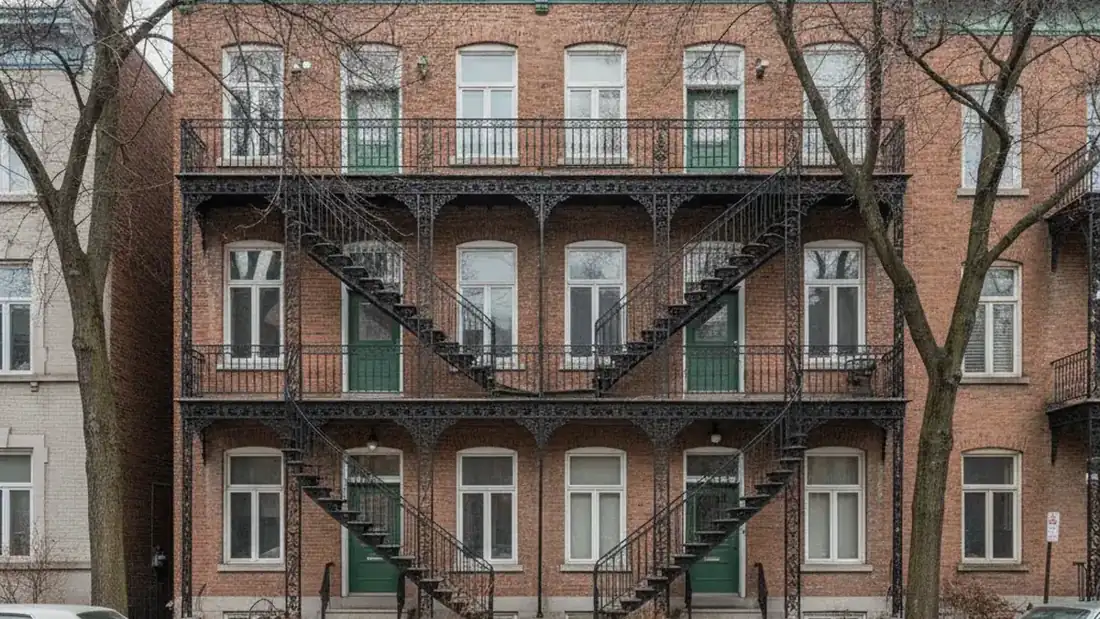
The TAL is clear: as soon as a building has housed at least one tenant over the past decade, its conversion into divided co-ownership is subject to authorization. This rule targets precisely the plex and multi-unit buildings at the heart of Québec's rental stock, on the North Shore and elsewhere.
The first legal step is not the application to the Tribunal, but the notice of intention: before any other step, the owner must give each tenant, in writing, a notice compliant with the law stating the intention to convert the building. A copy of each notice must be sent to the TAL.
The law also sets out grounds for mandatory refusal. The Tribunal must refuse authorization if work was done to prepare the building for conversion and evict a tenant, if a dwelling has already been the subject of an illegal repossession or a repossession aimed at conversion, or if the owner was found guilty of a harassment offence against a tenant within the preceding five years (without a pardon obtained). In other words, you cannot "empty" a plex of its tenants in order to convert it afterward.
The TAL must refuse in these cases
Work done to prepare the conversion and evict a tenant; a prior illegal repossession of a dwelling; a harassment conviction against a tenant within the past 5 years. The law deliberately closes the door on disguised eviction tactics.
Source: Administrative Housing Tribunal — "Conversion d'un immeuble en copropriété divise".
Montréal and low-vacancy cities: a de facto moratorium
According to the City of Montréal and the Québec government, converting a rental building into divided co-ownership is prohibited within the City of Montréal, except by a waiver granted through a resolution of the relevant borough council. In Québec City, the by-law blocks conversion where the vacancy rate is below 3%. In several cities, it is therefore a de facto moratorium.
The law sets up a dual regime: one for the City of Montréal and one for other municipalities. On Montréal territory, conversion is prohibited, unless a waiver is granted by resolution of the borough council. The same prohibition applies to the reconstituted municipalities on the Island of Montréal, except by a waiver from a municipal council with an urban planning advisory committee. In practice, these waivers are rare and discretionary.
Elsewhere in Québec, a municipality may, by by-law, prohibit, authorize or condition the conversion of rental dwellings. Québec City illustrates this logic well: its by-law prohibits converting a rental building into divided co-ownership in a borough where the vacancy rate is below 3% without an authorization certificate — the 3% rate being considered that of a balanced rental market.
| Territory | Conversion rule |
|---|---|
| City of Montréal | Prohibited, except by waiver through a borough council resolution |
| Reconstituted municipalities (Island of Montréal) | Prohibited, except by municipal council waiver (with planning committee) |
| Québec City | Prohibited where vacancy is below 3%, without an authorization certificate |
| Other municipalities | May be prohibited, authorized or conditioned by local by-law |
For a plex owner on the North Shore, the message is clear: before even considering the TAL, you must check your municipality's by-law (Terrebonne, Mascouche, Blainville, Boisbriand, Saint-Jérôme, Saint-Eustache, Deux-Montagnes…). Where the rental market is tight, the municipal door is often closed in advance.
Sources: City of Montréal — "Dérogation pour convertir un immeuble en copropriété divise"; Gouvernement du Québec — "Conversion des immeubles locatifs".
Protecting tenants in place: the central lock
According to the TAL, once the notice of intention to convert has been given, tenants benefit from an unlimited right to remain in their dwelling. Except in rare cases or with their consent, they cannot be evicted by a repossession exercised by a potential buyer. Conversion does not threaten the tenant's right to stay in their home.
This is where the real lock sits. Converting a building into divided co-ownership gives no power to remove tenants. The tenant keeps their lease and their right to remain as long as they meet their obligations. A buyer who acquires an occupied "fraction" inherits the tenant and their lease.
The protection is even stronger for older tenants. The landlord cannot repossess a dwelling where the tenant or their spouse is 65 or over, has occupied the dwelling for at least 10 years and has an income equal to or below 125% of the maximum income for eligibility for affordable housing — except in specific cases (for example, where the landlord or the beneficiary of the repossession is also 65 or over).
"Conversion to co-ownership does not threaten the tenant's right to remain in their dwelling. They keep the right to stay in their home for as long as they wish, provided they meet their obligations."
— Administrative Housing TribunalFinally, the law prohibits any harassment aimed at restricting the peaceful enjoyment of the dwelling to push a tenant out. A tenant who leaves permanently following an illegal repossession or one done to convert the building may claim damages, including punitive damages.
Source: Administrative Housing Tribunal — "Copropriété divise".
The steps of a conversion: a long, costly path
A divided co-ownership conversion chains several steps: written notice of intention to each tenant (copy to the TAL), municipal authorization where conversion is regulated, an authorization application to the TAL, then registration of the declaration of co-ownership at the land registry within the prescribed time. The TAL recommends consulting a notary or lawyer.

The typical path is demanding. Here are the main steps described by the TAL:
- Notice of intention in writing to each tenant of the building, with a copy sent to the TAL.
- Municipal authorization or conformity certificate, where the municipality regulates conversion (in Montréal, a borough council waiver).
- Authorization application to the TAL, with the required documents, within the time set after the notice.
- Registration of the declaration of co-ownership at the land registry within the prescribed time once authorization is obtained.
On top of these steps come an expert report on the building's condition and the drafting of the declaration of co-ownership by a notary — significant professional fees. Given the complexity, the TAL itself suggests consulting a notary or lawyer to prepare the application and assist the owner at the hearing.
Before you start, check these points
- Your municipality's conversion by-law (prohibition, vacancy threshold, waiver)
- The presence and tenure of tenants (right to remain, 65+ protection)
- The building's history (any prior repossession can block authorization)
- The budget: notice, municipal authorization, TAL application, expert report, notary
Source: Administrative Housing Tribunal — "Conversion d'un immeuble en copropriété divise".
The pragmatic alternative: selling your plex as-is
For most plex owners, selling the building as-is — as a block, with its leases in place — avoids the municipal authorization, the TAL authorization, the notices to tenants, the expert report and the declaration of co-ownership. It is the simplest and fastest route to recover your capital.
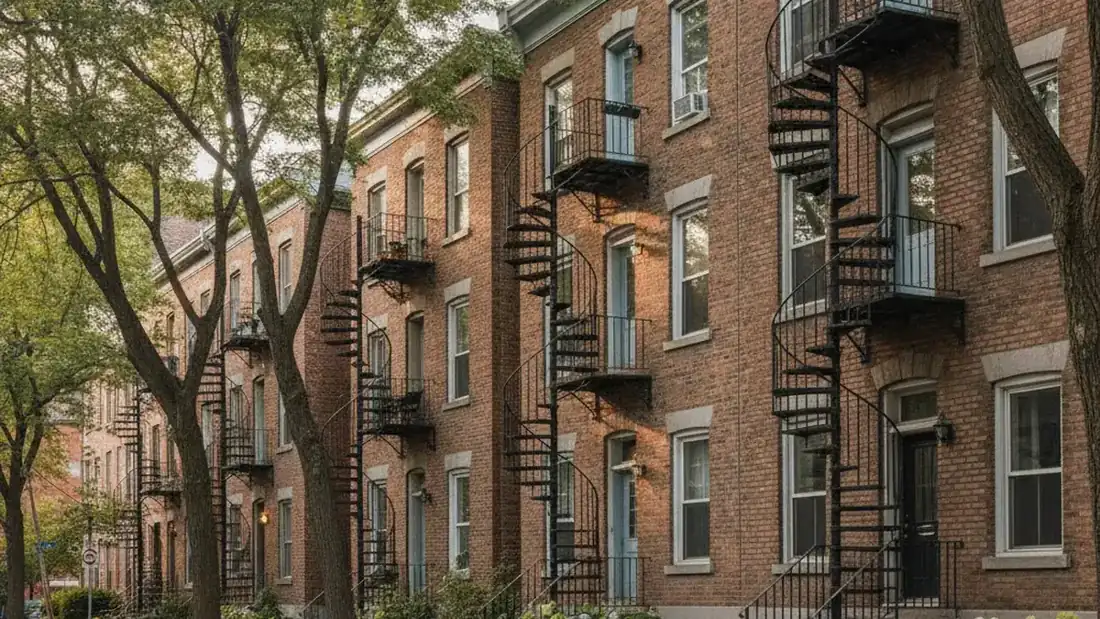
When you add up the obstacles — frequent municipal prohibition, TAL authorization, tenants who keep their leases, expert and notary fees, delays of several months — converting to divided co-ownership often makes sense only for the rare vacant building or one located in an area where vacancy exceeds the regulatory thresholds. For the typical fully occupied plex on the North Shore, the math generally tilts toward a block sale.
Selling a multi-unit building as-is, with its tenants and leases, triggers none of these steps. The buyer takes over the building and its rental income. That is exactly the ImmoMulti model: we buy plex and multi-unit properties on the North Shore directly, with no broker and no commission, with a fast offer — you recover your capital without navigating the regulatory machinery of conversion.
For a specific case — a vacant building, an estate, a particular area — consult a notary or a lawyer before any decision. Municipal regulations and TAL rules evolve and apply on a case-by-case basis.
Divided, undivided, rental building: the words that change everything
Divided co-ownership carves the building into distinct fractions, each with its own cadastral lot and its own title — that is what requires TAL authorization. Undivided co-ownership leaves the building as a single lot that several people share by shares, with no cadastral split. Confusing the two leads to costly decisions.
Before talking about procedures, you have to name correctly what you want to do. Many plex owners use "condo," "co-ownership" and "conversion" as synonyms. Yet Québec law distinguishes three precise realities, and only one of them triggers the heavy authorization process.
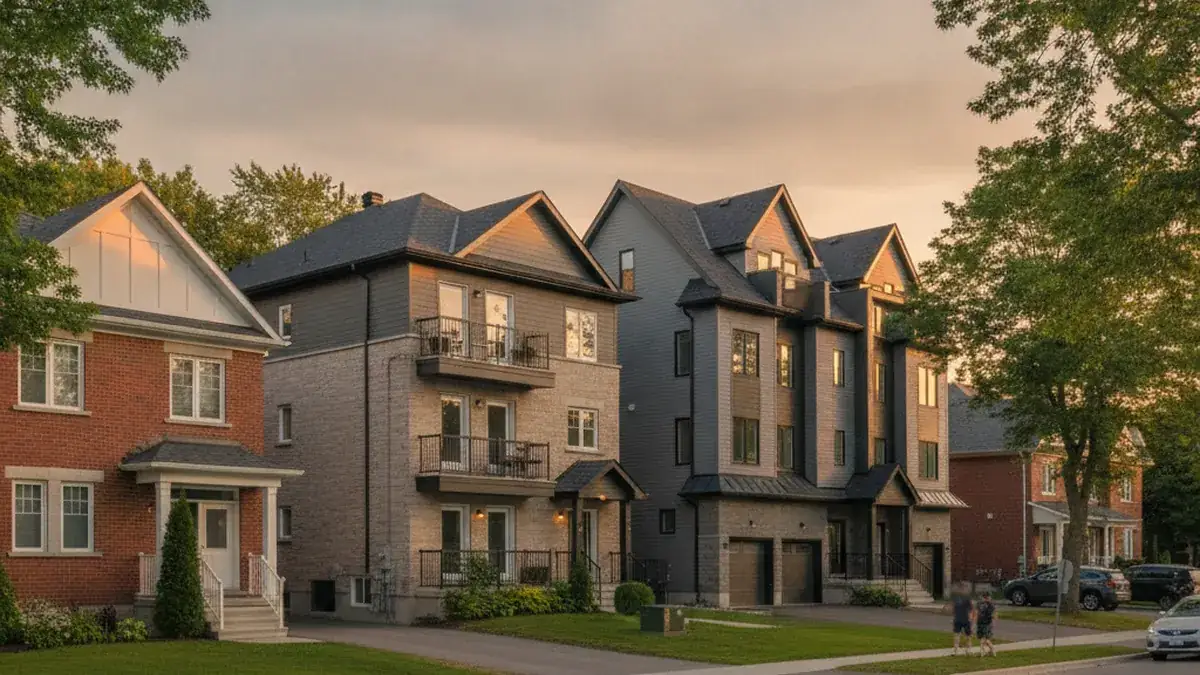
Divided co-ownership: each dwelling becomes a "condo"
In divided co-ownership, the building is officially split: the cadastre creates a lot for each dwelling (the private portions) and one or more common lots (roof, land, staircase, foundations). A notary drafts a declaration of co-ownership setting the shares, the building's by-laws and the sharing of charges. Each unit can then be sold, mortgaged and taxed separately. It is precisely this split — removing dwellings from the rental stock to resell them unit by unit — that the legislator watches closely, hence the mandatory authorization from the Administrative Housing Tribunal.
Undivided co-ownership: one building, several owners
In undivided co-ownership, the building stays a single cadastral lot. Two, three or four buyers become co-owners by shares (for example 50/50 for a duplex), and an indivision agreement grants each the exclusive use of one dwelling. There is no cadastral split, so no conversion in the TAL sense — but each co-owner generally needs their own "undivided" mortgage (often on less favourable terms) and all remain jointly liable for certain debts. Undivided ownership is popular in Montréal precisely because it sidesteps the divided-conversion prohibition, but it does not legally turn your plex into condos sellable separately with distinct titles.
The rental building held as a block: the starting point
Your current plex is, in the vast majority of cases, a rental building held in full ownership as a single lot. You sell it "as a block": one buyer, one deed, one title. It is the simplest status to sell — and, as we will see, often the fastest to cash out. The table below sums up the three regimes.
| Regime | Cadastral split | TAL authorization | Unit-by-unit sale |
|---|---|---|---|
| Rental building (block) | Single lot | No | No — block sale |
| Undivided co-ownership | Single lot, shares | No | Share only |
| Divided co-ownership | One lot per dwelling | Yes, mandatory | Yes, distinct titles |
Remember this: as soon as you want to sell the dwellings separately with distinct titles, you are in divided co-ownership, and the authorization regime applies in full. For a specific case (undivided structure, incorporation, estate), a notary will confirm the regime suited to your situation.
Source: Administrative Housing Tribunal — "Copropriété divise".
The full legal timeline: every deadline that awaits you
After the notice of intention, the owner has 6 months to file the application with the TAL, then 45 days to submit proof of notification to each tenant. A public notice opens a 10-day representation period, and once authorization is obtained, 1 year remains to register the declaration of co-ownership at the land registry. Missing a deadline can void the entire process.

Conversion is not a formality you settle in an afternoon: it is a series of strict deadlines chained over more than a year. Here is the timeline, as described by the TAL.
| Step | Deadline | Starting point |
|---|---|---|
| File the authorization application with the TAL | 6 months | Notice of intention OR municipal authorization (whichever is later) |
| Submit proof of notification + document list | 45 days | After filing the application |
| Written representations by interested parties | 10 days | After the public notice is posted at the building |
| Register the declaration of co-ownership at the land registry | 1 year | After TAL authorization |
Why these deadlines matter so much
Each deadline has teeth. According to the TAL, if you do not register the declaration of co-ownership at the land registry within one year of authorization, that authorization becomes invalid — and you must start over, notice of intention included. An extension request must be filed before the deadline expires, never after.
The 6-month deadline to file the application is also a trap: it runs from the later of two dates (the notice of intention or obtaining the municipal document). An owner who sends notices too early, before even knowing whether the municipality will allow the conversion, may start the clock needlessly.
The one-year registration trap
TAL authorization obtained but the declaration of co-ownership not registered at the land registry within 12 months: the authorization lapses. The result — thousands of dollars in notices, expert reports and notary fees to redo from scratch. Plan registration with the notary from the hearing onward.
This timeline also assumes a hearing before the Tribunal, where you must prove every fact through testimony and documents — including delivery of the original notice of intention to each tenant. Between the initial notice and a sellable condo title, it is not uncommon to count 12 to 24 months. For an owner who simply wants to recover their capital, that is an eternity compared with a block sale closed at the notary within a few weeks.
Source: Administrative Housing Tribunal — "Conversion d'un immeuble en copropriété divise".
The buildings that can never be converted
Beyond refusals tied to eviction, some buildings are outright excluded from conversion: those owned by a housing cooperative, a non-profit organization or a municipal housing office, as well as any building built, bought, restored or renovated under a government housing assistance program. And a refusal on a mandatory ground blocks any new application for 3 years.

We saw that the TAL must refuse conversion in cases of eviction work, a prior illegal repossession or a harassment conviction within five years. But there is another, more radical category: buildings where conversion is simply prohibited, no matter how strong the file.
Exclusions tied to the building's status
According to the TAL, conversion into divided co-ownership is prohibited when the building belongs to a housing cooperative, a non-profit organization or a municipal housing office. It is also prohibited if the building was built, bought, restored or renovated under a government housing assistance program. The logic is the same as for the rest of the regime: these dwellings benefited from public funds or a social mission, and there is no wish to see them leave the affordable rental stock.
Check the subsidy history
A plex once renovated with help from a program (renovation, homeownership access, affordable housing) may be ineligible for conversion — even years later. Have the history confirmed by a notary before incurring costs.
The 3-year penalty
If the Tribunal rejects your application on one of the mandatory grounds (eviction work, illegal repossession, harassment), the consequence is heavy: no new application can be filed for that building for 3 years. In other words, a single misstep — a tenant evicted "for renovations" last year — can freeze any conversion project for years. That is one more reason, for the owner in a hurry to sell, to look toward the block sale, which imposes none of these checks.
Three questions to ask first
- Has my building ever benefited from a housing assistance program?
- Was there a repossession or eviction in recent years?
- Am I (or a previous owner) targeted by a tenant harassment complaint?
Source: Administrative Housing Tribunal — "Conversion d'un immeuble en copropriété divise".
How much does a conversion really cost?
A divided co-ownership conversion adds up cadastre fees, an expert report on the building's condition, the declaration of co-ownership at the notary, notices and services to tenants, TAL fees (based on the number of dwellings) and registration at the land registry. For a triplex, the bill easily reaches several thousand dollars before the first unit is even sold.

The price of a conversion is not limited to the notary's fees. It is a series of professional expense items that stack up, several of which are incurred before you even know whether authorization will be granted. Here are the main items to budget.
| Expense item | What it covers |
|---|---|
| Land surveyor / cadastre | Creation of private and common lots, plans and technical description |
| Expert report on the building | Building condition, work to plan, contingency fund |
| Declaration of co-ownership (notary) | Drafting, shares, building by-laws, publication |
| Notices and services | Notice of intention, notification to each tenant (bailiff / mail) |
| TAL fees | Opening the file, variable by number of dwellings |
| Land registry registration | Publication of the declaration of co-ownership |
| Lawyer's fees (optional) | Preparation and representation at the hearing |
A worked example (hypothetical) for a triplex
Take a fully rented North Shore triplex. The owner wants to sell the three dwellings as condos. Assuming their municipality allows conversion (which is not a given), they must still engage the surveyor, the building expert, the notary, service on the three tenants and the Tribunal fees. Even staying conservative, we are easily talking several thousand dollars and 12 to 24 months of proceedings — with no guarantee the three dwellings will sell quickly, since two of them will remain occupied by tenants who keep their leases.
The hidden cost: tied-up capital
During the 12 to 24 months of proceedings, your capital stays locked in the building and you keep bearing taxes, insurance, upkeep and rental risk. This opportunity cost — often the highest of all — appears on no invoice.
By contrast, a block sale incurs none of these conversion costs. The seller essentially bears their notary fees for the deed of sale and, where applicable, the repayment of their mortgage. It is this asymmetry of costs that tips so many owners toward selling their plex as-is.
The economics: does selling unit by unit really earn more?
On paper, the sum of the unit-by-unit condo prices exceeds the value of the plex as a block. But once you subtract the conversion costs, the 12 to 24 months of waiting, the inability to sell occupied dwellings, and the regulatory risk, the gap shrinks — and often turns negative for a fully rented building.

The classic argument for conversion is simple: "three condos are worth more than the triplex." That is sometimes true in gross value. The problem is that this reasoning forgets everything that sits between the listed price and the money actually pocketed.
What eats the "conversion premium"
- Direct costs: surveyor, expert, notary, TAL, land registry (see previous section).
- Time: 12 to 24 months during which capital sits idle and charges keep running.
- Occupied dwellings: a condo sold with a tenant in place, who keeps their lease, sells for less and to a narrower pool of buyers (investors only).
- Regulatory risk: one municipal or TAL refusal, and the whole process collapses.
- Taxation: selling several units can complicate the calculation of capital gains and depreciation recapture (see below).
Comparing two scenarios (hypothetical)
| Criterion | Conversion into condos | Block sale |
|---|---|---|
| Potential gross price | Higher (sum of units) | Value of the whole building |
| Costs incurred upfront | High (several thousand $) | Low (deed of sale) |
| Time before cashing out | 12 to 24 months | A few weeks |
| Occupied dwellings | Sell slower, for less | Transferred with the leases |
| Risk of failure | Municipal or TAL refusal possible | Near zero |
| Tied-up capital | Long | Short |
For a vacant building located in an area where vacancy exceeds the regulatory thresholds, conversion can make sense: no tenants to protect, units sellable to the general public, conversion premium preserved. But for the typical fully rented North Shore plex, the equation almost always tilts toward the block sale, once you count time, costs and risk. The theoretical "premium" evaporates.
"Conversion to co-ownership does not threaten the tenant's right to remain in their dwelling."
— Administrative Housing TribunalThis principle, repeated by the TAL, is the heart of the economic problem: you can convert on paper, but you cannot deliver vacant dwellings to owner-occupier buyers. And it is they who pay the most.
Taxation: capital gains, recapture and transfer duties
Selling a plex — converted or as a block — generally triggers a capital gain and, if depreciation was deducted, a recapture taxed at 100%. On purchase, every buyer pays transfer duties (the "welcome tax"). Conversion simply multiplies the number of taxable transactions. Consult a tax specialist: every situation is unique.

Conversion does not only change housing law: it has tax consequences that too many owners discover too late. Without replacing a tax specialist's advice, here are the main mechanisms to know.
The capital gain
When you sell a rental building for more than its cost, the difference is a capital gain. According to Revenu Québec, part of that gain is taxable and is added to your income for the year. Whether you sell the plex as a block or three condos separately, the total gain ends up being taxed — conversion does not erase it, it simply splits it across several transactions, sometimes across several tax years.
Depreciation recapture
If you deducted depreciation (capital cost allowance, or CCA) on the building over the years, the sale can trigger a recapture: the amounts deducted are recaptured and taxed as ordinary income — so at 100%, not at the reduced capital-gains rate. This is often the most costly bad surprise when selling an income property.
Depreciation recapture is taxed at 100%
Unlike a capital gain (partially taxable), recaptured depreciation is added in full to your taxable income. On a long-held, heavily depreciated building, the bill can be steep. A tax specialist can plan the timing of the sale.
Transfer duties (the "welcome tax")
Every transfer of a building triggers transfer duties collected by the municipality, calculated on the higher of the price paid or the value on the assessment roll. For you, the seller, it is your buyers who pay them — but in a conversion, each unit sale generates its own transfer, which can make the condos less attractive than a building sold in one go. Our welcome tax calculator helps estimate these duties by municipality.
The tax lesson is the same as the regulatory one: conversion multiplies the friction. For an exact picture of your situation — gain, recapture, reserve, ownership through a corporation — talk to a tax specialist or an accountant. Our capital gains calculator gives a first estimate, but does not replace professional advice.
Source: Revenu Québec — "Capital Gains and Losses".
The common mistakes that derail a conversion
Owners almost always stumble on the same obstacles: evicting a tenant "for renovations" before converting, sending notices in the wrong order, forgetting to check the municipal by-law, underestimating the one-year registration deadline, or believing an occupied dwelling sells like a brand-new condo. Each of these mistakes can cost months and thousands of dollars.

Having watched dozens of plex owners consider conversion, the same missteps keep recurring. Knowing them already avoids half the trouble.
1. Evicting a tenant before converting
This is the fatal mistake. Doing work "to prepare" the building and pushing a tenant out is precisely one of the TAL's mandatory refusal grounds. Worse, a refusal on this ground blocks any new application for 3 years. You do not empty a plex to convert it: the law was written to prevent exactly that.
2. Getting the order of steps wrong
Many send the notice of intention before checking whether their municipality allows conversion. The result: the 6-month clock starts running, sometimes for nothing. The correct order starts with checking the municipal by-law, then obtaining the waiver or certificate, then only triggering the notices and the TAL application.
3. Overlooking the municipal by-law
In Montréal, conversion is prohibited except by a borough waiver; in Québec City, it is blocked below 3% vacancy. Many owners assume "it's allowed" without reading their local by-law. A single call to the urban planning department avoids months of pointless proceedings.
4. Underestimating the one-year registration deadline
Getting TAL authorization is not the end: one year remains to register the declaration of co-ownership at the land registry, or the authorization lapses. Owners relieved to have "won" ease off and let the deadline slip.
5. Believing an occupied dwelling sells like a vacant condo
A condo sold with a tenant who keeps their lease interests only investors, and trades below a unit delivered vacant. Counting on the "new condo price" for occupied dwellings leads straight to disappointment.
The anti-mistake checklist
- Never evict or "prepare" a dwelling before converting
- Check the municipal by-law BEFORE any notice
- Respect the order: municipality → notice → TAL → land registry
- Lock in registration within the year following authorization
- Value each occupied dwelling at its true investor value
North Shore: check your city's by-law first
On the North Shore (Terrebonne, Mascouche, Blainville, Boisbriand, Saint-Jérôme, Saint-Eustache, Deux-Montagnes, Sainte-Thérèse…), each municipality sets its own conversion rules. Where the rental market is tight — and it is across almost all of Greater Montréal, whose vacancy rate fell below 3% — the municipal door is often closed in advance.
The power to regulate conversion belongs to municipalities. Outside Montréal, a city may, by by-law, prohibit, authorize or condition the conversion of rental dwellings — often based on the vacancy rate. For a plex owner on the North Shore, the first step is therefore neither the notary nor the TAL: it is a call to the city's urban planning department.
The market context works against conversion
According to the Canada Mortgage and Housing Corporation (CMHC), the vacancy rate of the Montréal metropolitan area reached 2.9% in 2025 — below the 3% equilibrium threshold — while average rents climbed 7.2%. In such a tight market, municipalities have no reason to make it easier to remove rental dwellings from the stock: conversion is, in practice, discouraged or blocked.
| To check with your city | Why |
|---|---|
| Is there a conversion by-law? | Determines whether it is prohibited, allowed or conditional |
| Does a vacancy threshold apply? | Below 3%, conversion is often frozen |
| Is a certificate or council resolution required? | Mandatory municipal document before the TAL |
| Is there a local moratorium? | Some cities suspend all conversion |
In other words, before investing a dollar in a surveyor or notary, a multi-unit owner in Terrebonne, Mascouche or Saint-Jérôme should obtain their municipality's position in writing. If the answer is "prohibited" or "not below the current vacancy threshold," the matter is closed: the block sale becomes the only realistic route.
Sources: Gouvernement du Québec — "Conversion des immeubles locatifs"; CMHC — Rental Market Report 2025.
Selling your plex as-is: what the process looks like
Selling as a block avoids the surveyor, the expert, the TAL, the municipality and the one-year deadline. With ImmoMulti, the process comes down to a few steps: you share the basic information on your plex, you receive a firm offer, and the transaction closes at the notary — no broker, no commission, with the leases transferred to the buyer.

Against the weight of conversion, the block sale is disarmingly simple. It is the ImmoMulti model: we buy plex and multi-unit properties on the North Shore directly, as-is, with their tenants and leases. Here is the typical path.
- You share the essentials: address, number of dwellings, rents, main expenses. No clean-up to do, no dwelling to empty.
- You receive a firm offer, generally quickly, based on the building's actual income.
- You choose the closing date that suits you; the leases and tenants are transferred to the buyer.
- The transaction closes at the notary, with no broker and no commission to pay.
What the block sale spares you
- The municipal authorization and the TAL authorization
- The notices and services to each tenant
- The surveyor, the building expert and the declaration of co-ownership
- The 12-to-24-month delay and the tied-up capital
- A broker's commission
For an owner who wants to recover their capital without navigating the regulatory machinery of conversion — an estate to settle, a building that has become too demanding, a wish to move on — it is the most direct route. And if you still hesitate between converting and selling, start by objectively estimating the value of your plex: it is the best starting point for an informed decision.
As always, for a specific case — a vacant building, a high-vacancy area, an estate structure — consult a notary or a tax specialist. Municipal rules and TAL rules evolve and apply on a case-by-case basis.
Informational content only. Does not constitute legal or tax advice. Municipal regulations and TAL rules are subject to change. Consult a notary or lawyer for advice specific to your building and situation.

