
ImmoMulti — a direct buyer of income properties on the North Shore — highlights a distinction too many owners confuse: building insurance repairs your property, while liability insurance protects you when a third party or tenant is injured or suffers damage you are held responsible for. On a plex rented to several households, a slippery stairwell, a broken step, or a maintenance defect can turn into a lawsuit worth hundreds of thousands of dollars. Liability insurance then pays your legal fees and the compensation owed to the victim. This article, verified against infoassurance.ca (Insurance Bureau of Canada), CORPIQ, and insurers, explains what this coverage includes, the amounts to aim for on an income property, and the exclusions to watch for.
Building insurance or liability: what's the difference for a plex owner?
Building insurance indemnifies the property itself (fire, water damage, vandalism, loss of rent). Liability insurance does not repair your building: it pays legal fees and the compensation owed to a third party or tenant injured or harmed, where you are held responsible. Both coexist in a landlord policy but respond to entirely different risks.
Many multi-unit owners believe a single policy "covers everything." In reality, a landlord policy contains two clearly separate blocks. The first, property/damage insurance (building insurance), indemnifies your building and often the loss of rental income if a claim makes it uninhabitable. The second, liability insurance, applies to the opposite situation: you are not the one who suffers the damage — someone else does, and you are held responsible.
This nuance changes everything at the moment of an incident. If a fire destroys your triplex, building insurance rebuilds it. If a tenant slips on a poorly cleared shared stairwell and fractures a hip, liability insurance pays their compensation and your lawyer's fees. To dig into the "building" side and premiums, see our companion piece on essential income-property insurance coverage.
What does an income property's liability insurance actually cover?
According to infoassurance.ca (Insurance Bureau of Canada), liability insurance pays your lawyer's fees and other court costs if you are sued for causing damage or injury, and compensates the injured person on your behalf when you are held liable. For a plex, this covers a tenant or visitor falling, an injury caused by ice, or damage caused by a maintenance defect.

The Insurance Bureau of Canada's education resource, infoassurance.ca, describes the mechanism clearly: liability insurance means "paying your lawyer's fees and other court fees if you're sued for causing damage or injury," then "compensating on your behalf the person who suffered the consequences" when you are held liable.
For a plex owner, the typical covered situations are:
- Injury to a tenant or visitor: a fall in a shared stairwell, an icy entrance, or a poorly lit landing.
- Damage caused by a maintenance defect: a rotten step that gives way, a railing that fails, or an infiltration causing damage to a third party.
- Legal defence costs: lawyer's fees and court costs, even when the lawsuit is ultimately dismissed.
- Compensation paid to the victim when your liability is established.
Source: infoassurance.ca (Insurance Bureau of Canada) — "Civil liability and insurance".
What liability insurance takes on
- Bodily injury to a third party or tenant
- Property damage you are held responsible for
- Lawyer's fees and court costs
- Compensation paid to the injured person
Why does the law make a building owner liable?
The Civil Code of Quebec (article 1467) provides that the owner of an immovable is bound to repair damage caused by its ruin, even partial, whether it results from a lack of maintenance or a defect in construction. Article 1457 imposes on everyone the general duty not to cause injury to another. This is the legal liability the coverage addresses.
An income property owner's liability is not an insurers' invention: it flows directly from the Civil Code of Quebec. Article 1467 states that the owner is "bound to make reparation for injury caused by the ruin, even partial, of the immovable, whether the ruin results from lack of maintenance or from a defect in construction." In other words, a collapsing balcony or a dilapidated staircase can engage your liability as an owner, regardless of your good faith.
Added to this is the general principle of article 1457: every person has a duty to abide by the rules of conduct so as not to cause injury to another. For a multi-unit owner, these two provisions turn every common area — stairwell, entrance, parking, sidewalk — into a potential source of liability. That is exactly the risk liability insurance is designed to absorb. For a specific case, consult a lawyer or notary.
Source: Légis Québec — Civil Code of Québec, article 1467.
"The owner of an immovable, without prejudice to his liability as custodian, is bound to make reparation for injury caused by its ruin, even partial, where this has resulted from lack of maintenance or from a defect in construction."
Civil Code of Québec, article 1467 — Légis QuébecHow much liability coverage should you target on a plex?
In home insurance, the limit offered is usually $1M and that is the minimum recommended in Quebec (infoassurance.ca, Intact). For an income property rented to several households, many owners and insurers aim for $2M given the higher exposure. Because you choose your coverage amount, have your broker determine the right limit for your building.

According to infoassurance.ca, "the limit is usually $1 million," and the insured can choose their coverage amount. Insurers such as Intact confirm that the minimum recommended amount in Quebec for home insurance is $1M. But an income property is not a single-family home: it hosts several households, visitors, delivery people, and workers. The exposure to injury risk is mechanically greater.
That is why many plex owners and their brokers favour a $2M limit. Some institutional requirements even impose a $2M minimum of liability coverage for buildings with a larger number of units. Here is how to gauge your need:
| Situation | Limit often chosen | Note |
|---|---|---|
| Home / dwelling (home insurance) | $1M | Usual limit and QC minimum recommended (infoassurance.ca, Intact) |
| Small plex (duplex, triplex) rented | $1M to $2M | Higher exposure vs a single-family home |
| Larger multi-unit building | $2M and up | Often required; confirm with the broker |
| Insurance required of the tenant | $1M to $2M | Put it in the lease; does not replace your policy |
Sources: infoassurance.ca; insurer recommendations (Intact, CAA-Quebec). Exact amounts vary by building: confirm with your broker.
What are the exclusions in a landlord's liability coverage?
Liability insurance excludes intentionally caused damage, normal wear and tear, certain undeclared commercial activities, and any amount above your coverage limit. If damages exceed your limit, you cover the difference out of pocket (infoassurance.ca). It never repairs your own building — that is the role of property/damage insurance.
No coverage is unlimited. The most common exclusions in liability insurance for an income property owner include:
- Intentional acts: damage caused deliberately is not covered.
- Normal wear and a known, neglected chronic maintenance defect, per the policy's terms.
- Undeclared commercial activities carried out in the building.
- Exceeding the limit: beyond your coverage amount, the difference is on you.
Beware of exceeding your limit
According to infoassurance.ca, if the amount of damages exceeds your coverage limit, you must pay the difference out of your own pocket. On an income property, a serious injury can lead to compensation above $1M — which is why it is worth discussing a $2M limit with your broker.
Always read the "exclusions" section of your contract carefully and have your broker explain it. A documented, ignored maintenance defect can also weaken your position in a dispute, as our file on tenant damage and insurance recourse illustrates.

Why is liability insurance essential for your North Shore plex?
A plex on the North Shore (Terrebonne, Blainville, Saint-Eustache, Deux-Montagnes) combines exterior staircases, icy winters, and common areas shared between several households — all sources of liability. Adequate coverage protects your wealth against a lawsuit that could exceed several years of the building's net income.
Quebec's plex stock is defined by its exterior staircases, balconies, and shared landings. On the North Shore — Terrebonne, Mascouche, Blainville, Boisbriand, Saint-Jérôme, Saint-Eustache, Deux-Montagnes — winter adds ice and snow to the equation. Every common area becomes a place where a tenant, visitor, or delivery person can be injured and engage your liability under articles 1457 and 1467 of the Civil Code.
For a small owner, a single poorly covered lawsuit can wipe out several years of net income. Liability insurance is therefore not a luxury: it is the line of defence protecting your personal wealth behind your income property. CORPIQ also recommends requiring tenant insurance when signing the lease, notably for fairness among all occupants — an extra layer of protection that never replaces your own policy.
Finally, a clean insurance file makes a potential sale easier: a buyer wants to see adequate coverage and no ongoing liability dispute. If your plex weighs on you or you would rather recover your capital without managing these risks, ImmoMulti buys multi-unit buildings directly, with no broker or commission, with an offer within 48 hours.
How does a liability claim unfold, step by step?
A liability claim follows a precise sequence: a third party suffers harm, holds you responsible, you notify your insurer immediately, the insurer opens a file, mandates an adjuster and, if needed, a lawyer, then assesses your share of liability before compensating the victim within your policy limits. Understanding each step spares a plex owner the missteps that lose coverage.
Many multi-unit owners only discover how their liability coverage truly works at the moment of a loss — often in a rush and under stress. Yet how you react in the first hours largely determines the outcome. Here is the full mechanism, from the incident to the final settlement, applied to a concrete income property on the North Shore.
Step 1 — The incident and the claim
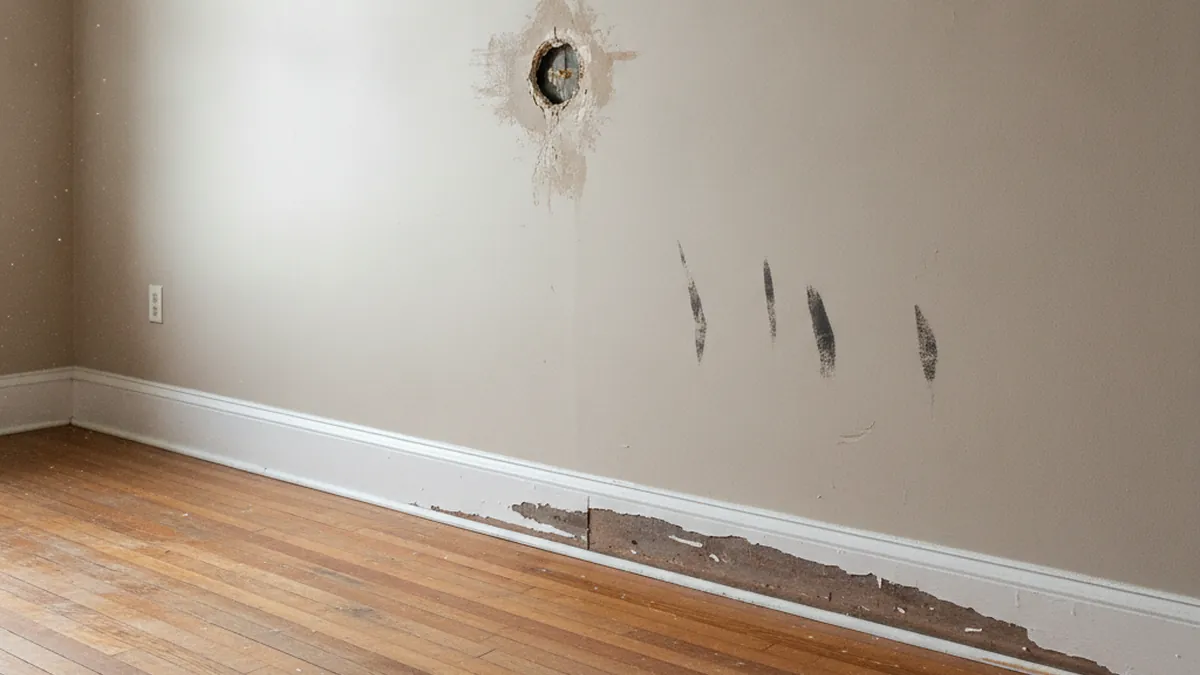
It all starts with an event: a tenant slips in the shared stairwell, a visitor is hurt on a loose railing, or water infiltration from your roof damages a third party's belongings. The injured person — tenant, visitor, neighbour — holds you responsible and signals their intent to claim compensation. This may be verbal at first, then formalized through a demand letter or even a lawsuit.
Step 2 — Notifying the insurer, without delay
As soon as you learn of an incident that could engage your liability, you must notify your insurer or broker as quickly as possible, even before any suit is filed. The policy generally imposes a prompt-reporting duty: delaying can compromise your indemnification. Never admit liability on the spot, sign no agreement, and promise no amount — it is the insurer's role to assess your share.
Step 3 — File opening and adjustment
The insurer opens a file and assigns a claims adjuster. The adjuster reconstructs the facts, examines the premises, gathers testimony and evidence (photos, maintenance log, snow-removal contract) and determines the extent to which your liability could be retained under articles 1457 and 1467 of the Civil Code. This is where the quality of your maintenance documentation makes all the difference.
Step 4 — Legal defence
If the victim sues, your liability coverage takes on the defence costs: lawyer's fees and court costs, per infoassurance.ca. The insurer mandates and pays the lawyer who represents you. This benefit applies even when the claim is ultimately dismissed — crucial, since defence costs in a months-long dispute can reach tens of thousands of dollars.
Step 5 — Assessing liability and compensation
If your liability is established, the insurer compensates the injured person on your behalf, within your coverage limits. The amount covers bodily injury (medical costs, the victim's lost income, pain and suffering) and material damage. If the settlement exceeds your limit, the difference remains your personal responsibility.
| Step | Who acts | Plex owner's reflex |
|---|---|---|
| 1. Incident and claim | The injured third party | Document the facts, photograph the scene |
| 2. Notify the insurer | The owner | Notify without delay; admit nothing |
| 3. File opening and adjustment | The claims adjuster | Provide maintenance log and evidence |
| 4. Legal defence | Insurer + mandated lawyer | Cooperate, forward every document |
| 5. Compensation | Insurer (within the limit) | Check the limit covers the real risk |
General operation of the liability coverage per infoassurance.ca (Insurance Bureau of Canada). Exact reporting terms are in your contract: confirm with your broker.
The admission-of-liability trap
In the heat of the moment, an owner sometimes tells the victim "it's my fault, I'll fix everything." This spontaneous admission can hurt the insurer's analysis and your defence. Simply assist the injured person, document the scene, and notify your insurer: it is the insurer's job to determine your share of liability.
Home policy or commercial insurance: which contract for your plex?
According to infoassurance.ca (Insurance Bureau of Canada), a personal home insurance policy can generally cover a 1-to-6-unit building, while a building of 7 units or more must be insured under a commercial policy. This threshold changes the nature of your liability coverage, the included guarantees, and the exclusions — a structuring point for any plex owner.
The type of contract framing your liability coverage depends directly on the number of units in your income property. The Insurance Bureau of Canada, via infoassurance.ca, draws a clear line: "a personal home insurance policy can usually cover a one- to six-unit property," whereas "properties with seven or more units must be covered under a commercial insurance policy."
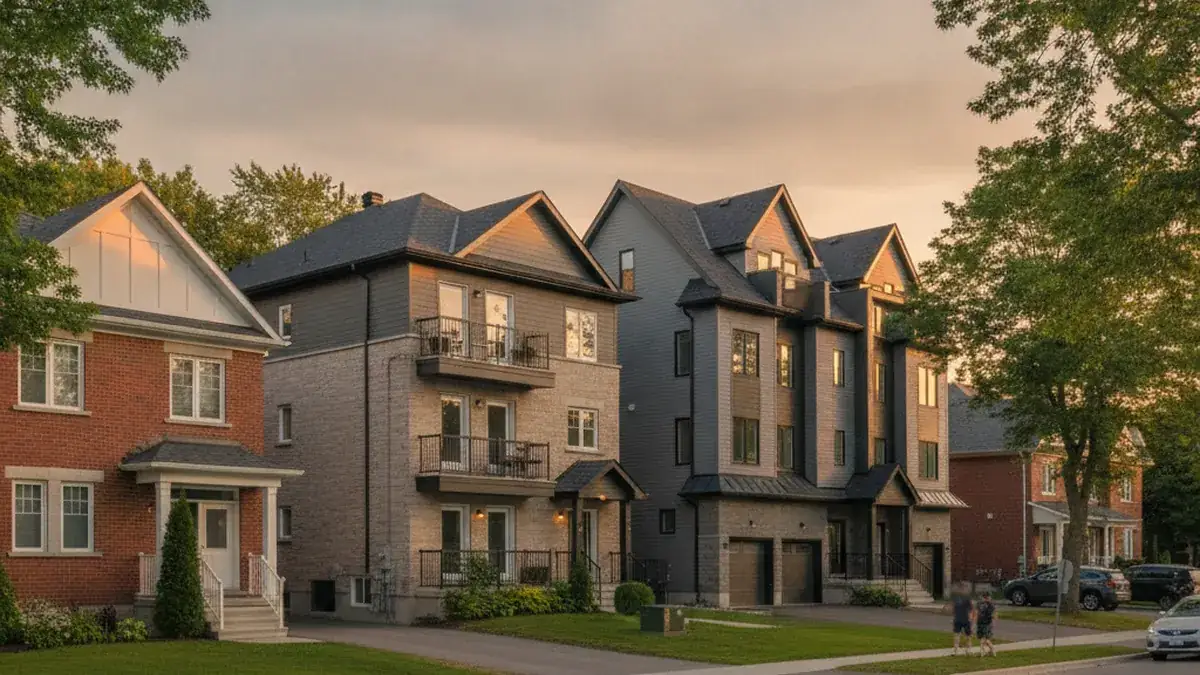
Concretely, a duplex, a triplex, a quadruplex, a five-unit or a six-unit building usually falls under the home regime. From the seventh unit onward, you move into the commercial world, with its own rules.
What changes between the two regimes
The distinction is not merely administrative. According to infoassurance.ca, several practical differences separate the two contracts:
- Under a home policy, water damage from a plumbing problem is generally covered; under a commercial policy, it is not automatically the case.
- Under a commercial policy, the bursting of a pressure vessel (boiler, steam tank) is excluded and requires separate "boiler and machinery" coverage.
- The owner of a 7-unit-plus building chooses between "named perils" coverage (specifically listed perils) and "broad" coverage (all risks except exclusions).
- In both cases, the building's insured amount must equal its reconstruction value, and the "loss of rental income" coverage should equal 100% of the annual rental income.
Source: infoassurance.ca — "Insuring an income-generating property".
| Number of units | Usual policy type | Watch-out |
|---|---|---|
| 1 to 6 units (duplex to six-plex) | Home insurance | Plumbing water damage often covered |
| 7 units and up | Commercial insurance | Add boiler & machinery; named vs broad perils |
| Co-ownership (rented condo) | Home + mandatory individual liability | Liability min. $1M (≤12 units) / $2M (13 units+) |
The six-unit threshold directly affects your liability coverage: crossing into the commercial regime, you often need to raise your limits and verify that common areas, parking, and exterior accesses are well covered. For an owner growing a plex portfolio on the North Shore, this shift deserves an in-depth conversation with the broker.
Key takeaways on contract type
- 1 to 6 units: home regime, simpler
- 7 units and up: commercial regime, guarantees to assemble
- The building is insured at its reconstruction value
- Loss of rent should cover 100% of annual income
Deductible, premium, and cost factors: what moves your liability coverage
A plex's liability premium depends on the chosen limit ($1M, $2M and up), the number of units, the building's age and condition, prevention measures, and claims history. The deductible mainly applies to the "building" side of the policy; the liability coverage generally works without a classic deductible for third-party compensation, but read your contract.
Unlike the "damage" side that repairs your income property, the liability coverage does not always carry a deductible in the classic sense: when a third party is compensated, it is the coverage limit that caps the payout, not a deductible you would bear on each claim. That said, every policy differs and some provide for a participation. What truly moves the cost is the full set of risk factors of your plex.

The main factors influencing the premium
- The coverage limit: moving from $1M to $2M raises protection, but the premium gap is often modest relative to the risk avoided.
- The number of units: more households, visitors, and common areas mean greater exposure.
- The building's age and condition: aging exterior staircases, an end-of-life roof, old electrical wiring — all weigh in.
- Prevention measures: snow-removal contract, detectors, documented maintenance, lit accesses.
- Claims history: past claims push the premium up.
- Location: a North Shore building exposed to harsh winters carries a marked winter-risk profile.
Building-side deductible: an arbitrage to make
On the "damage" part of your policy (the one that repairs your building), the deductible is the amount you bear before the insurer steps in. Raising your deductible lowers your annual premium but increases your exposure at claim time. On a multi-unit building, a thoughtful arbitrage between deductible and premium, discussed with your broker, can free up savings without weakening your core protection — liability.
| Lever | Effect on the premium | Effect on your exposure |
|---|---|---|
| Liability limit $1M → $2M | Moderate increase | Marked drop in overrun risk |
| Higher building deductible | Lower premium | Higher share on a claim |
| Pro snow-removal contract | Can help the profile | Lower winter-fall risk |
| Documented maintenance | Favourable argument | Stronger defence in a dispute |
Exact premiums vary by insurer and by building. The liability coverage amount is chosen by the insured (infoassurance.ca). Ask your broker for several quotes.
Snow removal, de-icing, and the plex owner's winter liability
The duty to remove snow and de-ice a rental building is, per Éducaloi and case law, an "obligation of means," not of result: the owner must act prudently and diligently, without guaranteeing perfectly ice-free accesses at all times. The mere presence of snow or ice is not enough to engage liability, and the owner is not the tenants' insurer — but a deficient snow-removal plan can trigger it.
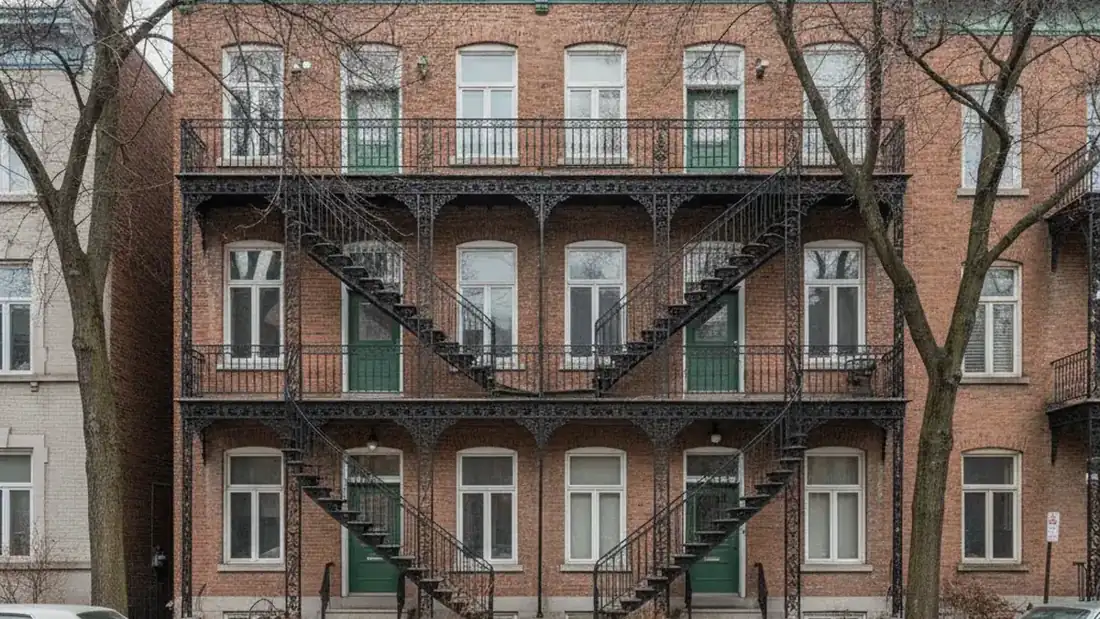
On the North Shore, winter is the leading generator of liability claims for plex owners. Exterior staircases, landings, entrances, and sidewalks ice over, and falls multiply. The good news: an owner's liability is not automatic.
An obligation of means, not of result
According to Éducaloi, the duty of snow removal and de-icing is an obligation of means: the owner must deploy reasonable efforts, but cannot be required to keep accesses perfectly clear at every moment of a storm. "The mere presence of snow or ice is not enough" to make them liable, and "the owner is not the tenants' insurer." In other words, a fall does not automatically trigger compensation.
What the victim must prove
To obtain reparation after a fall on ice, the injured person must demonstrate three elements, Éducaloi recalls:
- A breach by the owner of their duty of prudence (deficient snow-removal plan, negligence);
- A real injury (harm, damaged property);
- A causal link between the breach and the injury.
The person generally has three years from the fall to sue a private owner for compensation of their injuries. This is exactly the type of claim your liability coverage handles — defence costs included — even if you are ultimately not found liable.
Sources: Éducaloi — "Icy sidewalks: a hefty bill in case of a fall"; CORPIQ — snow removal and de-icing responsibility.
"The duty to remove snow and de-ice is an obligation of means, not of result: the owner must act prudently and diligently, without guaranteeing that their efforts will eliminate all risks."
Synthesis based on Éducaloi and Quebec case lawThe plex owner's good winter reflexes
- Sign a written snow-removal contract and keep proof of each visit.
- Spread abrasive (salt, gravel) regularly on staircases and accesses.
- Ensure adequate lighting of landings and entrances.
- Repair slippery steps, railings, and surfaces without delay.
- Document every intervention (dates, photos) to support your defence.
Three worked examples of lawsuits against a plex owner
A serious fall, a damaging water infiltration, or an electrical fire can generate claims of several hundred thousand dollars, defence costs included. These illustrative scenarios show why a $1M limit can fall short and why many income-property owners aim for $2M.
The amounts below are illustrative examples meant to convey the possible scale of a liability loss; they are not statistics. They rest on the mechanism described by infoassurance.ca (defence costs + compensation paid to the victim) and on the liability set out in articles 1457 and 1467 of the Civil Code.
Example 1 — Fall on a poorly de-iced exterior staircase
A tenant of your triplex in Terrebonne slips on an icy, un-abraded step and fractures a hip. They undergo surgery, lose several months of income, and suffer lasting effects. The claim combines uncovered medical costs, lost income, and compensation for pain and suffering. If the court retains a breach of your snow-removal duty, the compensation plus defence costs can easily cross $200,000 to $400,000.
Example 2 — Infiltration from your roof
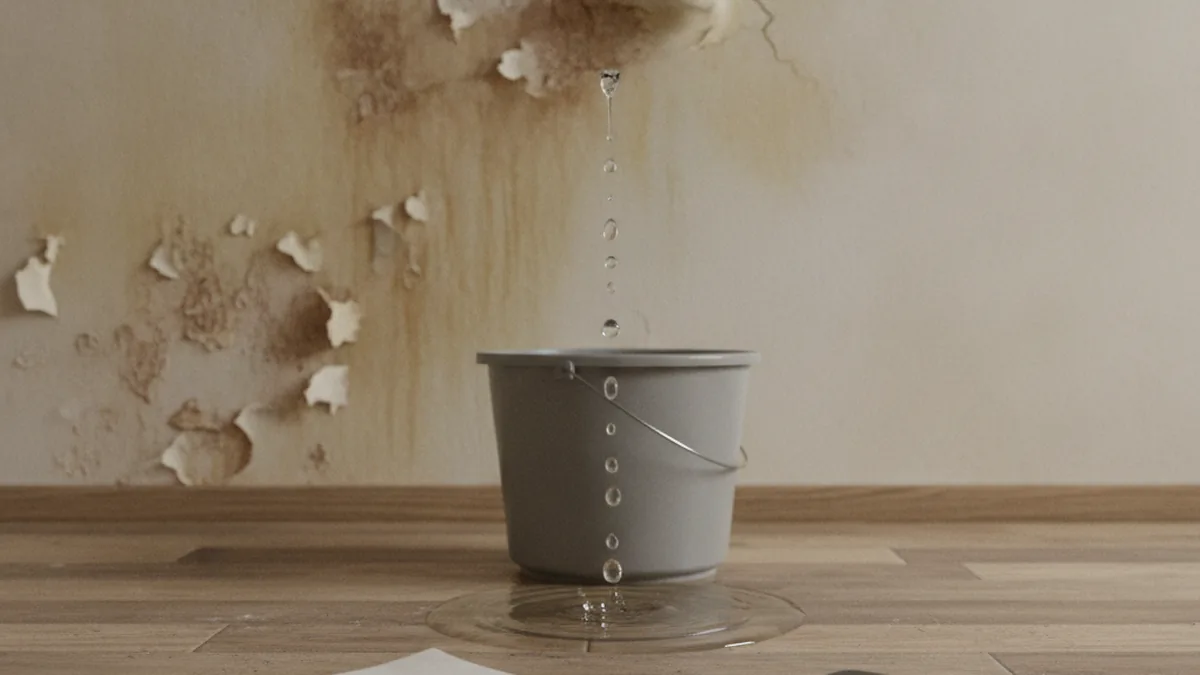
A neglected roof on your Saint-Eustache quadruplex lets water infiltrate down to a top-floor tenant, ruining furniture, electronics, and personal effects. Under article 1467, the partial "ruin" resulting from a maintenance defect engages your liability. Between compensating the belongings and possible temporary-housing costs, the bill climbs quickly.
Example 3 — Electrical fire
An electrical problem in your Blainville duplex sparks a fire that destroys a tenant's belongings. As infoassurance.ca notes, the owner can be held liable and their liability coverage then compensates the tenant for the loss of their property. In a fire, the sum of material damage, rehousing, and defence can approach — or even exceed — a $1M limit.
| Scenario | Civil Code article | Illustrative range |
|---|---|---|
| Fall on an icy staircase | 1457 (fault) | $200,000 – $400,000 + |
| Infiltration through the roof | 1467 (ruin) | Tens of thousands $ + |
| Electrical fire | 1457 / 1467 | Can approach or exceed $1M |
Illustrative, non-statistical amounts, provided for educational purposes. Compensation mechanism per infoassurance.ca. For a real case, consult a lawyer and your broker.
Why $1M may not be enough
On an income property, the sum of compensation plus defence costs for a serious injury can approach or exceed $1M. If your limit is reached, the difference comes out of your personal wealth — which is why it is worth evaluating a $2M limit with your broker.
Common mistakes plex owners make with liability insurance
Under-insuring your limit, confusing building and liability coverage, ignoring exclusions, neglecting documented maintenance, failing to require tenant insurance, and forgetting to update the policy after renovations: these are the mistakes that most expose plex owners in Quebec. Each can turn a manageable loss into a financial catastrophe.
Having seen what liability coverage includes and how a claim works, it is worth cataloguing the errors that recur most among income property owners. Avoiding them costs little; suffering them can cost years of net income.

Mistake 1 — Believing one policy "covers everything"
The most widespread confusion is thinking that building insurance also protects against third-party lawsuits. Wrong: repairing your building and compensating a victim are two distinct coverages. Verify that your contract includes a sufficient liability component.
Mistake 2 — Choosing the lowest limit "to save"
Defaulting to $1M out of a saving reflex when a serious loss can approach that amount is a risky bet. Because the premium gap between $1M and $2M is often modest, under-insuring your limit is rarely a good deal on a multi-unit building.
Mistake 3 — Not requiring tenant insurance
CORPIQ recommends requiring tenant insurance at lease signing, notably for fairness among all occupants. According to the Insurance Bureau of Canada, roughly 37% of Quebec tenants reportedly have no home insurance. Not requiring it deprives you of a protective layer and exposes the whole building.
Mistake 4 — Neglecting maintenance and its documentation
A known, ignored maintenance defect weakens your position and can trigger an exclusion. Conversely, an up-to-date maintenance log is your best defence to show you acted as a prudent, diligent owner.
Mistake 5 — Forgetting to update the policy after work
Adding units, a major renovation, a change of use, adding a basement unit: each change alters your risk profile. A policy that no longer reflects your plex's reality can lead to under-insurance at the worst moment.
| Mistake | Possible consequence | Fix |
|---|---|---|
| "One policy covers everything" | Uncovered lawsuit | Verify the liability component |
| Limit too low | Overrun on your dime | Evaluate $2M |
| No tenant insurance | Increased exposure | Require it in the lease |
| Undocumented maintenance | Weakened defence | Keep a log |
| Policy not updated | Under-insurance | Notify after work |
Sources: CORPIQ — tenant insurance; infoassurance.ca.
Prevention and documentation: lowering your liability risk
The best liability policy is the one you never have to use. Rigorous preventive maintenance, a dated log of interventions, regular inspections of common areas, and a documented snow-removal contract reduce both the probability of a loss and the risk that an exclusion is raised against you in a dispute.
Liability coverage is a safety net, not an invitation to negligence. On an income property, prevention pays twice: it prevents injuries and protects your legal position if an incident occurs anyway. Here is how to structure your approach.
Keep a dated maintenance log
Record every intervention: step repair, replacing a bulb on a landing, the snow-removal visit, roof inspection. A dated log, backed by photos and invoices, shows you act as a prudent, diligent owner — the exact standard against which your liability is assessed under article 1457 of the Civil Code.
Inspect the risk zones regularly
Common areas concentrate the risk: staircases, railings, landings, entrances, parking, lighting. A seasonal walkthrough catches a loose step or a slippery surface before a tenant is hurt. For a deeper audit of the building's condition, see our article on the inspection of a North Shore plex.
Your liability-prevention kit
- Dated maintenance log (repairs, inspections)
- Written snow-removal contract with proof of visits
- Before/after photos of corrective work
- Tenant insurance clause in the lease
- Working lighting of accesses and landings
- Policy updated after each change to the building
Coordinate prevention and coverage
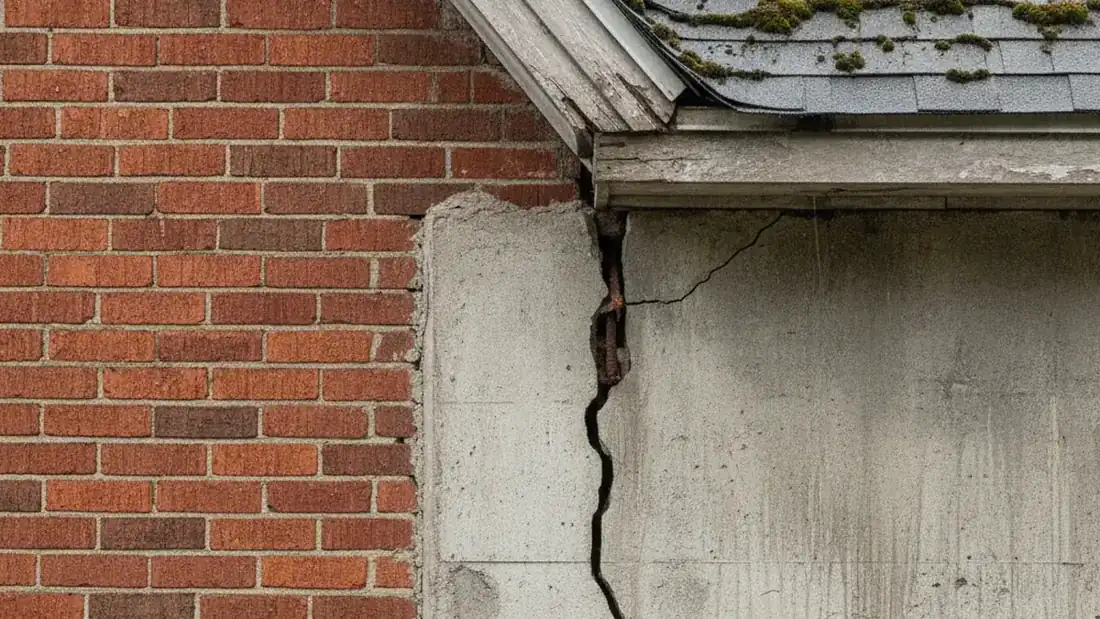
Prevention and insurance reinforce each other. A well-maintained building presents a better profile to the insurer, and adequate coverage absorbs the residual risk prevention cannot eliminate. On the North Shore, where winter amplifies the dangers, this pairing is the best protection for your wealth.
| Plex zone | Winter / everyday risk | Preventive measure |
|---|---|---|
| Exterior staircase | Ice, loose step | De-icing, repair, solid handrail |
| Entrance / landing | Weak lighting, ice | Lighting, abrasive, non-slip mat |
| Roof | Infiltration | Annual inspection, quick repair |
| Parking | Ice, potholes | Snow removal, resurfacing |
Liability coverage and selling your plex: what the buyer checks
When selling an income property, a savvy buyer examines the claims history, the absence of an ongoing liability dispute, and the adequacy of the coverage. A clean insurance file reassures and smooths the transaction; a coverage gap or an unresolved dispute can lower the price or delay closing.
Liability coverage is not only about day-to-day operation: it also influences the value and salability of your plex. A buyer — investor or direct acquirer — seeks to avoid inheriting a latent problem.

What a buyer looks at in your file
- The claims history: repeated losses signal a risky building.
- Ongoing disputes: an unresolved liability suit creates financial uncertainty.
- The adequacy of the limit: insufficient coverage will have to be corrected by the buyer.
- The maintenance log: proof of prudent, diligent management.
A clean file — adequate coverage, documented maintenance, no pending dispute — becomes a selling point. Conversely, a gap can translate into a lower price, a holdback clause, or a longer closing delay.
Sell without the insurance and maintenance hassle
- Direct offer, no broker or commission
- Purchase of the building "as is," insurance file included
- Quantified proposal within 48 hours
- You stop bearing the liability risk overnight
If managing the risks of your income property weighs on you — insurance, winter, potential disputes — ImmoMulti buys multi-unit buildings directly on the North Shore, with no broker or commission. You recover your capital and transfer the risk, without orchestrating a listing.
