
ImmoMulti — a direct buyer of multi-unit properties on the North Shore — regularly works with plex landlords who discover, sometimes too late, that in Quebec the security deposit is simply banned. Unlike Ontario, the United States or most other provinces, a Quebec landlord cannot require a security deposit, last month's rent in advance, or a guarantee cheque for keys. This guide walks through what you can and cannot ask a tenant when signing the lease, so you stay strictly compliant with the Civil Code of Quebec and the Administrative Housing Tribunal (TAT).
Why are security deposits banned in Quebec?
The security deposit is banned in Quebec for all types of rental housing, including duplexes, triplexes and quadruplexes. The Civil Code of Quebec strictly limits the amounts a landlord can require from a tenant. The principle is simple: when signing the lease, you cannot require any amount other than the first month's rent, and only as of the first day of the rental.
This rule protects tenants from accumulating advances that would make housing harder to access. A lease clause that provided for a security deposit or last month's rent payable in advance is without effect: writing it into the lease does not make it legal. The Administrative Housing Tribunal is very clear on this, as is Éducaloi.
Source: Éducaloi — Security deposit and TAT — Payment of rent.

Article 1904 of the Civil Code: the exact legal basis
When a plex landlord asks us "but where exactly is this written?", the answer is a single number: article 1904 of the Civil Code of Quebec. It is this provision, not merely a policy of the Administrative Housing Tribunal, that makes the security deposit illegal. Understanding its exact wording saves you plenty of misunderstandings with a tenant — or with your own brother-in-law who has "done this in Ontario forever".
The article sets out two distinct prohibitions, which are often confused:
- The one-month cap — the landlord cannot require that each instalment exceed one month's rent, nor claim in advance more than the first term of rent (usually the first month).
- The ban on any other sum — the landlord cannot require "any sum of money other than the rent, whether as a deposit or otherwise", nor the handing over of a postdated cheque or other instrument.
In other words, the law does not merely ban the word "deposit": it bans any mechanism that would tie up the tenant's money beyond the current rent. That is why a "key deposit", a "pet deposit" or "file-opening fees" all fall under the same rule, even if they carry a different name.
A provision of public order for protection
Article 1904 is regarded as a rule of public order enacted for protection. In practice this means the protection exists for the tenant's benefit, and a lease clause to the contrary has no effect. You could have the tenant sign the finest form in the world stating that they "freely agree" to pay a deposit: the clause remains void, and the tenant can reclaim their money later without having to prove anything beyond the payment.
The Government of Quebec put it plainly in an official communication: "A landlord cannot require a security deposit" and "the landlord may only require, in advance, payment of the first term of rent." The narrow legal nuance — a tenant may, in rare cases, spontaneously offer a sum — must never become an entry point: the moment there is any pressure, any condition at signing or any fear of being refused, you fall back under the ban.
Sources: Civil Code of Quebec, art. 1904 (LégisQuébec) and Québec.ca — Renting a property.
"The lessor may not require that each rent instalment exceed one month's rent… nor require any sum of money other than the rent, whether as a deposit or otherwise."
— Civil Code of Quebec, article 1904What "first term of rent" means
The "first term" is the first month when rent is payable monthly, which covers virtually every plex lease. You can require that first month, but only as of the first day of the lease. Signing a lease in March for a July move-in does not entitle you to cash the July rent in March: you must wait until July 1. This subtlety surprises many new landlords who would like to "hold" the unit with an early payment.
What you CAN require from a tenant
As a plex landlord, you keep legitimate ways to secure a tenancy. The following are allowed:
- The first month's rent — payable as of the first day of the lease, never before.
- Solvency information — name, contact details, references from former landlords and consent to a credit check.
- A guarantor (surety) — a person who agrees to pay if the tenant defaults.
- Tenant's home insurance — you can require it as a lease condition and ask for proof.
- Payment by postdated cheques — you can propose it, but not impose it.
Key takeaways
- The first month's rent is the only payment due at signing.
- A guarantor and credit check are your best compliant tools.
- Requiring home insurance in the lease is legal and recommended.
What you can NOT require
The list of prohibited requests is longer than most landlords think. Ban these practices from your plex leases:
| Request | Allowed? | Why |
|---|---|---|
| Security deposit | No | No amount other than the 1st month is allowed. |
| Last month paid in advance | No | Banned rent advance (more than one month). |
| Mandatory postdated cheques | No | Cannot be imposed as a lease condition. |
| Deposit for keys / remote | No | Treated as a banned security deposit. |
| "Pet deposit" | No | No special deposit is allowed, even with a pet. |
| Lease / file-opening fees | No | No rental fee may be charged. |
Warning
Even if the tenant voluntarily agrees to pay a deposit or the last month, the amount remains illegal and the tenant can demand reimbursement. The tenant's consent does not validate a clause contrary to the law.
Screening a good tenant: your real protection
Since the deposit is taken away as a safety net, your best protection happens before signing, when you choose the tenant. A plex well rented to solvent, careful occupants beats any one-month deposit. The good news: the law leaves you entirely legitimate screening tools, provided you stay within the limits of the Charter of Human Rights and Freedoms.
You may ask for the information reasonably necessary to assess an applicant's ability to pay their rent and meet their obligations. You cannot, however, require excessive information or reject an applicant on a prohibited ground.
What you can ask — and what to avoid
| Information | Allowed? | Detail |
|---|---|---|
| Name and contact details | Yes | Basic requirement to draw up the lease. |
| References from former landlords | Yes | One of your best behavioural indicators. |
| Consent to a credit check | Yes | With the applicant's written consent. |
| Proof of employment / income | Yes (with nuance) | To assess solvency, without being excessive. |
| Social insurance number | No | Excessive; not required for a credit check. |
| Bank account number | No | Irrelevant to assessing the application. |
| Refusal based on having children | No | Discrimination, unless justified by unit size. |
| Refusal based on origin, religion, age… | No | Grounds prohibited by the Charter. |
The Commission des droits de la personne et des droits de la jeunesse lists 14 prohibited grounds of discrimination: notably race, colour, sex, pregnancy, sexual orientation, civil status, age, religion, political convictions, language, ethnic or national origin, social condition and disability. Refusing housing on one of these grounds — or because the applicant has children, unless the unit's size objectively justifies it — exposes the landlord to a complaint before the Commission and, potentially, to damages.
Source: CDPDJ — The 14 prohibited grounds and Éducaloi — Housing: discrimination is prohibited.
A simple, defensible screening grid
To stay objective — and to justify your choices if they are ever challenged — apply the same grid to every applicant for a given unit:
- Ability to pay. A common market rule of thumb targets rent at roughly 30% of gross income. For a 4½ at $1,500/month, that implies an annual income of about $60,000. This ratio is not a legal requirement, but a prudent management benchmark.
- Credit history. With written consent, a check reveals late payments and indebtedness. An imperfect file is not an automatic refusal: it may call for a guarantor.
- References. Call the previous landlord (not just the current one, who may want to get rid of a bad tenant). Did they pay on time? Was the unit kept clean?
- Stability. Relatively stable employment and address reduce the risk of non-payment — without ever becoming a discriminatory pretext.
Key takeaways
- Screening replaces the deposit: 80% of the risk is decided here.
- Written consent is mandatory before any credit check.
- Same grid for everyone: it is your best defence against a complaint.

The guarantor (surety): a compliant how-to
Of all the alternatives to the banned deposit, the guarantor — also called a surety or co-signer — comes closest to a genuine financial guarantee, and it is perfectly legal in Quebec. The guarantor is a person who agrees, in writing, to pay the rent or damages if the tenant defaults. It is especially useful for a student, a newcomer or a young tenant with no credit history.
How to set it up correctly
- A written, signed commitment. The guarantor must sign the lease or a separate suretyship document. A verbal agreement is worthless in a dispute.
- A clear scope. Specify what is covered: rent only, or damage as well? For how long — the first year only, or the whole lease and its renewals?
- The guarantor's solvency. A guarantor is only worth something if they can actually pay. Check their capacity just as you would the tenant's.
A worked example
Take a triplex in Blainville with a unit renting at $1,400/month. A young couple with no credit history appeals to you, but the risk worries you. Rather than a deposit (banned), you ask for a guarantor — a parent who owns their home. Six months later, the couple leaves without paying the last two months ($2,800) and leaves a smashed door ($600 of repairs beyond normal wear). You claim $3,400. If the couple is insolvent, the guarantor's commitment lets you turn to them to recover the amount — which a one-month deposit ($1,400) would not have fully covered anyway.
Warning
The guarantor remains bound by the exact terms of the signed document. If the suretyship covers only "the first year", you will not be able to claim for a default that occurs in the third year. Draft the scope with care, ideally with the help of a notary or legal professional.
Legal alternatives to a deposit
The deposit ban does not leave you unprotected. Several compliant approaches genuinely reduce your rental risk:
- Rigorous tenant screening — a credit check, employment verification and calls to former landlords remain your best filters.
- A guarantor — especially useful for a young tenant or a newcomer with no credit history.
- Mandatory home insurance — a lease clause requiring liability insurance protects against many tenant-caused losses.
- A detailed condition report — done at move-in and move-out, with dated photos, to document any damage.
For a landlord weighing whether to keep a plex or sell it because the risk feels unmanageable, it also helps to know your options when a tenant causes damage.
Want to sell your plex without management headaches?ImmoMulti buys North Shore multi-unit properties directly — offer in 48 hours. →The condition report: your substitute for a deposit
If the deposit does not exist, evidence does — and it is evidence that replaces the deposit. A detailed condition report, done at move-in and move-out, is the most underrated tool of the Quebec plex landlord. It costs almost nothing, it is perfectly legal, and it turns an unverifiable "it was already like that" into a documented claim before the Administrative Housing Tribunal.
How to make a condition report that holds up at the TAT
- A written document, room by room. Describe the state of the walls, floors, doors, appliances, plumbing. Note everything: the smallest scratch will avoid a later argument.
- Dated photos or video. Take timestamped shots of every room on the day you hand over the keys. The date metadata is your ally.
- Both parties' signatures. Have the tenant sign and date the document at move-in. A joint condition report (accepted by both) carries far greater evidentiary weight.
- The same exercise at move-out. Compare the move-out condition to the move-in condition: the difference, minus normal wear, is your claim.
| Item | At move-in | At move-out |
|---|---|---|
| Walls and paint | Photos + colour/condition notes | Holes, stains, drawings? |
| Floors | Type, existing scratches | Burns, deep stains? |
| Supplied appliances | Brand, working condition | Working, clean? |
| Doors, windows, locks | Number of keys given | Breakage, missing keys? |
| Bathroom / kitchen | Faucets, seals condition | Abnormal mould, breakage? |
A careful tenant has nothing to fear from a condition report — on the contrary, it protects them too against an unfair accusation. It signals seriousness and often improves the rental relationship from day one.
How to protect yourself against damage without a deposit
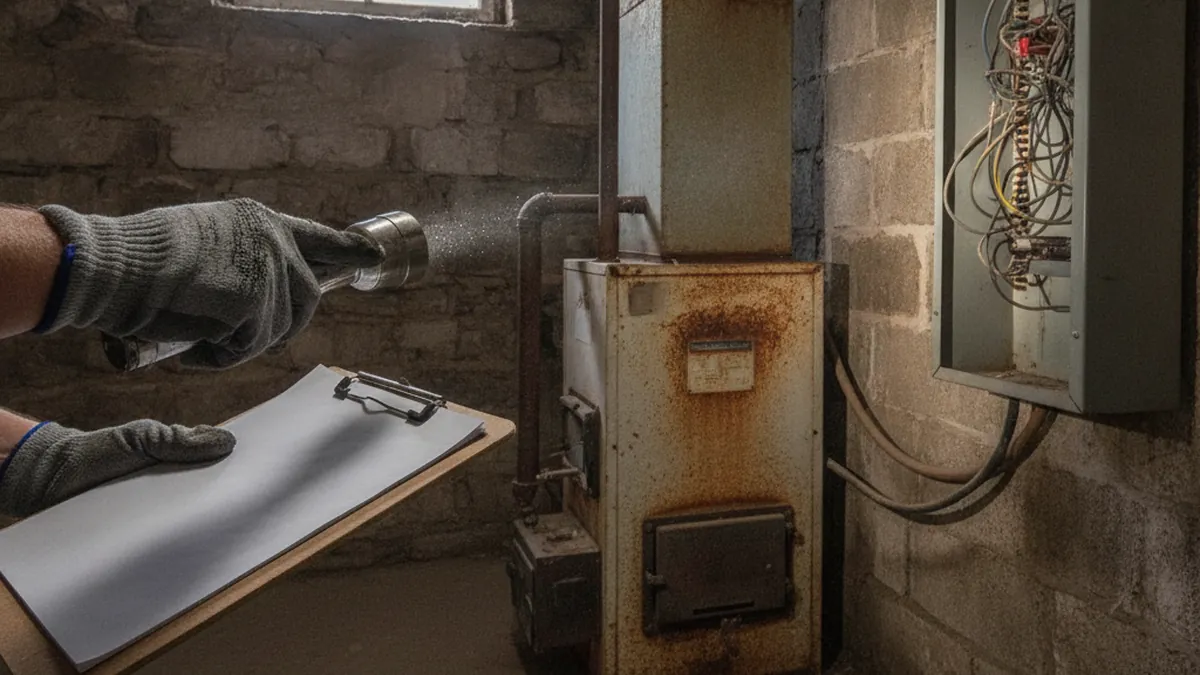
Without a security deposit, your protection comes from evidence. Document the condition of the unit at move-in (photos, video, signed condition report) and repeat the exercise at move-out. If a tenant causes damage beyond normal wear and tear, you can claim the cost of repairs — first amicably, then through the Administrative Housing Tribunal if needed.
The TAT always distinguishes normal wear and tear (the landlord's responsibility) from damage caused by negligence or abuse (the tenant's responsibility). The better documented your file, the more likely your claim succeeds. Also make sure to properly frame any pet-related clauses in your lease, another frequent source of disputes.
Claiming damage at the TAT: the procedure step by step
Since you hold no deposit to keep, the only way to recover the cost of contested damage is a claim to the Administrative Housing Tribunal. Many landlords shy away from this out of unfamiliarity; in reality it is accessible and very manageable on your own, file in hand.
The steps, in order
- The formal demand (mise en demeure). First, send the tenant (or former tenant) a written formal demand describing the damage and the amount claimed, with a reasonable deadline to pay. This alone often settles the matter.
- Filing the application. If payment does not come, open a file at the TAT. The filing fee for a general application (recovery of damage) is $92 under the schedule in force since April 1, 2026; rent-related applications cost from $59 to $92 depending on the rent amount.
- Notification. You must notify the application to the tenant and, since the amendments that came into force on June 12, 2026, file proof of notification and the list of your exhibits with the Tribunal within a set timeframe. Follow these formalities carefully.
- The hearing. Present your file: move-in and move-out condition reports, dated photos, repair invoices or estimates, the lease. The quality of the evidence makes the difference.
- The decision and enforcement. If the Tribunal rules in your favour, it orders the tenant to pay. In case of non-payment, the decision can be enforced (seizure) through the usual mechanisms.
| Step | What to prepare | Indicative cost |
|---|---|---|
| Formal demand | Letter describing damage + amount + deadline | $0 (registered mail advised) |
| Opening the file | Application form, exhibits | ≈ $92 (general application) |
| Notification | Proof of notification + list of exhibits | Bailiff fees vary if required |
| Hearing | Condition reports, photos, invoices, lease | $0 (self-representation possible) |
Source: TAT — Required fees (schedule as of April 1, 2026) and Administrative Housing Tribunal. Check current amounts before filing.

Normal wear or damage: where is the line?
A landlord's entire claim rests on this distinction, and it is also the number-one source of misunderstandings. Normal wear and tear — the deterioration that results from ordinary use and the passage of time — is the landlord's responsibility and can never be billed to the tenant. Damage caused by negligence, abuse or fault is the tenant's responsibility. Between the two, you need judgment… and evidence.
Concrete examples
| Situation | Normal wear (landlord) | Damage (tenant) |
|---|---|---|
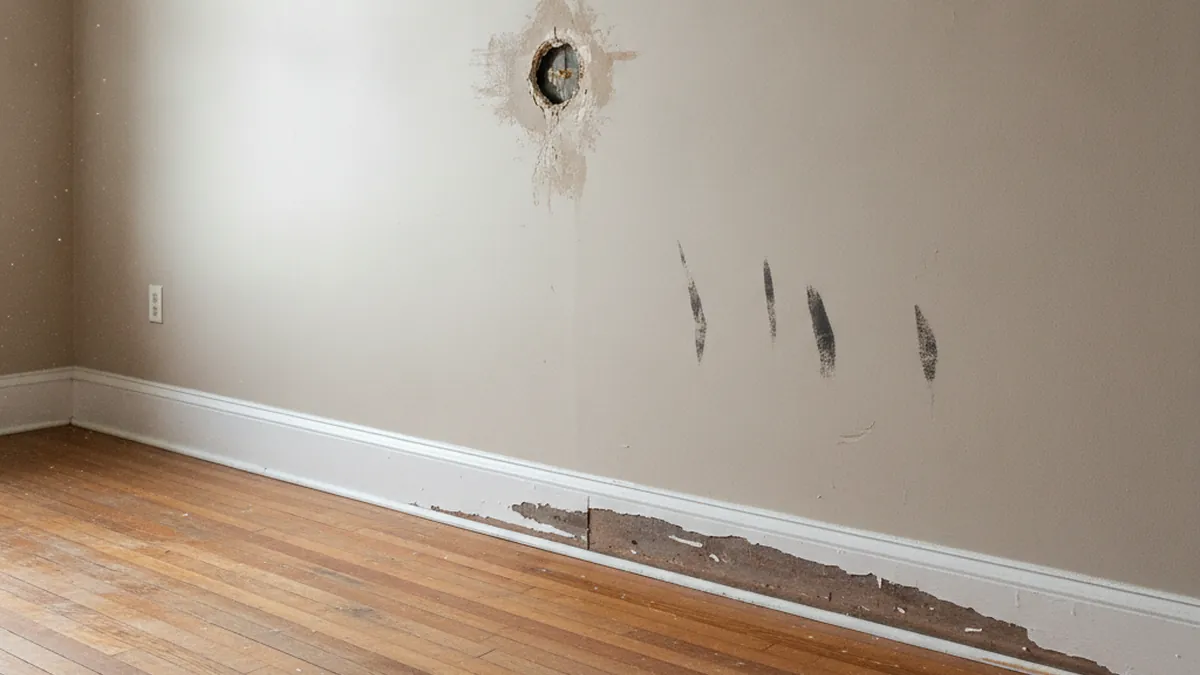
| Paint | Fading, small marks after several years | Walls painted black, large holes |
| Hardwood floor | Light everyday scratches | Cigarette burn, water damage left unreported |
| Carpet | Flattening in traffic areas | Indelible stains, tears |
| Kitchen counter | Normal micro-scratches | Pot burn, deep gouge |
| Doors and locks | Slight play, hardware wear | Smashed door, ripped-out lock |
A practical principle: the older an item, the less you can claim its brand-new value. The TAT often applies a logic of depreciation. A ten-year-old carpet destroyed by a tenant is not worth a new carpet; its remaining useful life is taken into account. Claiming $2,000 to replace a carpet that was already at the end of its life will rarely lead to full compensation.
Deposits elsewhere: Quebec vs Ontario and the rest of Canada
The confusion often comes from elsewhere. A landlord who has rented in Ontario, or who reads American advice online, sincerely believes a deposit is the norm. It is almost everywhere — except in Quebec. Understanding the contrast keeps you from importing a banned practice into your plex.
| Jurisdiction | Security deposit? | Advance allowed |
|---|---|---|
| Quebec | Banned | 1st month only, as of the 1st day of the lease |
| Ontario | No damage deposit; last-month "deposit" allowed | Last month's rent deposit permitted |
| Other provinces (general) | Often allowed (security deposit) | Often 0.5 to 1 month, held in trust |
The difference is structural: in several provinces, the deposit is held in trust and returned with interest at the end of the lease. Quebec made the opposite choice — protecting access to housing by banning the tying-up of money — and offsets it by giving the landlord access to the Administrative Housing Tribunal for any claim. It is not "less protection", it is a different protection, resting on evidence rather than on money withheld.
Note: rules outside Quebec vary from province to province and change regularly. This table is indicative; check the legislation of the province concerned. For Quebec, only article 1904 C.C.Q. is authoritative.
Special cases: furnished, roommates, subletting, pets
The deposit ban has no exception based on the type of rental. Here are the situations that come up most often for North Shore plex landlords.
Furnished unit
Renting furnished opens no right to a deposit to protect the furniture. Many landlords believe the opposite: "I supply a $2,000 sofa, surely I can take a deposit." No. Protection comes from a detailed inventory of the furniture (with photos and values), signed with the lease, and from a claim to the TAT in case of damage.
Roommates
Whether the lease is signed by one tenant or several roommates, the one-month cap applies to the total rent for the unit, not per person. You cannot require "one month per roommate" in advance.
Subletting and lease assignment
A tenant who sublets obviously cannot require from a subtenant what the law forbids you. And as a landlord, you cannot use a lease assignment to demand a deposit from the new tenant. The same rules follow the unit.
Pets and parking
A "pet deposit" or a "deposit for the garage remote" are banned, even when presented as refundable. If you accept a pet, frame it with a well-drafted pet clause — not with a deposit. Parking may be the subject of a clearly identified additional rent, but never a security deposit.
Warning
Renaming a deposit does not make it legal. "Prepaid cleaning fees", "furniture surety", "key guarantee": whatever the label, any sum beyond the first month's rent falls under the ban in article 1904.

You have already collected a deposit: what now?
Many landlords discover the ban after the fact — a deposit collected in good faith two years ago, a last month's rent taken in advance at signing. The right approach is not to panic, but to regularize the situation before a tenant raises it. An illegal amount remains reclaimable by the tenant; better to get ahead of it.
Three reflexes to adopt
- Refund the illegal amount. If you hold a deposit or a last month paid in advance, return it to the tenant (or apply it to an upcoming rent, with their written agreement). It is the simplest and safest route.
- Fix the lease. Remove any deposit clause, mandatory last month, or imposed postdated cheques. Remember: the clause is void anyway, but its presence sends the wrong signal.
- Document the fix. Keep proof of the refund (transfer, signed receipt). This protects you against a later claim over an amount already returned.
The risk if you do nothing
A tenant can claim reimbursement of the banned deposit before the Administrative Housing Tribunal, with interest, and — in the most abusive cases — punitive damages. Recent Quebec case law shows tribunals do not take illegal housing practices lightly. Regularizing almost always costs less than defending.
If you are preparing to sell your building, this fix is doubly important: a diligent buyer will review the leases and immediately spot an illegal deposit, which becomes a negotiating point — or a liability they will not want to inherit.
The compliant lease: what to put in (and take out)
In Quebec, a residential lease is normally drawn up on the mandatory Administrative Housing Tribunal form. That is a good starting point, but many landlords add schedules or "house clauses" that create problems. Here is how to keep a lease both protective and fully compliant.
Clauses to remove immediately
- Any deposit clause — security, damage, cleaning, keys or pets.
- The obligation to pay the last month in advance.
- The obligation to provide postdated cheques (you may propose, not impose).
- File-opening or lease-preparation fees.
- Flat penalties disguised as "administrative fees" on every late payment.
Compliant clauses that genuinely protect you
- A home-insurance requirement with an obligation to provide proof.
- An attached condition report, signed at move-in, with dated photos.
- A clear pet clause (conditional permission, cleanliness, noise) — without a deposit.
- A guarantor's commitment, when the tenant's profile justifies it.
- Building rules (parking, laundry, quiet enjoyment) attached and signed.
| Landlord's goal | Banned reflex | Compliant solution |
|---|---|---|
| Protect against damage | Security deposit | Condition report + insurance + TAT recourse |
| Secure payment | Last month in advance | Rigorous screening + guarantor |
| Guarantee keys | Key deposit | Signed inventory + claim if lost |
| Frame a pet | Pet deposit | Well-drafted pet clause |
A compliant lease is not a "weak" lease. It is a lease whose every protection will hold up before the Tribunal, rather than a set of dramatic but void clauses that collapse at the first dispute. When in doubt about a specific clause, have it validated by a legal professional or a notary.
Common mistakes plex landlords make
- Writing a deposit into the lease "for peace of mind" — the clause is void and exposes you to damages.
- Requiring last month's rent in advance — one of the most common mistakes, and one of the easiest for a tenant to contest.
- Imposing postdated cheques — proposing is allowed, imposing is not.
- Asking for a deposit on keys or a garage remote — banned, even if refundable.
- Charging "file-opening fees" — no rental fee is allowed in Quebec.
A compliant lease from the start spares you costly disputes and preserves your building's value. If property management becomes a burden, note that a direct sale of your North Shore multiplex remains an option to recover your capital without the constraints of renting.
When compliance feels too heavy: selling your plex
For some landlords, the accumulation of rules — banned deposit, rent-increase caps, lease assignment, a TAT application for the smallest dispute — eventually turns an asset into a burden. If that is where you are, it helps to know that a well-kept plex keeps its full value, precisely because compliance also protects the buyer.
A clean file makes selling far easier: up-to-date leases, a payment history, condition reports, no lingering illegal clause. Conversely, a lease containing a banned deposit or an unauthorized advance is a red flag for a savvy buyer — and a potential source of claims they would inherit.
Two exit scenarios
| Option | What you manage | Typical timeline |
|---|---|---|
| Traditional sale (broker) | Showings with tenants, buyer financing, commission | Often several months |
| Direct sale to a multi-unit buyer | A single contact, no broker or commission | Fast offer, closing at the notary |
ImmoMulti buys multi-unit properties directly on the North Shore: you recover your capital without managing deposits, leases, rent increases or TAT disputes. If management weighs on you more than it pays, a direct sale of your plex is worth comparing to a conventional listing.
Sources: Administrative Housing Tribunal, Éducaloi, Civil Code of Quebec (LégisQuébec), Québec.ca — Renting a property. Informational content; does not constitute legal advice.


