ImmoMulti — a direct buyer of income properties on the North Shore — works with many owners of older plex buildings. One question comes up again and again before renovations or a sale: does my building contain lead paint? In Québec buildings built before 1980, the answer is often yes. It is not a dead end, but a risk to manage methodically: test first, renovate without spreading dust, meet your workplace safety duties and disclose what you know when selling. This guide is for the owner-seller who wants to do it right — and protect both tenant health and property value.
Which plex buildings have lead paint in Québec?
According to Health Canada, a home built before 1960 was very likely painted with lead-based paint. Between 1960 and 1990, small amounts of lead could still be present in some paints. After 1980, there is little cause for concern about interior paint.
Québec's stock of plex buildings is old: a large share of the duplexes, triplexes and quadruplexes in Montréal and on the North Shore was built decades ago. It is precisely in these buildings that lead paint hides — often under newer coats, on woodwork, window frames, doors, railings and walls.
Health Canada documents a clear decline in concentrations across construction eras. Canadian studies show a median lead concentration in paint chips of 1,900 mg/kg for homes built before 1920, 1,100 mg/kg between 1920 and 1949, and 395 mg/kg between 1950 and 1974. In other words: the older your income property, the higher the probability and the lead content.
Source: Health Canada — Lead-based paint.
Why is lead paint dangerous, especially for children?
Household dust and dirt are among the main sources of lead for children under six, according to Health Canada. The cognitive and neurobehavioural effects of lead are an important concern for exposed children. Removing old paint during renovation can therefore pose lasting risks.
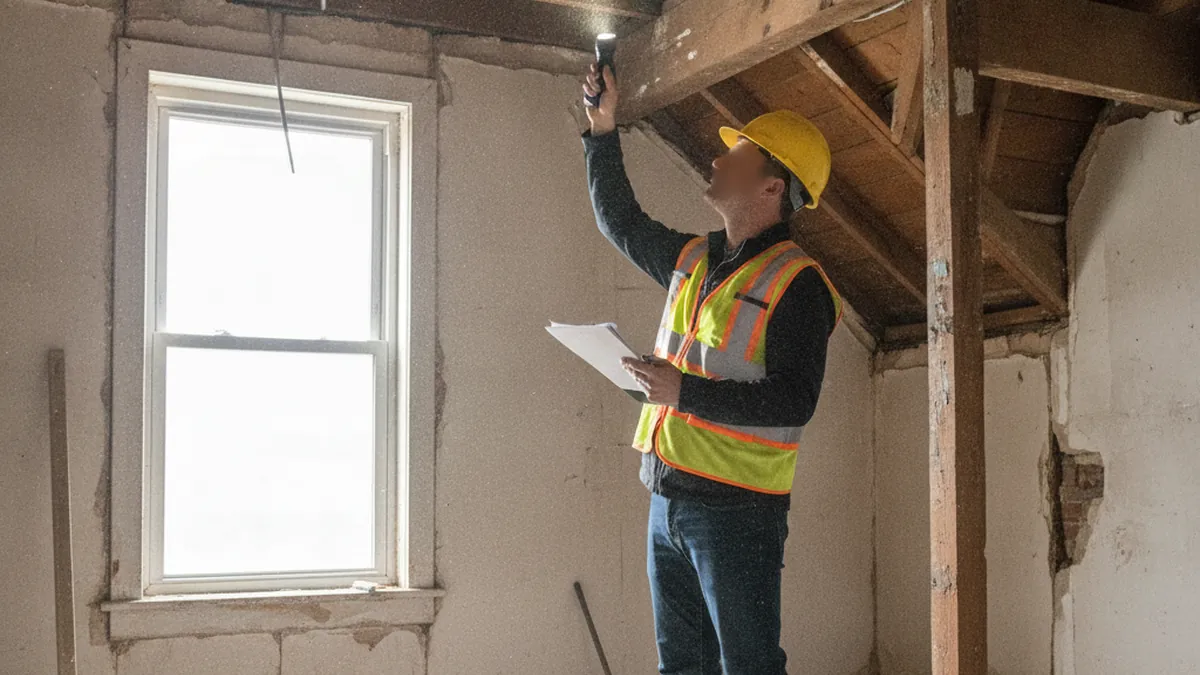
Intact lead paint in good condition poses a limited risk as long as it is not disturbed. The problem arises when it flakes, deteriorates, or is sanded — creating a fine, lead-laden dust. Because young children regularly put their hands and objects in their mouths, dust settling on floors, window sills and toys becomes a direct exposure pathway.
Health Canada notes that contaminated dust generated during renovations where lead paint is removed can directly affect blood lead levels in both children and adults. An important point for an owner of an occupied plex: work in one unit can affect families in neighbouring units if the dust is not contained.
The real danger is not the paint — it's the dust
A lead-painted wall that is intact and covered is generally low-concern. It is sanding, dry-scraping and burning that turn that dormant lead into breathable dust and fumes. How you renovate matters more than the mere presence of lead.
Source: Health Canada — Reduce your exposure to lead.
How do I know if my plex has lead? Test before you renovate
Health Canada does not recommend home test kits, which it considers unreliable. Instead, have a certified inspector measure the concentration, or mail paint chip samples to a testing laboratory. Testing is the prudent first step before any work that disturbs old layers.
Before starting work in an older income property, the first question to settle is simple: is there lead, and where? Health Canada advises against consumer test kits, whose reliability is insufficient. Two serious paths exist:
- A certified inspector can measure the lead concentration in the paint directly on site, surface by surface;
- A testing laboratory can analyze paint chip samples that you collect and mail according to their instructions.
For an owner of a plex on the North Shore, this test is more than a health precaution: it is documentation. A dated report identifying where lead is — or is not — in your income property lets you plan work, budget for abatement and, later, answer a buyer's questions clearly.
Source: Health Canada — Lead-based paint.
How do I renovate an older plex without spreading lead dust?
Do not sand, dry-scrape or burn off lead paint: do not use sanders, heat guns or blowlamps, as they release toxic dust and fumes. Encapsulation (covering the surface) is a good option. Frequent dusting, vacuuming and wet-mopping reduce dust.
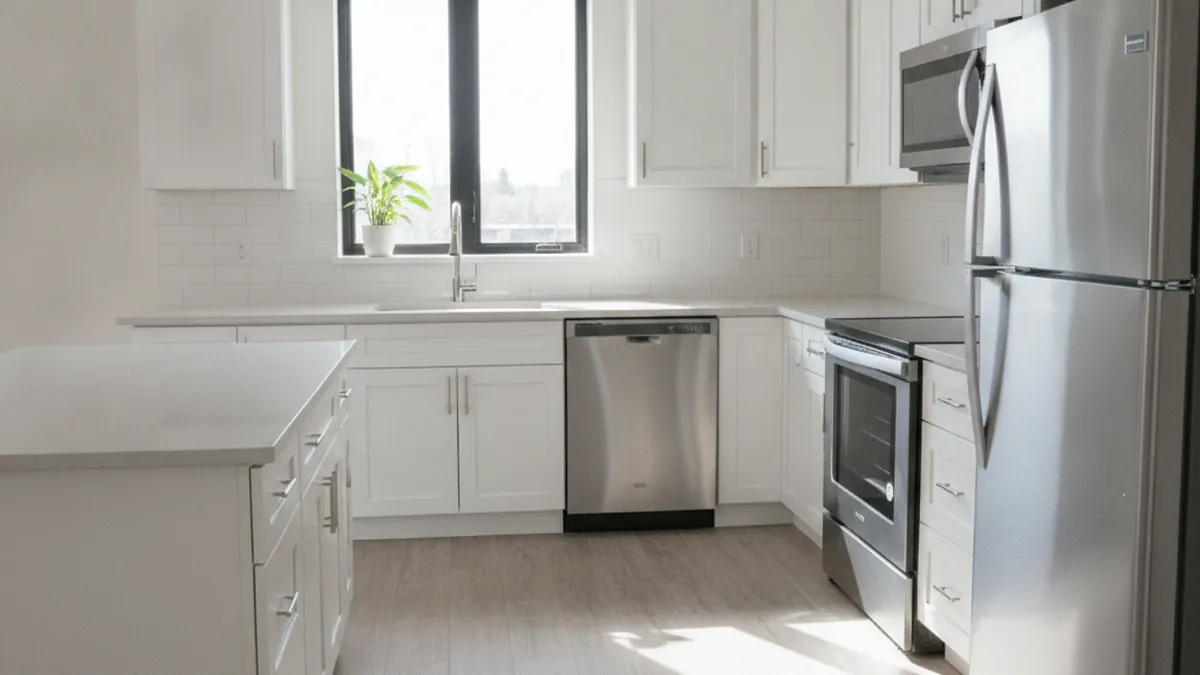
Health Canada's golden rule is clear: do not sand, dry-scrape or burn off lead paint. In practice, avoid sanders, heat guns and blowlamps, which spray lead into the air as toxic dust and fumes. These fast methods are precisely the most dangerous.
Instead, Health Canada suggests encapsulation: covering the lead-painted surface — for example with vinyl wallpaper, wallboard or paneling. The paint stays in place but sealed, which neutralizes the dust risk as long as the surface is not pierced or damaged. For a plex owner, this is often the fastest and least expensive solution.
Finally, routine cleaning matters: regular dusting, vacuuming and wet-mopping keeps dust levels down, with a focus on surfaces young children touch often (floors, window sills). Wet cleaning is essential — dry sweeping only puts the dust back into the air.
Safe renovation: the right reflexes
- Test before disturbing any old coat of paint
- Ban sanders, heat guns and blowlamps
- Prefer encapsulation where possible
- Contain and isolate the work area in an occupied building
- Clean wet, not dry, at the end of the job
Source: Health Canada — Chemical safety for DIY projects and renovations.
What are your workplace safety duties (CNESST)?
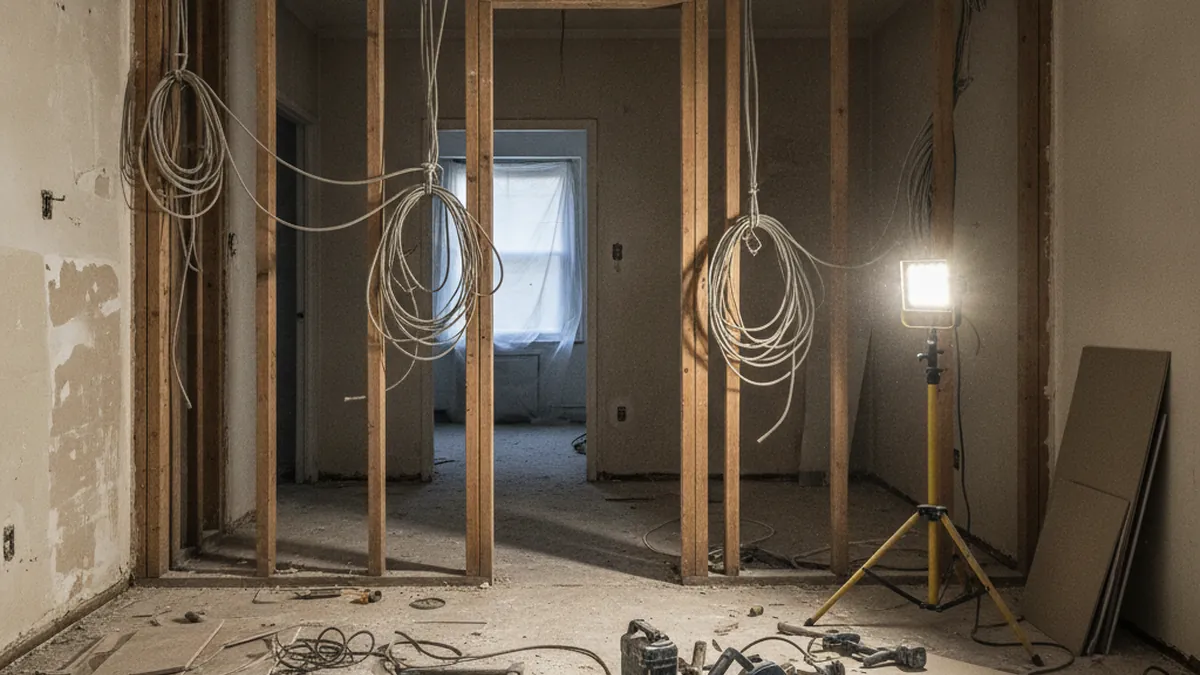
According to the CNESST, construction workers are at greater risk of lead exposure, a toxic substance. Composition tests identify lead-bearing coatings before work. Exposure is reduced by controlling dust, isolating areas and installing enclosures. Workers must have access to a double changing room.
As soon as you hire workers — contractors or employees — on your plex, the occupational health and safety dimension kicks in. The CNESST reminds us that construction workers are at particular risk of lead exposure, a toxic substance that can accumulate in the body and disrupt several functions with no visible signs.
The CNESST recommends using composition tests to identify lead-based coatings or materials before starting renovation or demolition work. It stresses that the lead content of paint is only one factor: the process used to remove the paint and the scope of the work matter just as much for actual exposure.
To reduce exposure, the CNESST suggests modifying equipment or processes to control dust, isolating work areas where lead is present, and using enclosures or barriers on construction sites. It also states that workers must have access to a double changing room, regardless of their level of exposure — a measure to avoid carrying contamination off-site.
"Lead-contaminated dust can cling to skin, hair, clothing and vehicles and be carried into the home, exposing workers' families."
— Adapted from Health Canada, Reduce your exposure to leadThis reality applies to you as an owner too: in an occupied income property, rigorous site management protects not only the workers but also your tenants and their children. Make sure the contractor you hire knows and applies the CNESST measures.
Source: CNESST — Lead (prevention and safety) and Prevention guide "Lead exposure".
Must you disclose lead paint when selling your North Shore plex?
In Québec, the seller must disclose facts they know that could influence the buyer's decision, under the Civil Code warranty of quality (latent defects). If you know lead paint is present, withholding the information may expose you to recourse. A notary or lawyer will confirm how this applies to your case.
On the selling side, the question is not whether lead paint "scares off" buyers — it is common in older buildings — but what you must say. In Québec, the sale of a building is governed by the Civil Code legal warranty of quality, which protects the buyer against latent defects. A seller who knows a fact likely to influence the buyer's decision is well advised to disclose it rather than conceal it.
In other words: if you have tested your plex and know it contains lead paint, it is prudent — and generally required depending on the circumstances — to disclose this to the buyer, notably in the seller's declaration. Knowingly hiding such a fact can ground a later claim. Since every situation is unique, consult a notary or lawyer for how it applies to your transaction.
The good news for the owner-seller: transparency is an asset, not a liability. A building where you have tested, documented and managed the risk — encapsulation, safe abatement, invoices on hand — inspires more confidence than an older plex sold with no information on the subject. To understand the legal warranty mechanism from the seller's side, read our guide on latent defects and seller protection.
ImmoMulti: sell your older plex as-is, without managing the work
Would you rather not manage abatement in an occupied building? ImmoMulti buys income properties on the North Shore as-is, with no broker or commission and an offer within 48 hours. Get a confidential proposal.
Whether you choose to renovate safely and keep your building, or sell it as-is, the essentials are the same: understand the risk, document it and act with full knowledge. To evaluate the broader condition of an older plex before deciding, our article on the pre-sale inspection of an income property reviews the other sensitive points of older buildings.
Lead is not just a children's issue: effects on adults
According to Health Canada, chronic lead exposure — even at low levels — is associated in adults with higher blood pressure (especially systolic) and an increased risk of hypertension — the best-established link — as well as cardiovascular disease, kidney failure and reproductive problems. Very high exposure can cause vomiting, convulsions, coma and even death, but such cases are rare in Canada.
Public discussion of lead paint focuses — rightly — on children under six. But for a plex owner who renovates the building themselves, or for the adult living in one of the units, lead is not harmless. Health Canada notes that low-level chronic exposure can affect the central and peripheral nervous systems, and that symptoms tied to relatively low exposure often go unnoticed. In other words: you can be exposed without knowing it, without any obvious sign, while lead accumulates in the body.
The most-studied endpoint — and the one with the strongest evidence — is the lead-related increase in blood pressure, particularly systolic pressure, and the resulting risk of hypertension. Health Canada also links low-level chronic exposure to developmental neurotoxicity, neurodegenerative effects, cardiovascular disease, kidney failure and reproductive problems. These are diffuse, long-term effects that do not show up the day after a job, but they justify treating lead dust as a genuine occupational risk, not a minor nuisance.
At the other extreme, very high acute exposure can cause vomiting, diarrhea, convulsions, coma and, in extreme cases, death. Health Canada notes, however, that lead poisoning cases are rare in Canada: the realistic danger in an older plex is not sudden poisoning, but the repeated, underestimated exposure of an owner who sands, scrapes and breathes dust job after job.
Why the owner-renovator is especially concerned
The multi-unit owner who does their own work stacks up the risk factors: they directly disturb old coats of paint, they often work without adequate respiratory protection, and they repeat the exposure from one unit to the next across renovations. Unlike a child who mostly ingests settled dust, the adult who sands inhales the fine particles — a direct, efficient absorption route. This is exactly the profile the CNESST measures are designed to protect, which is why an owner gains by treating their own site with the same rigour as a professional contractor.
A silent warning sign
Because symptoms of moderate exposure "often go unnoticed" (Health Canada), the absence of discomfort does not prove the absence of risk. An owner who has renovated several older units without protection and who has hypertension can discuss it with their doctor: a blood lead test is the only reliable way to measure actual body burden.
Source: Health Canada — Risk management strategy for lead and Health Canada — Reduce your exposure to lead.

Lead does not hide only in paint: water, dust and soil
In an older plex, lead can also come from a lead water service line: according to Health Canada, a lead service line can account for 50 to 75% of the total lead measured at the tap after prolonged stagnation. The maximum acceptable concentration for drinking water is 0.005 mg/L (5 µg/L), one of the lowest in the world. Household dust and yard soil are also among the sources.
Focusing only on lead paint would be an incomplete view of the risk in an older building. Health Canada notes that lead is omnipresent in the Canadian environment: it is found in air, dust, soil, water and food. For the owner-seller of an older plex on the North Shore, two sources deserve particular attention beyond painted woodwork.
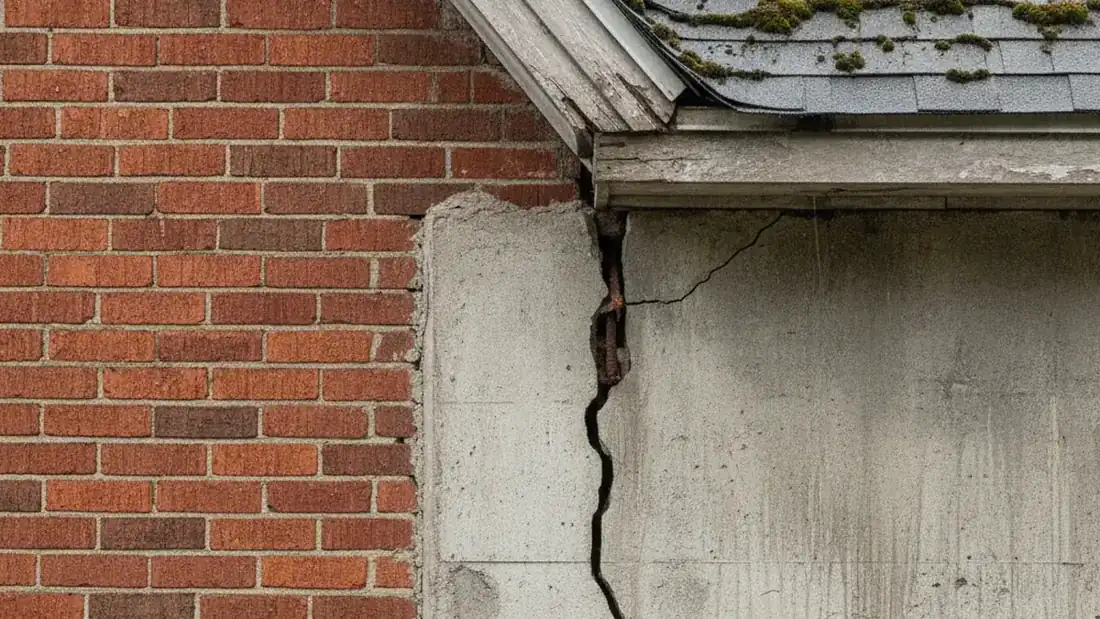
The lead water service line: a legacy of old neighbourhoods
Many buildings built before the 1970s are connected to the municipal network by a lead service line. Health Canada states that these lines remain a significant source of lead many years after installation, and that they can account for 50 to 75% of the total lead measured at the tap after a prolonged stagnation period. The Canadian guideline for drinking water sets a maximum acceptable concentration of 0.005 mg/L (5 µg/L) — one of the lowest in the world, precisely because lead has no recognized safe threshold.
For an owner, this means the question "does my plex contain lead?" is not settled by a paint test alone. A lead water service line, present or suspected, is checked with the municipality (several North Shore cities keep a registry and offer replacement programs) and documented just like the paint. It is a point a savvy buyer — or their inspector — will raise.
Household dust and yard soil
Health Canada ranks household dust and dirt among the main sources of lead for young children, and notes a historically important relationship between children's blood lead levels and lead concentration in soil, especially with "pica" behaviour (eating dirt). In the yard of an older plex where exterior paint has flaked for decades, or near a former busy street, the soil can concentrate lead. Wet cleaning of surfaces, yard maintenance and avoiding bare-soil areas near the foundation are part of overall management.
| Lead source | Where to look in an older plex | Benchmark (Health Canada) |
|---|---|---|
| Lead paint | Woodwork, window frames, doors, railings, walls (old coats) | Very likely before 1960; traces into the 1990s |
| Drinking water | Lead service line, old piping, solder | MAC 0.005 mg/L; the line can be 50-75% of lead at the tap |
| Household dust | Floors, window sills, low surfaces | Main source for children under 6 |
| Yard soil | Bare soil near foundations, under windows, old roadside | Historical link with children's blood lead |
Sources: Health Canada — Lead in drinking water and Health Canada — Reduce your exposure to lead.
Renovating an older plex unit step by step, without spreading lead
The safe method follows a simple logic: test first, contain the area, avoid any technique that sprays lead (sanding, dry-scraping, blowlamp), prefer encapsulation, then clean exclusively with wet methods. In an occupied plex, isolate the site from neighbouring units and protect both workers and residents. Each step follows Health Canada and CNESST guidance.
Beyond the broad principles, here is a concrete walkthrough for an owner renovating a unit in an older plex likely to contain lead paint. This is not a regulatory abatement protocol — for major work, a qualified contractor is essential — but a common-sense framework faithful to the authorities' recommendations.
Step 1 — Identify and test
Locate the at-risk surfaces: woodwork, window frames and sills, doors, mouldings, railings, baseboards, and any old coat of paint under newer ones. Since Health Canada advises against consumer kits, bring in a certified inspector or mail chips to a laboratory. Record the results room by room and surface by surface: this is the foundation for everything else.
Step 2 — Decide: encapsulate, replace or abate
For each lead-positive surface, three paths exist. Encapsulation (covering: vinyl wallpaper, wallboard, coating) is the fastest and least expensive, as long as the surface stays intact. Full replacement of the element (for example, changing a window frame rather than stripping it) avoids disturbing the paint. Abatement/removal — stripping the paint — is the most delicate and must absolutely avoid dry sanding and heat.
Step 3 — Contain and prepare the area
In a multi-unit building, isolate the work room: close doors, seal openings with polyethylene sheeting, shut off through-ventilation and protect floors. The CNESST recommends isolating work areas and using enclosures or barriers. The goal: prevent dust from migrating to neighbouring units and common areas.
Step 4 — Work without generating dust
Ban the sander, the heat gun and the blowlamp (Health Canada). If paint must be removed, prefer wet methods or suitable strippers, keeping the surface damp to knock down particles. Wear appropriate respiratory protection and dedicated work clothing.
Step 5 — Clean wet, then decontaminate yourself
At the end of the day and the end of the job: wet dusting, vacuuming and wet-mopping, never dry sweeping that puts dust back into the air. Focus on floors, window sills and low surfaces. Work clothes are changed and washed separately — the CNESST in fact provides for a double changing room for workers, to avoid carrying contamination off-site.
| Step | To do | Absolutely avoid |
|---|---|---|
| 1. Test | Certified inspector or lab, results per surface | Relying on a consumer kit (deemed unreliable) |
| 2. Decide | Encapsulate, replace the element, or abate carefully | Quick-stripping a positive surface |
| 3. Contain | Seal the room, protect floors, cut ventilation | Working doors-open in an occupied plex |
| 4. Work | Wet methods, respiratory protection, dedicated clothes | Sander, heat gun, blowlamp |
| 5. Clean | Wet-mopping, vacuuming, changing clothes | Dry sweeping, reusing site clothing |
Sources: Health Canada — Chemical safety for DIY projects and CNESST — Lead.
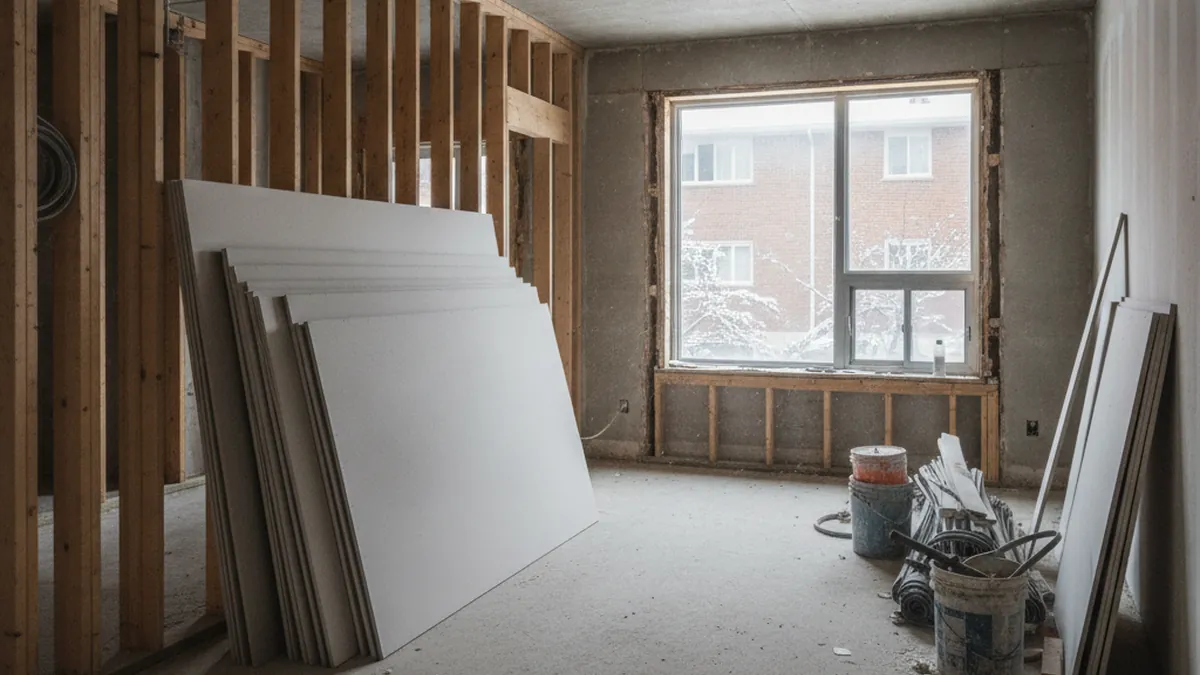
What does it cost? Three worked scenarios for an older plex
The cost of managing lead varies enormously with scope: from a few hundred dollars for a test and a spot encapsulation, to several thousand for supervised abatement in an occupied building. The figures below are illustrative orders of magnitude to help compare options; always get quotes from qualified professionals.
A caveat: the amounts below are educational examples, not official prices. They serve to reason about the gap between strategies, not to budget to the dollar. Actual prices depend on region, contractor, surface area and occupancy. What is verified and sourced is the method (test, encapsulate, avoid dust) — not the price, which is a market matter.

Scenario A — The well-kept plex: manage by encapsulation
A 1950s triplex whose paint is in good condition, with no flaking. The owner tests a few key surfaces, confirms lead on the woodwork, then encapsulates (covers) rather than strips. Most of the budget goes to testing and cosmetic finishing. This is the most common and least costly scenario: the risk is neutralized without major work.
Scenario B — Renovating a unit: replace rather than strip
A unit to refresh before re-renting. Rather than sanding the old lead-painted windows and doors, the owner replaces them — which resolves the lead and improves rental value. The main cost is not "the lead" but the renovation itself; the lead constraint simply steers choices toward replacement and containment.
Scenario C — The occupied, flaking building: supervised abatement
An older quadruplex with degraded paint and occupied units, some housing young families. Here logistics dominate: room-by-room containment, resident protection, qualified contractor, waste management. This is the heaviest scenario — cost, duration, tenant coordination — and the one that pushes many owners to ask whether they really want to run this work or sell as-is.
| Scenario | Dominant approach | Effort / logistics | Good choice when… |
|---|---|---|---|
| A — Intact paint | Test + encapsulation | Low | Paint is in good condition and not flaking |
| B — Unit to renovate | Replacing painted elements | Medium | You are already renovating and want to add value |
| C — Occupied, degraded | Supervised abatement | High | Paint is flaking and children live in the building |
Price it out before deciding
Before choosing between managing the lead or selling as-is, put an order of magnitude on the overall upgrade bill for the plex. Our renovation calculator helps estimate the work envelope — lead, windows, kitchen, bathroom — to compare scenarios calmly.
Common mistakes older-plex owners make with lead
The most common pitfalls: sanding or heat-stripping (the most dangerous move), relying on a consumer test kit, dry-sweeping the dust, renovating an occupied unit without containment, and hiding known lead when selling. Each of these goes against Health Canada guidance, CNESST rules, or the disclosure rules of the Civil Code.
Many plex owners approach lead with good intentions but the wrong reflexes, often inherited from old renovation habits. Here are the mistakes that come up most often — and why they cause problems.
Mistake 1 — Sanding or heating "to do it properly"
This is the most serious mistake. Sanding, dry-scraping or burning old paint seems like "doing it right," but Health Canada is categorical: these methods release toxic dust and fumes. Carefully sanding lead-painted woodwork is far more dangerous than a "lazy" encapsulation. The good renovator's reflex — strip to bare, sand, repaint — is exactly the wrong one here.
Mistake 2 — Trusting a home test kit
Consumer kits are cheaply reassuring, but Health Canada does not recommend them, considering them unreliable. A "negative" kit result can give false security and lead to careless sanding. For a decision involving both health and property value, use a certified inspector or a laboratory.
Mistake 3 — Sweeping and vacuuming "as usual"
After the work, dry sweeping and an ordinary household vacuum put fine dust back into the air. The guidance is wet cleaning, repeated, on low surfaces and window sills. Cleaning badly is almost as risky as working badly.
Mistake 4 — Renovating an occupied unit without isolating the site
In an occupied multi-unit building, opening a site without containment exposes neighbours — and especially their children. Health Canada notes that dust can affect the blood lead levels of occupants in neighbouring units. The CNESST recommends isolating areas and using enclosures. Skipping this step can turn a renovation into a collective health incident.
Mistake 5 — Hiding known lead when selling
Finally, on the selling side: the owner who knows lead is present and chooses to say nothing risks recourse under the Civil Code legal warranty of quality. Documented transparency protects the seller; silence exposes them. More on this below.
The "good renovator" paradox
The moves that make a great job elsewhere — stripping to bare, sanding, heating, sweeping — are precisely the most dangerous with lead. Facing a positive surface, the right reflex is often not to strip at all: encapsulate or replace the whole element.
Medical surveillance and blood lead: what the CNESST provides for workers
According to the CNESST, blood lead (the lead level in blood) is the reference indicator of exposure; its long half-life reflects both recent and cumulative exposure. As a benchmark, a blood lead level of about 2.42 µmol/L is expected in workers exposed continuously to 0.15 mg/m³ (the Québec standard). A reporting threshold (MADO) requires laboratories and health professionals to report certain values to public health.
As soon as workers operate on your plex, the health surveillance dimension takes on meaning. The CNESST treats blood lead — the measurement of lead in blood — as the reference indicator of exposure. An important point: the half-life of lead in blood is long, so blood lead reflects both recent and accumulated exposure over time. The result is interpreted according to the worker's history and explained to them by a physician or nurse.
On quantitative benchmarks, CNESST documentation indicates that a blood lead level of about 2.42 µmol/L is expected when workers are exposed day after day to an ambient lead concentration of 0.15 mg/m³ — the Québec standard. These figures illustrate the link between airborne exposure and blood burden, and why controlling dust at the source is the priority.
Finally, lead poisoning is a reportable disease (MADO): there is a threshold above which laboratories and health professionals must inform the director of public health of blood lead values. For an owner, the practical takeaway is simple: hiring a contractor who knows and applies the CNESST framework is not a formality — it is what protects the workers, your tenants and yourself.
| CNESST concept | What it means for your site |
|---|---|
| Composition tests | Identify lead-bearing coatings before work |
| Dust control | Modify processes/equipment to limit airborne dust |
| Area isolation | Enclosures, barriers, containment of contaminated spaces |
| Double changing room | Avoid carrying contamination off-site |
| Blood lead | Reference indicator; reflects recent and cumulative exposure |
| MADO | Mandatory reporting above a blood lead threshold |
Source: CNESST — Lead (prevention and safety) and CNESST — Guide "Lead exposure".
Special cases and exceptions in an older plex
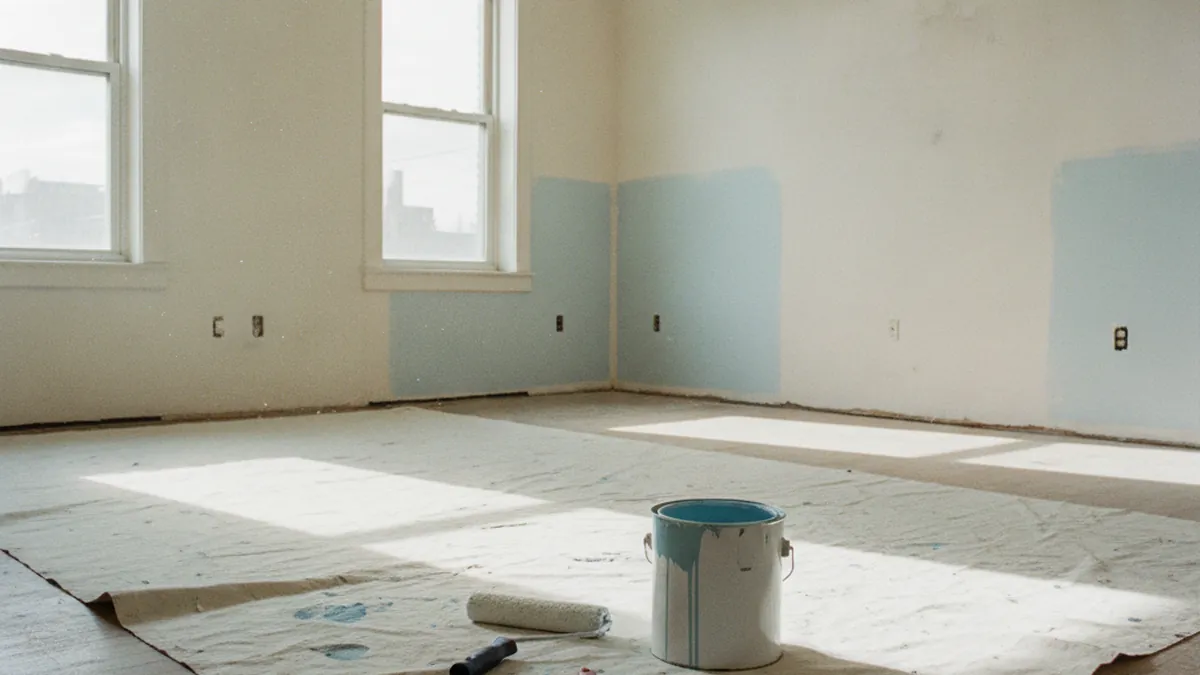
Some situations call for heightened vigilance: the presence of young children or a home daycare, flaking exterior paint that contaminates the soil, units occupied during the work, and buildings combining lead, asbestos and old piping. In each case, the general rule — test, contain, avoid dust — applies with a higher level of demand.
Managing lead is not uniform: depending on who lives in the building and the state of the surfaces, the same triplex can call for very different measures. Here are the situations that come up most often on the North Shore.
A unit occupied by young children or a daycare
This is the most sensitive case. Since Health Canada identifies children under six as most vulnerable to lead dust, a unit housing a young family — or a home daycare — requires strict containment and, ideally, carrying out the work while it is unoccupied. Postponing non-urgent work, or temporarily rehousing, can be more prudent than renovating next to an infant who puts everything in their mouth.
Flaking exterior paint
We tend to think of interior surfaces, but the exterior paint of an older plex (cornices, galleries, frames) also flakes, and the chips fall into the yard, contaminating the soil where children play. Stripping a façade with a blowlamp or sander is one of the most contaminating acts there is. Here again: wet methods, ground containment (tarps), careful collection of the chips.
The plex that stacks lead, asbestos and old piping
Buildings built before 1980 often combine several period risks: lead paint, asbestos (insulation, tiles, pipe lagging), vermiculite, and sometimes a lead water service line. Disturbing one of these materials can reveal another. Before major work, an overall characterization by a professional avoids nasty surprises. Our guide on asbestos and vermiculite in an older plex usefully complements this reflection.
Friction and impact surfaces
Not all lead-painted surfaces are equal. Friction surfaces (sash windows that slide, doors that rub) and impact or mouthable surfaces (window sills, railings) generate or release more dust than flat, intact walls. These are treated first: replacing the window rather than encapsulating a rubbing mechanism, for example.
"Low-level chronic lead exposure has been associated with cardiovascular disease, kidney failure, reproductive problems and developmental neurotoxicity, and symptoms of relatively low exposure often go unnoticed."
— Adapted from Health Canada, Risk management strategy for lead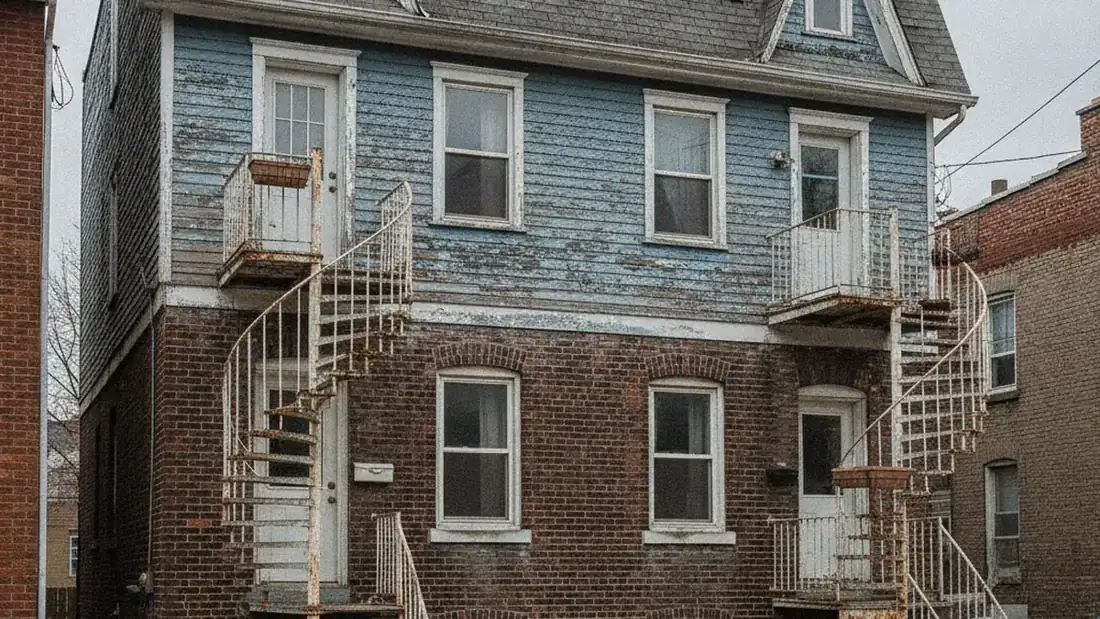
Renovate safely or sell as-is: a decision framework for owners
The right decision depends on the scope of the work, the building's occupancy and your tolerance for running a regulated site. If the paint is intact, encapsulation lets you keep and manage it. If the building is occupied, degraded and stacks several risks, a direct as-is sale to a specialized buyer avoids orchestrating the abatement. In every case, document what you know and disclose it when selling.
Once the risk is understood, priced and located, the question becomes strategic: manage and keep, or sell as-is? There is no universal right answer — only a decision suited to your plex, your means and your appetite for project management.
When safe renovation makes sense
Keeping and managing is often the best choice when the paint is in good condition (simple encapsulation), when you were renovating anyway (replacing elements resolves the lead along the way), and when the building is not densely occupied by young children. In these cases, lead becomes a method constraint, not an obstacle: you test, encapsulate or replace, document, and the building's value is preserved — even improved.
When selling as-is becomes the rational path
Conversely, running an abatement in an occupied, degraded building that stacks lead, asbestos and old piping represents considerable cost, delay and logistical burden. Coordinating tenants, containing unit by unit, managing waste and contractors: all of this takes time and energy. For an owner who does not want to become a site manager, a direct as-is sale to a specialized buyer avoids taking on this work.
| Factor | Leans toward "renovate and keep" | Leans toward "sell as-is" |
|---|---|---|
| Paint condition | Intact, encapsulable | Flaking, degraded |
| Occupancy | Few young children, units can be vacated | Occupied, young families, daycare |
| Other risks | Lead only | Lead + asbestos + lead water line |
| Your availability | Ready to run a regulated site | No desire to manage work and tenants |
| Horizon | Long-term hold | Quick exit desired |

Whichever option you choose, two constants remain: document tests and work, and disclose what you know when selling. A clear file — test report, encapsulation invoices, correspondence with the municipality about the water line — reassures the buyer and protects the seller. To prepare this file, our article on the pre-sale inspection of an income property details the documents to gather.
Sell an older plex without orchestrating abatement
ImmoMulti buys income properties on the North Shore as-is — lead, asbestos, aging systems included — with no broker or commission and an offer within 48 hours. If you would rather not run the work, get a confidential proposal and compare it to the effort of a supervised renovation.
Informational content only. This does not constitute tax or legal advice. Consult a notary or lawyer for your specific situation.