
ImmoMulti — direct buyer of income properties on the North Shore — hears it often: "Should I sell my plex occupied, or wait until it's empty to sell it vacant?" The answer is not the same depending on the buyer you target, and above all, it collides with an unavoidable legal reality: in Québec, you cannot empty a building of its tenants simply to sell it. The tenant's right to maintain occupancy and the strict framing of repossession by the Tribunal administratif du logement completely change the equation. This guide explains how occupancy affects price, who buys what, and why below-market rents weigh heavily on your income property's value.
Are an occupied plex and a vacant plex really two different products?
Yes. An occupied plex sells as an investment producing immediate income, while a plex with vacant units also appeals to buyers who want to live in it or set new rents. The price and buyer type change, but the seller does not freely choose to deliver the building vacant: tenant rights prevail.
Commercially, an occupied plex and a vacant plex tell the buyer two different stories. A fully rented building presents as a turnkey investment: the units already produce income, leases are signed, and the buyer can measure the real yield even before taking possession. Conversely, a free unit opens possibilities — living in it, renovating, resetting the rent — but it also means lost income during the sale.
The essential nuance, specific to Québec, is that the seller does not decide the occupancy status alone. You cannot promise a building "delivered vacant" the way you might elsewhere. Occupancy depends on the leases in force and on tenant rights, not on your marketing strategy. It is this legal framework that sets the sale of a Québec income property apart from many other markets.
Who buys an occupied plex, who buys a vacant plex?
The investor favours an occupied, rented plex because it produces net operating income from day one and is valued on real figures (GRM, cap rate). The owner-occupant often seeks a vacant unit to move in quickly. Occupancy status therefore determines which buyer pool you reach.
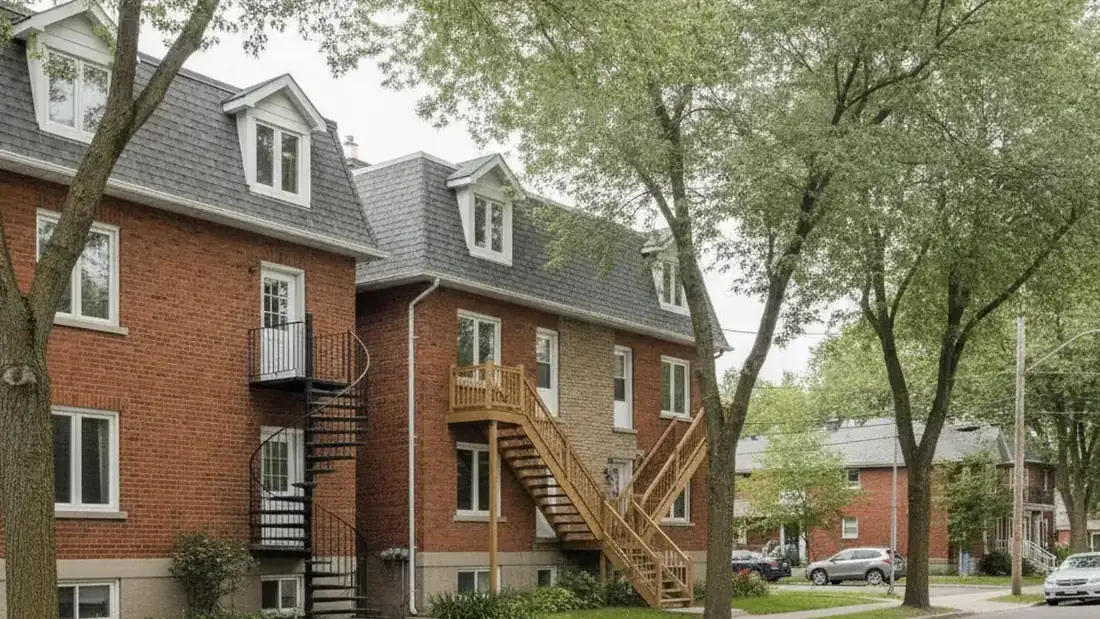
Understanding who you are selling to is key to arbitrating between occupied and vacant. The two main plex buyer profiles have opposite expectations:
| Criterion | Investor (occupied plex) | Owner-occupant (vacant unit) |
|---|---|---|
| Goal | Rental income and yield | Live in one unit, rent the rest |
| What reassures them | Signed leases, rents paid, history | A free unit at possession |
| Valuation method | GRM, cap rate on real income | Residential comparables + rental potential |
| Effect of a vacant unit | Income to make up | Major asset, can support the price |
For the investor, a building already rented at good rents is often more attractive than an empty one: there is no vacancy period to absorb and no tenant search. They value the plex using the gross rent multiplier (GRM) and the capitalization rate (cap rate), calculated on real, verifiable income. A vacant unit, to them, is a temporary shortfall.
For the owner-occupant, it is the reverse: a free unit lets them move in without waiting and, often, set the rent of the units they re-rent. This profile sometimes accepts paying more for the immediate availability of a unit — but they can only count on units that are genuinely vacant, never on a promise to free them up.
Key points to target your buyer
- Fully rented plex at good rents: target the investor, showcase the income.
- One or two free units: the pool widens to owner-occupants.
- Rents far below market: the investor discounts, the occupant focuses on the free unit.
Can you "empty" a plex of its tenants to sell it for more?
No. In Québec, the tenant has a right to maintain occupancy: they can stay as long as they respect their lease, and a sale does not end the lease. Repossession, governed by the Tribunal administratif du logement, only serves to house the owner or certain relatives — never to prepare a sale.

This is the point too many sellers discover too late. According to the Tribunal administratif du logement, a tenant benefits from the right to maintain occupancy: they may stay in their dwelling as long as they wish, provided they respect the conditions of their lease. This right does not vanish because you decide to sell.
Better still for the tenant — and more constraining for the seller who dreams of an empty building: the sale does not end the lease. The lease continues and the new owner is bound by the leases in force. In other words, selling your income property "resets" nothing; the buyer inherits the tenants and their conditions.
As for repossession of a dwelling, it is strictly bounded. According to the Tribunal, it gives the owner the right to take back a dwelling to live in it themselves, or to house their children, parents, or another relative for whom they are the main support. It cannot be used as a manoeuvre to deliver a vacant building to a buyer. Moreover, in the event of a sale, it is up to the new owner to undertake the repossession steps, once the sale is completed — not on the basis of a signed purchase promise alone.
Warning: "empty it and sell" does not exist
Promising a buyer a building "delivered vacant" by counting on repossessing units on someone else's behalf is not a valid repossession within the meaning of the Tribunal administratif du logement. A repossession used for the wrong purpose exposes you to tenant claims and damages. Sell the building as it is occupied, in full transparency.
Sources: Tribunal administratif du logement — Repossession of a dwelling ; TAL — Acquiring a rental building ; Éducaloi — Repossession of a dwelling.
Why do below-market rents lower a plex's price?
The value of an income property is calculated from its income. In-place rents below market reduce net operating income, and therefore the value obtained by the GRM and cap rate. Because the lease renews with an adjustment framed by the Tribunal administratif du logement, the buyer cannot quickly raise rents to market — they pay on real income, not on potential.

Here is the paradox that surprises many owners: an occupied plex can be worth less than hoped if its rents are well below market. The reason is mechanical. An income property is valued largely by its income, through the gross rent multiplier (GRM) and the capitalization rate (cap rate). Less income means lower value — regardless of theoretical potential.
Why doesn't the buyer pay for the "potential" of raising the rents? Because in Québec, they cannot do it quickly. The lease renews from year to year and the rent adjustment follows the method framed by the Tribunal administratif du logement. A tenant in place, protected by their right to maintain occupancy, will not see their rent jump to market level overnight. The savvy investor knows this and therefore values your plex on real income, discounting the lag in rents.
This does not mean a building with modest rents is unsellable — on the contrary, it attracts investors betting on the long term. But the price reflects today's numbers. Hence the importance, before selling, of applying the allowed rent increases and documenting your income. Our article on how your tenants affect your plex's value details this valuation mechanic.
How do you show an occupied plex without hurting the sale?
To show an occupied dwelling to a buyer, the landlord must give the tenant a 24-hour notice (verbal or written), and the visit must take place between 9 a.m. and 9 p.m. The tenant may require to be accompanied by the landlord or their representative. These rules stem from articles 1857, 1930 and following of the Civil Code of Québec.
Selling an occupied plex means coordinating showings with tenants who, for their part, did not ask to move. The Tribunal administratif du logement precisely frames access to the dwelling: to show a unit to a potential buyer, the landlord must give the tenant a 24-hour notice, verbal or written. The visit must take place between 9 a.m. and 9 p.m., and the tenant has the right to require that the landlord or their representative accompany the buyer.
These rules, which stem from articles 1857, 1930 and following of the Civil Code of Québec, are not mere formalities. Multiplying showings of an occupied income property can irritate tenants, complicate coordination and lengthen the sale timeline. This is one of the reasons many owners on the North Shore opt for a direct sale, without public listing or repeated open houses.
"The tenant benefits from the right to maintain occupancy: they may stay in the dwelling as long as they wish, provided they respect the conditions of their lease."
— Tribunal administratif du logement (tal.gouv.qc.ca)Source: Tribunal administratif du logement — Access to the dwelling and visits.
What is the best strategy to sell your plex on the North Shore?
First decide which buyer you target, thoroughly document leases, rents and expenses, apply allowed increases before selling, and consider a direct sale to avoid repeated showings of an occupied building. You cannot deliver the building vacant, but you can make it flawless on the numbers.
On the North Shore — Terrebonne, Mascouche, Blainville, Boisbriand, Saint-Jérôme, Saint-Eustache, Deux-Montagnes — the plex market remains driven by investor demand. Since you cannot choose to sell vacant, your leverage lies elsewhere: in the quality of your file and the clarity of your income.
- Target the right buyer: a fully rented building sells better to the investor; make the most of any genuinely vacant unit to widen the pool to owner-occupants.
- Document everything: up-to-date leases, rent history, proof of payment, real expenses. A solid file reduces the uncertainty discount.
- Optimize income before selling: apply the rent increases allowed under the Tribunal administratif du logement method, to move your rents closer to market.
- Consider a direct sale: with no multiple showings and no public listing, you preserve your tenants' peace and speed up the transaction.
ImmoMulti: direct buyer of occupied income properties
We buy your plex as it is occupied, based on its real income, without requiring a vacant unit and without repeated showings. Leases are transferred, your tenants stay in place. Get a confidential offer within 48 hours.
To go further on your obligations toward tenants at the time of the transaction, see our guide on selling a plex with existing leases, and to build a complete sale file, review the documents to gather before selling a plex.
Repossession: deadlines, notices and indemnities to know before selling
Repossession serves to house the owner or a relative, never to prepare a sale. For a 12-month lease, the notice is given 3 to 6 months before the lease ends; the tenant has 1 month to answer. A bad-faith repossession or an eviction exposes the owner to damages and, for eviction, to an indemnity of 3 months' rent plus moving expenses.

Because so many sellers hope to "free up" a unit before selling, it is worth understanding in detail what repossession allows — and above all what it forbids. Repossession is a right of the owner, but a strictly purpose-bound one: according to the Tribunal administratif du logement, it may only be used to house the owner themselves, their children, their parents, or another relative of whom they are the main support. Repossessing a dwelling with the real aim of selling it vacant is not a valid repossession, and a bad-faith repossession exposes the owner to recourse.
Notice deadlines by type of lease
Repossession notice deadlines depend on the lease term. For a lease of 12 months or more, the notice must be sent to the tenant between 3 and 6 months before the end of the lease. For a lease of less than 12 months, it is between 1 and 2 months before the end. For a lease of indeterminate duration, notice is 1 to 2 months before the repossession. The tenant then has one month to tell the owner whether they accept or refuse; if they do not answer, they are deemed to refuse, and the owner must apply to the Tribunal.
| Type of lease | Deadline for the repossession notice | Tenant's response |
|---|---|---|
| Lease of 12 months or more | Between 3 and 6 months before the end of the lease | 1 month to answer |
| Lease of less than 12 months | Between 1 and 2 months before the end | 1 month to answer |
| Lease of indeterminate duration | Between 1 and 2 months before the repossession | 1 month to answer |
Sources: Tribunal administratif du logement — Repossession; Éducaloi — Repossession of a dwelling.
Repossession, eviction and indemnities: do not confuse them
Repossession (to house a relative) must not be confused with eviction (to subdivide, substantially enlarge or change the use of a dwelling). In an eviction, the Civil Code of Québec provides an indemnity to the evicted tenant equal to three months' rent plus reasonable moving expenses, whether or not the tenant contests. In a repossession, the Tribunal may impose fair and reasonable conditions, including payment of an indemnity for moving expenses. Neither route is a shortcut to deliver a vacant building to a buyer.
Bad-faith repossession: a costly risk
Repossessing a dwelling by claiming to house a relative, then selling the building vacant, is a bad-faith repossession. The tenant may claim damages, sometimes punitive damages. It is not worth the gamble: it is better to sell the plex occupied, transparently, to a buyer who values it on its real income.
Source: Éducaloi — Eviction from a dwelling.
What this means concretely for the seller
A rushed seller sometimes imagines they can trigger a repossession "just in case" to improve their sale price. In practice, the opposite happens: the process is long (notice, deadlines, possibly a hearing at the Tribunal), uncertain (the tenant may refuse and contest) and risky (damages in case of bad faith). Meanwhile, your income property stays occupied and your sale timeline stretches out. The winning strategy is almost always to sell as is, betting on the quality of the file rather than a hypothetical vacancy.
Quantifying the gap between occupied and vacant: GRM and cap-rate examples
The value of an income property depends directly on rents. With a gross rent multiplier (GRM) of 12, a plex collecting $42,000 in annual income is worth about $504,000; if it rented at market for $48,000, it would be worth about $576,000. The rent gap, not the occupied/vacant status itself, explains most of the price difference.

To move beyond impressions, let us put numbers on the valuation mechanics. An income property is valued mainly through two methods: the gross rent multiplier (GRM), which multiplies gross income by a market-observed factor, and the capitalization rate (cap rate), which divides net operating income by a yield rate. The examples below are illustrative — real factors vary by North Shore sector, building condition and current market.
Example 1 — The effect of below-market rents (GRM method)
Take a hypothetical triplex whose three units are rented. Assume a GRM of 12 for the sector.
| Scenario | Annual gross income | GRM | Indicative value |
|---|---|---|---|
| In-place rents (below market) | $42,000 | 12 | $504,000 |
| Rents at market level | $48,000 | 12 | $576,000 |
| Gap | $6,000/yr | — | ≈ $72,000 |
This example shows why $6,000 of "missing" annual rent can translate into roughly $72,000 less in value. It is not the fact that the building is occupied that costs the seller: it is the gap between in-place rents and the market. A plex occupied at good rents does not suffer this discount.
Example 2 — The investor's reasoning (cap-rate method)
An investor also reasons in net operating income (NOI) and cap rate. Assume an NOI of $30,000 and a market cap rate of 5%. The capitalized value is $30,000 ÷ 0.05 = $600,000. If below-market rents bring the NOI down to $26,000, the value falls to $26,000 ÷ 0.05 = $520,000. Once again, the income gap — not occupancy — drives the value.
What these numbers tell the seller
- An occupied plex at market rents often sells as well as, or better than, a vacant plex.
- The discount sellers fear comes from below-market rents, not from the presence of tenants.
- Documenting and optimizing income before the sale has a direct, measurable effect on price.
The figures above are illustrations to understand the mechanics; they do not replace a professional appraisal. To test your own assumptions, use our GRM and cap-rate calculators.
Moving rents closer to market before selling: the 2026 method
Before selling, apply the allowed rent increases to reduce the discount from below-market rents. Since January 1, 2026, a new calculation method applies: the Tribunal administratif du logement no longer recommends an average increase but publishes the three-year average of Québec's CPI (estimated at 3.1% for 2026), on which the calculation is based, adjusted for real expenses.

Since the sale discount comes from below-market rents, the seller's most concrete lever is to apply, year after year, the allowed rent increases before listing the plex. A building whose rents have been adjusted regularly presents income closer to market, and therefore a higher value under income methods.
The new method since January 1, 2026
According to the Tribunal administratif du logement, a new calculation method applies to fixing requests whose lease-modification notice was given on or after January 1, 2026; the old method continues to apply to notices sent before that date. From 2026, the Tribunal no longer recommends a single "average increase": it instead publishes the three-year average of Québec's CPI (estimated at 3.1% for 2026), on which owners base their calculation, plus the adjustment tied to real expenses (taxes, insurance, energy, major work).
| Item | Treatment in the 2026 calculation |
|---|---|
| Starting base | Three-year average of Québec CPI (estimated at 3.1% for 2026) |
| Municipal and school taxes | Real variation passed through per the method |
| Insurance | Real premium variation |
| Major work | Amortized and spread per the regulation's criteria |
| Notice given before Jan 1, 2026 | Old method applicable |
Sources: TAL — Calculating the 2026 rent adjustment; TAL — 2026 calculation tool.
Planning over several years
Moving rents closer to market cannot be done in a single notice. Because the tenant keeps their right to maintain occupancy and the annual increase is framed, the catch-up is planned over several renewals. The savvy seller anticipates: if they plan to sell their income property in two or three years, they apply the allowed increases now and keep all supporting documents (tax, insurance and work invoices). At the time of sale, this file proves that the income reflects reality rather than accumulated lag.
"From 2026, the Tribunal administratif du logement no longer recommends an average rent increase, but indicates the three-year average of Québec's CPI, estimated at 3.1% in 2026."
— Tribunal administratif du logement (tal.gouv.qc.ca)Beware of abusive or poorly documented increases
Trying to "inflate" rents just before the sale is counterproductive: an unjustified increase can be contested by the tenant at the Tribunal, and a knowledgeable buyer will sense artificial income. The right approach remains rigor: increases that comply with the method, documented, applied on time. That is what gives the buyer — investor and lender alike — the confidence to pay the fair price.
Special cases: estate, lease assignment and a genuinely vacant unit
Some situations change the sale of an occupied plex: an estate must manage inherited leases; a lease assignment refused without serious cause ends the lease on the target date; a genuinely vacant unit widens the buyer pool. In every case, the rights of tenants in place remain, and the seller cannot force vacancy.
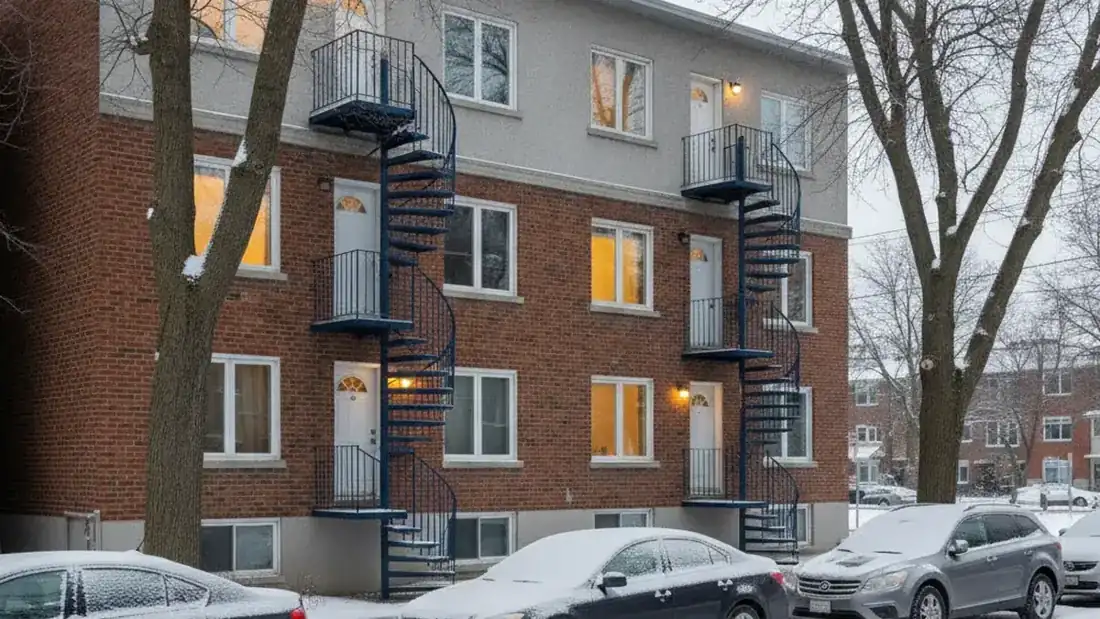
Beyond the typical "occupied plex for sale" scenario, several special situations recur among North Shore owners. Here is how they interact with the occupied/vacant question.
Selling a plex in an estate
In an estate, the heirs receive the building with its leases in force. The sale that follows obeys the same rules: tenants keep their right to maintain occupancy, leases transfer to the buyer, and repossession remains reserved for housing a relative. An estate building therefore also sells "as occupied." The advantage of a direct sale here is twofold: it spares the heirs, often scattered, the logistics of showings, and it closes the file quickly.
Lease assignment: what has changed
Since February 21, 2024, an owner no longer needs a serious reason to refuse a lease assignment. But beware of the side effect: according to Éducaloi, if the owner refuses the assignment without serious cause, the lease is then terminated on the assignment date indicated in the tenant's notice. The owner has 15 days to respond to the assignment notice; failing a response, they are deemed to have consented. In practice, refusing an assignment can result in a vacant unit — but it is the tenant, through their action, who originates it, not a maneuver by the seller.
Source: Éducaloi — Lease assignment and subletting.
The genuinely vacant unit at the time of sale
Sometimes a unit is legitimately vacant at listing: a tenant's voluntary departure, a lease not renewed at the tenant's initiative, a refused assignment, and so on. In that case — and only in that case — you can present a vacant unit. This widens the pool to owner-occupants and lets the buyer set the rent of a new lease. But weigh the pros and cons: an empty unit also means lost income during the sale. For an investor, a unit rented at a good price is often worth more than an empty one. One legitimate way to obtain a genuinely vacant unit is a mutually agreed cash-for-keys buyout with the tenant, rather than an improper repossession.
| Situation | Effect on occupancy | Sale impact |
|---|---|---|
| Estate | Inherited leases, transferred to the buyer | Sold "as occupied" |
| Assignment refused without serious cause | Lease terminated on the assignment date | Possibly vacant unit |
| Voluntary tenant departure | Legitimately vacant unit | Pool widened to occupants |
| Repossession to house a relative | Framed, never to sell | Does not create "sellable" vacancy |
Each situation deserves professional advice
Estate, assignment, repossession, eviction: these mechanisms carry precise deadlines and conditions. Before acting, consult a notary or legal advisor. This article is informational and does not replace advice tailored to your file.
Common mistakes of the occupied-plex seller
The costliest mistakes: promising a building "delivered vacant," triggering a repossession to sell, neglecting the allowed rent increases, presenting incomplete leases, and multiplying showings at the risk of irritating tenants. Each one lowers the price, lengthens the timeline, or exposes you to recourse.
After hundreds of conversations with income-property owners, certain mistakes come up again and again. Avoiding them protects both your price and your peace of mind.
Mistake 1 — Promising a building "delivered vacant"
This is the parent mistake. A seller signs a purchase promise committing to deliver the plex vacant, without realizing they have no legal way to force out lawful tenants. The result: an impossible promise, a derailed transaction, sometimes a lawsuit. The golden rule: sell the building as it is occupied.
Mistake 2 — Triggering a repossession "to sell"
As seen above, repossession only serves to house the owner or a relative. Using it to prepare a sale is a bad-faith repossession, liable to damages. It is long, uncertain and risky.
Mistake 3 — Neglecting the allowed rent increases
Years without adjustment, and rents drift far below market and drag value down at sale time. Applying the allowed increase each year under the Tribunal administratif du logement method avoids this costly lag.
Mistake 4 — Presenting incomplete or missing leases
A buyer who cannot verify the leases, the rent history and the payments discounts the uncertainty. Missing leases, forgotten amendments, undocumented deposits: all reasons to lower the offer.
Mistake 5 — Multiplying showings without coordination
Each showing of an occupied unit requires a 24-hour notice and must take place between 9 a.m. and 9 p.m. Stringing together public showings irritates tenants, complicates logistics and lengthens the timeline. A direct sale, without open houses, resolves this point.
The reflex that protects your price
- Sell as occupied, without promising vacancy.
- Document leases, rents, expenses and work.
- Apply the allowed increases well before listing.
- Limit showings; favor a buyer who values on the numbers.
Building a sale file that reassures the buyer and supports the price
A complete file — up-to-date leases, rent history, proof of payment, real expenses, work invoices, increase notices — reduces the buyer's uncertainty and limits the discount. For an occupied plex, it is the main price lever, since the seller does not control occupancy.

Since you cannot play on occupancy, play on clarity. An income-property buyer pays for what they can verify. The more complete your file, the less they discount the unknown. Here are the documents to gather.
| Category | Documents to provide | Why it matters |
|---|---|---|
| Leases | Signed leases, amendments, increase notices, deposits | Prove the income and conditions |
| Rents | History, proof of payment, any arrears | Show the stability of income |
| Expenses | Taxes, insurance, energy, maintenance, management | Allow the real NOI to be calculated |
| Work | Invoices, warranties, permits, reports | Reassure on the building's condition |
| Building | Certificate of location, tax bills, assessment | Ease due diligence and financing |
Such a file speeds up the buyer's due diligence and the lender's assessment, two steps that, poorly prepared, can stall or sink a transaction. For an occupied plex, this is even truer: the buyer relies on the leases to establish value, so the quality of the leases makes the price.
The "ready-to-sell" file
- Gather early: do not chase documents once the offer arrives.
- Compute the real NOI: income minus documented expenses.
- Prepare a lease table (unit, rent, term, deposit).
- Keep proof of the increases applied.
For the detailed list, see our guide on the documents to gather before selling a plex.
Occupied, vacant, direct sale: comparing the sale routes
Three main routes are open to the owner: sell occupied on the market (investor pool, framed showings), wait for a legitimate vacancy to widen to occupants (lost income, uncertain timeline), or sell directly to a specialized buyer (fast, discreet, on real income). The right choice depends on in-place rents and your priorities.
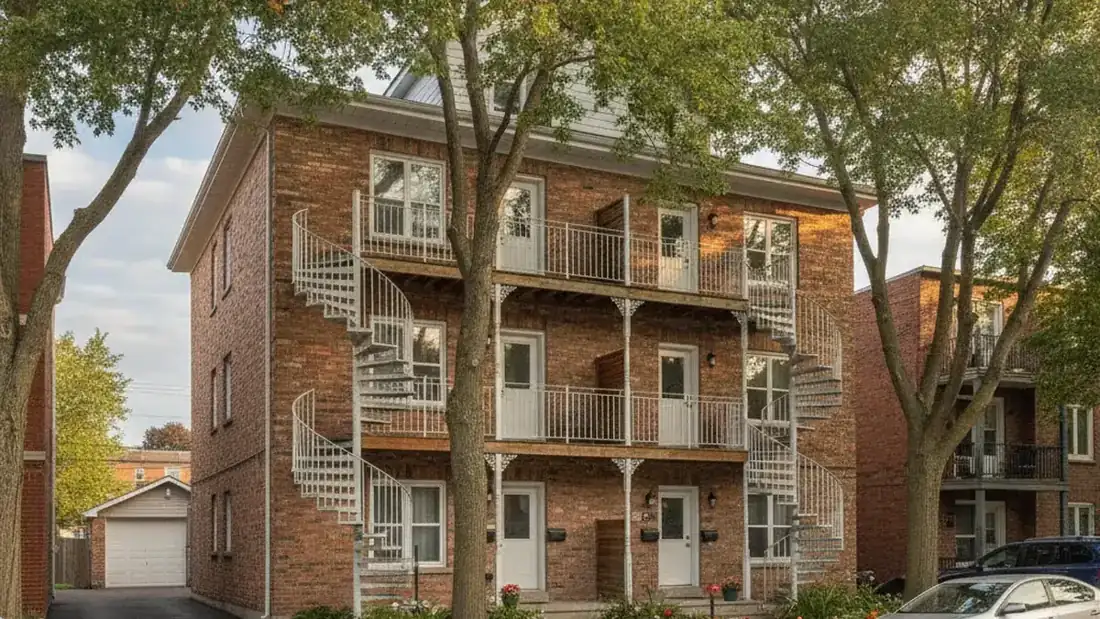
To summarize, here are the three main ways to sell a plex depending on its occupancy status, with their strengths and limits from the seller's point of view.
| Sale route | Advantages | Limits | For whom |
|---|---|---|---|
| Sell occupied (public market) | Investor pool, income maintained, valued on real leases | Framed showings (24-hour notice), variable timeline | Well-rented plex, solid file |
| Wait for a legitimate vacancy | Pool widened to occupants, rent can be reset | Lost income, uncertain timeline, vacancy cannot be forced | A tenant's departure already planned |
| Direct sale to a specialized buyer | Fast, discreet, on real income, leases transferred, no commission | Price negotiated privately, no public bidding | Rushed, discreet seller, occupied plex |
An occupied sale on the market suits a well-rented plex with a flawless file. Waiting for a vacancy only makes sense if a departure is already planned — never by betting on a diverted repossession. The direct sale, for its part, bypasses the frictions specific to an occupied income property: no repeated public showings, tenants left in peace, leases transferred to the new owner, and a price set on real income.
How to choose your route
- Rents close to market + solid file: the public market can work.
- Priority on discretion and speed: the direct sale is often best.
- A unit already vacant: assess widening to owner-occupants.
Frequently asked questions
It depends on the buyer you are targeting. An investor generally prefers an occupied, rented plex because it produces income from day one and lets them assess the yield (GRM, cap rate) on real figures. An owner-occupant buyer often prefers one or more vacant units so they can move in quickly. The seller, however, cannot unilaterally decide to deliver the building vacant: tenants have a right to maintain occupancy protected by the Tribunal administratif du logement.
No. In Québec, a tenant benefits from the right to maintain occupancy: they may stay in their dwelling as long as they respect the conditions of their lease. A sale does not end the lease. Repossession is strictly governed by the Tribunal administratif du logement and can only be used to house the owner or certain relatives — not to prepare a sale. Emptying a building "to sell" is therefore not a legal option.
No. According to the Tribunal administratif du logement, the lease continues despite the sale and the new owner is bound by the leases in force. The tenant keeps their right to maintain occupancy. If the new owner wishes to repossess a dwelling to live in it, it is up to them to begin the repossession steps after the sale is completed — not before, and never on the basis of a mere purchase promise.
An occupied, rented plex produces immediate net operating income, with no vacancy period or tenant-search costs. The investor can analyze the property's real yield (gross rent multiplier, capitalization rate) from the existing leases rather than estimates. For mortgage financing, occupied units and signed leases also make the lender's assessment easier.
The value of an income property is calculated largely from its income. In-place rents below market reduce net operating income, and therefore the value obtained through income methods (GRM and cap rate). And because the lease renews from year to year with only an adjustment framed by the Tribunal administratif du logement, the buyer cannot quickly raise rents to market level — so they pay based on real income, not on potential.
Yes. According to the Tribunal administratif du logement, to show a dwelling to a potential buyer, the landlord must give the tenant a verbal or written notice of 24 hours. The visit must take place between 9 a.m. and 9 p.m., and the tenant may require that the landlord or their representative accompany the buyer. These rules stem from articles 1857, 1930 and following of the Civil Code of Québec.
Document your income and expenses thoroughly, apply the rent increases allowed under the Tribunal administratif du logement method before listing, and present a complete lease file. A well-documented plex, even with modest rents, reassures the investor and reduces the uncertainty discount. You can also sell directly to a specialized buyer who values your property on its real figures without requiring a vacant unit.
Not necessarily. A vacant unit can widen the pool to owner-occupants and let a buyer set the rent of a new lease, which can support the price. But vacancy also means lost income during the sale and a unit to re-rent. For an investor, a plex already rented at good rents is often worth more than an empty one. The right trade-off depends on the buyer profile you target and the gap between in-place rents and the market.
Yes. A direct sale to an income-property buyer like ImmoMulti is generally done without multiple showings and without public listing. Tenants stay in place, their leases are transferred to the new owner, and you avoid the back-and-forth of visits governed by the 24-hour notice. It is often the most discreet way to sell an occupied income property on the North Shore.
According to the Tribunal administratif du logement, for a lease of 12 months or more, the repossession notice must be sent to the tenant between 3 and 6 months before the end of the lease. For a lease of less than 12 months, it is between 1 and 2 months before the end, and for a lease of indeterminate duration, between 1 and 2 months before the repossession. The tenant then has one month to answer; if they do not, they are deemed to refuse and the owner must apply to the Tribunal. Remember that repossession serves to house the owner or a relative, never to prepare a sale.
Eviction (to subdivide, substantially enlarge or change the use of a dwelling) is different from repossession. Under the Civil Code of Québec, the evicted tenant is entitled to an indemnity of three months' rent plus reasonable moving expenses, whether or not they contest the eviction. Neither repossession nor eviction can be used to deliver a vacant building to a buyer.
Since January 1, 2026, a new method applies to lease-modification notices given on or after that date. The Tribunal administratif du logement no longer recommends an average increase: it publishes the three-year average of Québec's CPI (estimated at 3.1% for 2026), on which the calculation is based, plus the adjustment tied to real expenses (taxes, insurance, energy, work). Notices given before 2026 remain governed by the old method.
The effect depends on the multiplier. As an illustration, with a GRM of 12, a shortfall of $6,000 in annual gross income reduces value by about $72,000 ($6,000 × 12). With the cap-rate method, a net operating income lower by $4,000 at a 5% rate reduces value by $80,000 ($4,000 ÷ 0.05). These are indicative examples; real factors vary by sector and building, and a professional appraisal remains recommended.
The new owner is bound by the leases in force. They may propose an increase at renewal, but it follows the method framed by the Tribunal administratif du logement and the tenant can refuse it and request a fixing. They therefore cannot raise rents to market overnight. That is precisely why the investor values your plex on real income, not on potential.
The heirs receive the building with its leases in force. The sale that follows obeys the same rules: tenants keep their right to maintain occupancy, leases transfer to the buyer, and repossession is reserved for housing a relative. An estate building therefore sells "as occupied." A direct sale is often welcomed in this context, as it spares scattered heirs the logistics of showings and closes the file quickly.
Since February 21, 2024, the owner no longer needs a serious reason to refuse a lease assignment. According to Éducaloi, if they refuse without serious cause, the lease is terminated on the assignment date indicated in the tenant's notice; the owner has 15 days to respond, failing which they are deemed to consent. A unit can thus become vacant, but it is the tenant's action that originates it, not a maneuver by the seller.
Gather signed leases and their amendments, the rent history and proof of payment, real expenses (taxes, insurance, energy, maintenance, management), work invoices and warranties, and the building documents (certificate of location, tax bill, assessment). A complete file speeds up the buyer's due diligence and the lender's assessment, and reduces the uncertainty discount — the main price lever for an occupied plex.
The public market suits a well-rented plex with a flawless file, but it involves showings governed by the 24-hour notice and a variable timeline. A direct sale to a specialized buyer is fast and discreet, is done on real income, transfers the leases and avoids repeated showings, at the cost of a private negotiation rather than a bidding process. The right choice depends on your in-place rents and your priorities (price, speed, discretion).
No. Repossessing a dwelling by claiming to house a relative, then selling the building vacant, is a bad-faith repossession. The tenant may claim damages, sometimes punitive ones. The process is also long and uncertain. The winning strategy is to sell the plex as occupied, betting on the quality of the file and the income rather than on a vacancy that cannot be guaranteed.


Sell your occupied plex without the headache
Occupied or not, ImmoMulti buys your income property on the North Shore based on its real income — with no vacant unit required, no broker, no commission. Confidential offer within 48 hours.
Get a purchase price →