You redo the roof, repaint a unit, replace a few windows on your plex: every invoice raises the same tax question. Is it a current deductible expense this year, or a capital expense that will be deducted only slowly? Classifying a current expense vs a capital expense correctly changes both your tax bill this year and the taxation of your rental property when you sell. This guide, grounded in the criteria of the Canada Revenue Agency (CRA) and Revenu Québec, helps you decide — with concrete examples for multi-unit owners on the North Shore and across Quebec.
What sets a current expense apart from a capital expense?
A current expense is a recurring cost that restores or keeps the plex in its original condition — it is 100% deductible against the year's rental income. A capital expense provides a lasting benefit, improves the property or replaces it entirely: it is added to the property's cost and deducted gradually through capital cost allowance.
The principle is easy to state, trickier to apply. Per the CRA and Revenu Québec, a current expense is a generally recurring outlay that provides only a short-term benefit: it maintains your income property in its current state. Repainting, fixing a leak, replacing a broken part — you are simply keeping the property as it was.
A capital expense, by contrast, provides a lasting benefit. It improves the plex beyond its original condition or replaces a component entirely with something better or new. It is not a deduction for the year: the cost is added to the building's tax value and recovered slowly, year after year, through capital cost allowance (CCA).
How do the CRA and Revenu Québec decide repair or improvement?
No single criterion decides. The CRA asks a series of questions: does the expense provide a lasting benefit? Does it restore the property or improve it? Is a part being replaced, or the whole? Is the amount large relative to the property's value? Is it recurring maintenance? The analysis is case by case.
Neither the CRA nor Revenu Québec sets a dollar threshold. They apply a grid of factors instead, none of which is decisive on its own:
| Criterion | Points to a CURRENT expense (deductible) | Points to a CAPITAL expense (depreciable) |
|---|---|---|
| Lasting benefit | Short-term benefit, recurs | Benefit over several years |
| Maintain or improve | Restores the property's original state | Makes the property better than before |
| Part or whole | Repairs a part of the property | Replaces the whole property |
| Relative value | Low cost vs the building's value | High cost vs the building's value |
| Nature of the replacement | Equivalent to the old one | Markedly superior to the old one |
These criteria are set out in the CRA's T4036 "Rental Income" guide and in Revenu Québec's documentation on income from rental property. In practice, you add up the signals: the more "capital" boxes your project ticks, the more it must be depreciated rather than deducted.
Sources: CRA — Guide T4036 "Rental Income" and Revenu Québec — Rental income.
Roof, paint, windows: current or capital expense?
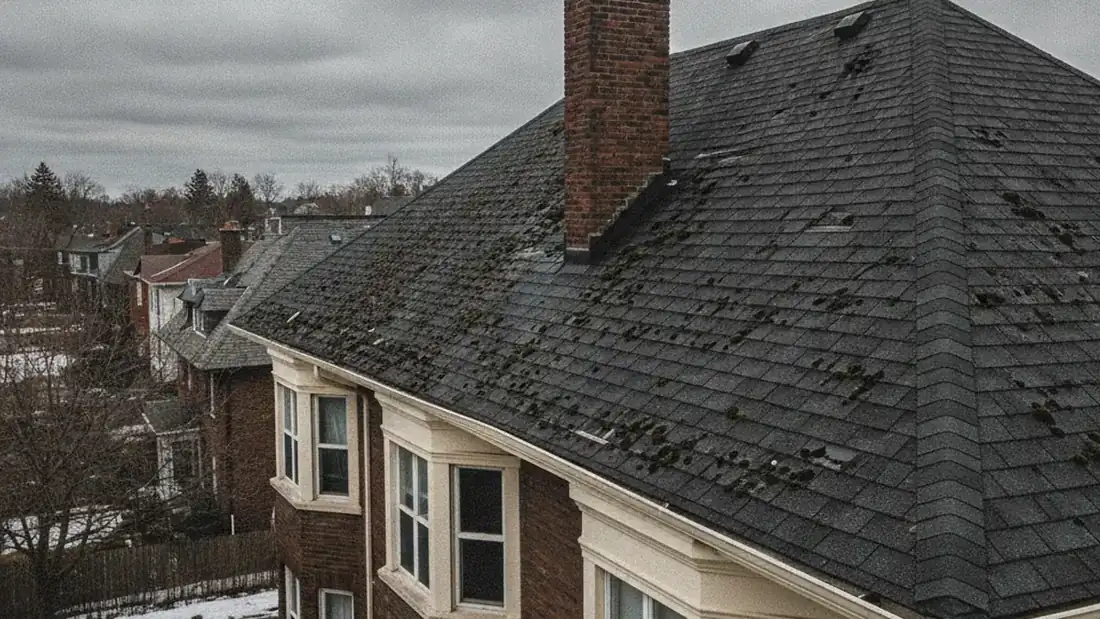
Paint between two tenants = current (deductible). Fixing blown-off shingles = current. Redoing the entire roof = capital. Replacing windows, especially with higher-performing models = capital. Fixing a pane or mechanism = current. The rule: a one-off fix is current; a full replacement or a lasting improvement is capital.
The three most common cases for plex owners illustrate the dividing line well:
- The roof. Replacing a few shingles blown off in a storm is a current repair, deductible. Redoing the entire roof covering is a capital expense: you restore the property for many years. Moving from an old covering to a markedly superior system reinforces the capital character further.
- Paint. Repainting a unit to restore it between two tenants is the textbook current expense — fully deductible in the year. It does not extend the building's useful life; it merely maintains it.
- Windows. Replacing windows, especially with energy-efficient models that outperform the old ones, is generally a capital expense. Repairing a window, or replacing a broken pane or mechanism, remains a deductible current repair.
The rule of thumb
- Repair a part, like-for-like, at low cost → current deductible expense
- Replace the whole, with something better, at high cost → depreciable capital expense
- When in doubt, add up the CRA's criteria — and have an accountant confirm
What is the real tax impact of each category?
A current expense reduces your taxable rental income this year. A capital expense raises the plex's tax cost and is deducted slowly through CCA — but the CCA claimed will be recaptured and taxed at sale, while the higher cost reduces the future capital gain. So the choice of category has an immediate AND a long-term effect.
The distinction is not just a bookkeeping formality: it shifts tax over time.
A current expense comes straight off your rental income for the year. If you collect $24,000 in rent and incur $3,000 of deductible repairs, you are taxed only on the difference. The tax saving is immediate.
A capital expense works differently. Its cost is added to the building's depreciable value and deducted over several years via CCA. When you sell, two mechanisms come into play: the CCA you claimed may be recaptured and added to your taxable income, while the higher cost of the property can reduce your capital gain. To understand the taxation of the sale itself, see our guide to the capital gain on selling a plex in Quebec.
How does capital cost allowance work, step by step?
A capital expense does not vanish: it joins a depreciation class and is deducted each year at a fixed rate. The building of a plex acquired after 1987 goes into Class 1, depreciated at 4% a year on a declining balance; appliances and furniture go into Class 8, at 20%. In the first year, the half-year rule limits your claim to half of the amount added.
Understanding capital cost allowance (CCA) changes how you see every capital invoice. Unlike a current expense that disappears entirely from the year's income, a capital expense is "filed" in a depreciation class and deducted slowly, year after year, for as long as you own the plex. Here is the mechanics.
Step 1 — Sort each capital expense into the right class
The CRA groups depreciable property into classes, each with its own rate. For a plex owner, four classes come up constantly:
| Class | Rate (declining balance) | What it covers on a plex |
|---|---|---|
| Class 1 | 4% | The building acquired after 1987 and most major additions and renovations to its structure |
| Class 3 | 5% | Certain buildings acquired before 1988 |
| Class 6 | 10% | Frame, log, stucco-on-frame or corrugated-metal buildings, under certain conditions |
| Class 8 | 20% | Appliances, furniture in the units, certain equipment |
Source: CRA — Rental: classes of depreciable property.
This step is far from trivial: the rate sets how fast you get your money back. Redoing the building's structure (Class 1) is deducted at 4% — roughly 25 years in practice — while replacing the fridges and stoves in your units (Class 8) is deducted five times faster, at 20%.
Step 2 — Apply the half-year rule in year one
In the year you add property to a class, you can usually claim CCA on only half of the net addition: this is the half-year rule. If you install $12,000 of new appliances (Class 8, 20%) in your plex this year, your first claim is calculated on $6,000, or $1,200 — not on the full $12,000.
Source: CRA — How much CCA you can claim.
Step 3 — Do not create (or deepen) a rental loss
CCA is optional and capped: you cannot use it to create or increase a rental loss. In other words, depreciation on the building cannot reduce your net rental income below zero. You choose each year how much CCA to claim, from $0 up to the maximum allowed — a valuable planning lever, especially in a year when you expect to sell.
Worked example — two capital expenses, two speeds
- New roof: $30,000 (Class 1, 4%). First-year claim with the half-year rule: $30,000 × 50% × 4% = $600. Year 2: 4% of the remaining balance, and so on.
- New appliances: $12,000 (Class 8, 20%). First-year claim: $12,000 × 50% × 20% = $1,200. Capital comes back much faster.
A $30,000 current repair, by contrast, would have been deducted in full in the first year — hence the stakes of classifying each item correctly.
The flip side of CCA on the building is paid at resale: the depreciation you claimed is then "recaptured" and added back to income. That is why many plex owners, with their accountant's help, fine-tune their CCA rather than blindly claiming the maximum.
Every type of work: current or capital expense?
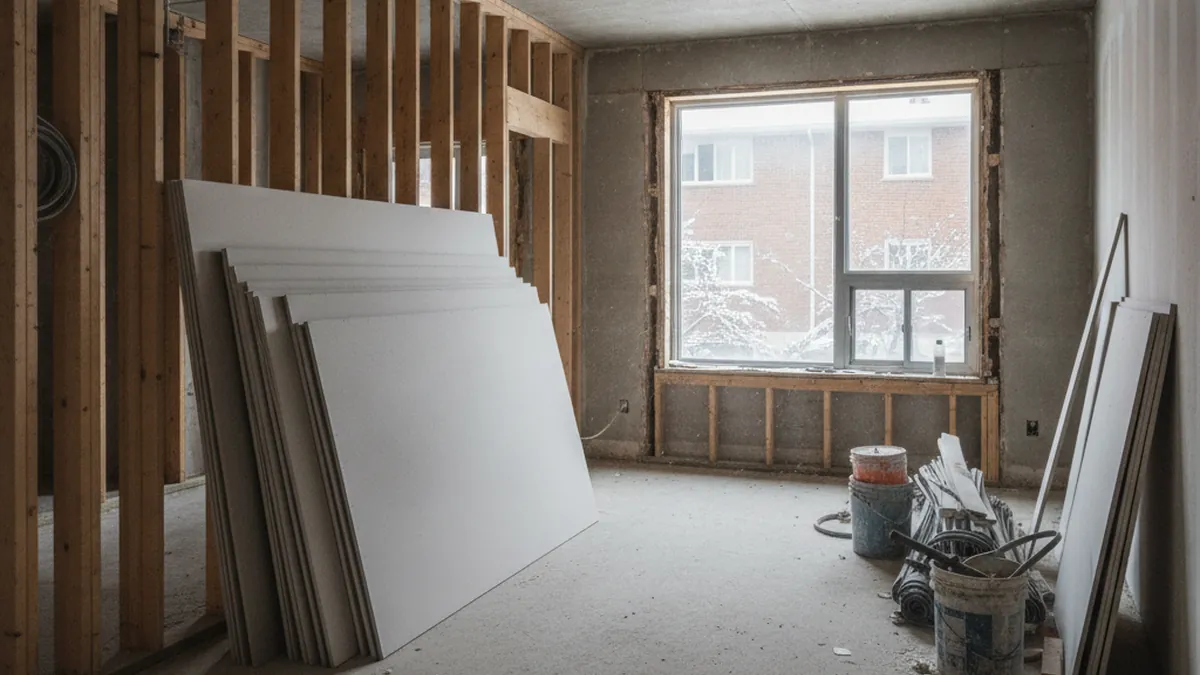
The logic is always the same: a one-off repair to a part = current; a full replacement or a lasting improvement = capital. Sealing a foundation crack is current; redoing the weeping tile or the slab is capital. Fixing a balcony is current; rebuilding all the balconies is capital. Here is an item-by-item guide.
Beyond the roof-paint-windows trio, a multi-unit owner faces dozens of decisions. The table below applies the same grid of criteria to the most common work on a North Shore plex. It gives a tendency: the specific case can tip depending on scale, relative cost and the improvement made.
| Work on the plex | Tends to be current (deductible) | Tends to be capital (depreciable) |
|---|---|---|
| Roof | Replace a few shingles, seal a leak | Full re-covering |
| Paint | Repaint between two tenants | — |
| Windows | Replace a pane, fix a mechanism | Replace all windows, especially higher-performing |
| Plumbing | Fix a leak, change a faucet | Redo all the building's piping |
| Electrical | Replace an outlet, a breaker | Replace the panel and rewire completely |
| Heating | Fix an electric baseboard | Install a central heat pump, a new system |
| Flooring | Fix a damaged floorboard | Redo all the floors in a unit |
| Kitchen / bathroom | Fix a counter, reseal a joint | Full modernized renovation |
| Foundation | Seal a minor crack | Underpinning, weeping tile, waterproofing |
| Balconies / stairs | Fix a step, a railing | Rebuild the exterior balconies and stairs |
| Parking | Patch a pothole | Repave the whole parking area |
| Masonry | Repoint a small section | Redo the entire brick cladding |
| Appliances | Repair a dishwasher | Replace the appliances (Class 8, 20%) |
One constant stands out: the word "all." The moment you redo a system in its entirety rather than repair a part of it, the balance tips toward capital. Conversely, repetitive one-off maintenance stays current, even if it adds up over the year.
Beware "while we're at it, let's upgrade"
Fixing a damaged floor is current; taking advantage of the job to lay high-end engineered flooring throughout the unit tips the expense to the capital side. The intent to enhance the property beyond its original condition is one of the signals the CRA and Revenu Québec watch most closely.
How do you split an invoice that mixes repair and improvement?
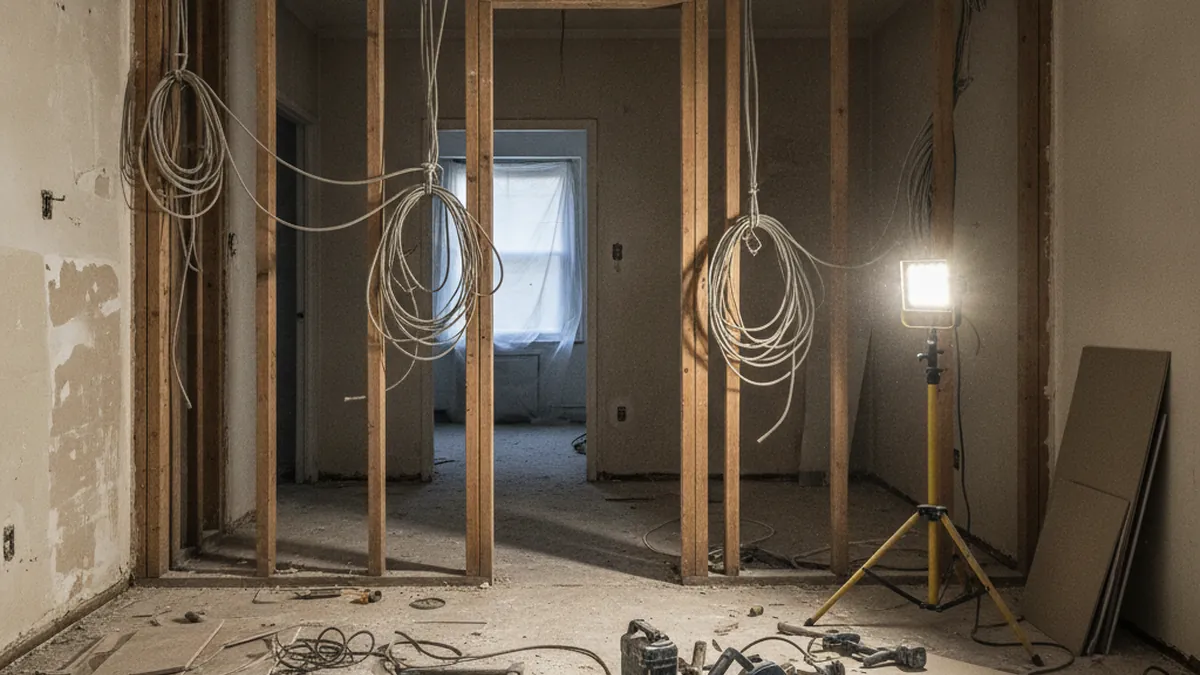
Many jobs combine a current portion and a capital portion on the same invoice. The fix: split it item by item based on a detailed contractor's invoice. You deduct the repair portion immediately and depreciate the improvement portion. Without a credible split, the CRA may treat everything as capital.
The most common case: a bathroom damaged by a leak. Repairing the water damage is a current repair; taking the opportunity to install a ceramic shower, a new vanity and high-end fixtures is a capital improvement. The same invoice contains both kinds of expense.
The 3-step method
- Ask for an item-by-item invoice from the contractor, separating materials and labour by work item. This is your key document.
- Classify each item using the current/capital grid: like-for-like repair on one side, full replacement or improvement on the other.
- Add up each category: the current portion is deducted in the year, the capital portion is added to the right CCA class.
Example split — a $14,000 bathroom
| Invoice item | Amount | Nature |
|---|---|---|
| Water-damage repair (plumbing, drywall, drying) | $4,000 | Current — deductible |
| New ceramic shower, vanity and high-end fixtures | $8,000 | Capital — depreciable |
| Finishing paint for the unit | $2,000 | Current — deductible |
Result: $6,000 deducted immediately and $8,000 depreciated — rather than $0 deductible if the CRA had reclassified everything as capital for lack of a split.
Without a detailed invoice, the tax authority can deny the current portion and treat the whole as an improvement. The quality of your documentation is worth real money, right in the year of the job.
Worked example: a year of work on a triplex
Take a North Shore triplex generating $42,000 in rent, with $8,000 of work mixing repairs and improvements. Classifying the expenses correctly makes a direct difference to the year's tax — and to the future tax at resale. Here is the full calculation.
The figures below are an illustrative example (personal tax rates vary); they show the mechanics, not your exact situation. Consult a tax specialist for your own numbers.

The building's profile
- Triplex in Terrebonne, annual rent: $42,000;
- Current operating expenses (taxes, insurance, maintenance): $18,000;
- Work for the year: $8,000, of which $5,000 in repairs (partial roof, paint, plumbing) and $3,000 in improvements (new appliances).
Scenario A — everything classified correctly
| Line | Amount |
|---|---|
| Rent | $42,000 |
| Operating expenses | −$18,000 |
| Current repairs (deductible) | −$5,000 |
| Net income before CCA | $19,000 |
| CCA on appliances (Class 8: $3,000 × 50% × 20%) | −$300 |
| Taxable rental income | $18,700 |
The repair portion ($5,000) reduces income right away; the improvement portion ($3,000) yields only $300 of deduction this year, the rest depreciating in later years.
Scenario B — the mistake: deduct it all at once
Some owners run the full $8,000 through as repairs to maximize the immediate deduction (taxable income cut to $16,000 rather than $18,700). On audit, the CRA reclassifies the $3,000 of appliances as capital: it denies $2,700 of deduction, adds interest and sometimes a penalty. The initial cash-flow gain becomes a reassessment bill — never mind the time and stress of a disputed file.
The lesson of the example
Classifying correctly costs almost nothing in year one (here $2,700 of deferred deduction) but protects against a reassessment that is expensive. And at resale, every properly capitalized dollar has raised the property's cost, which lightens the taxable capital gain.
Why is work done right after purchase often capital?
When you buy a plex in poor condition at a reduced price, the repair work done shortly after acquisition is generally treated as a capital expense — even if it is technically a repair. The CRA considers that you paid less for a property that needed upgrading, so those costs are part of the acquisition.
This is one of the most classic traps for a new investor. You find a neglected triplex, negotiate the price down because of its condition, then spend $25,000 on work in the first year to make it presentable. Natural reflex: deduct that $25,000 as current repairs. Common mistake.
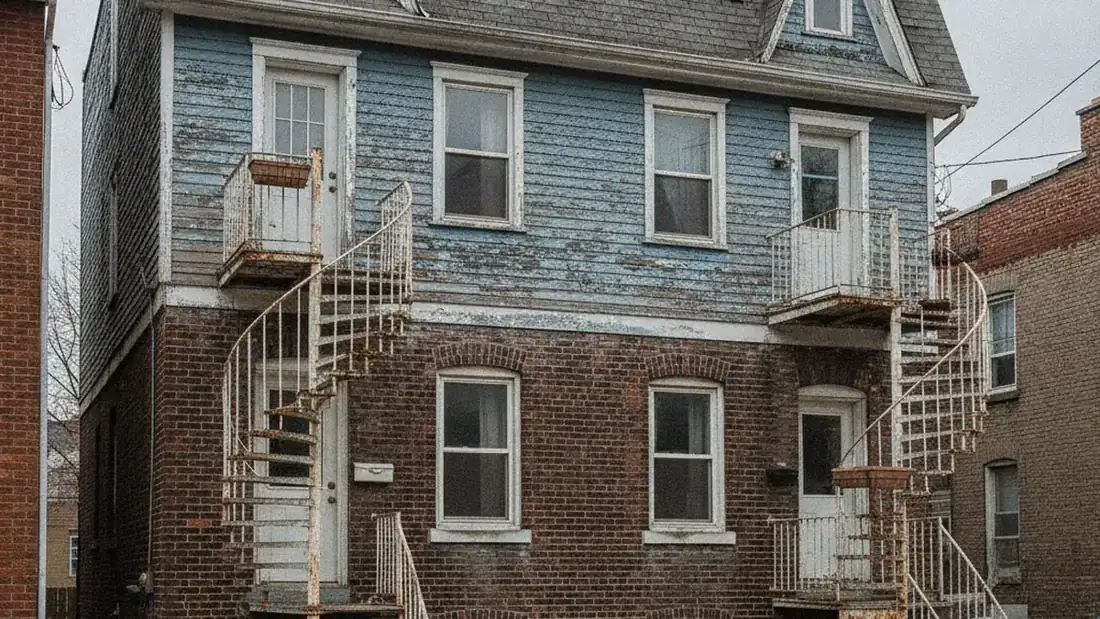
The CRA applies a principle: when a property is acquired in poor condition and bought cheaper for that reason, the costs incurred to put it back in order are treated as part of the cost of acquisition. They are added to the building's cost and depreciated, rather than deducted all at once. The logic: you did not maintain a property, you improved it to bring it to a condition it did not have when you bought it.
The signs that point to capital
- The plex was bought at a discount precisely because of its run-down state;
- The work was done soon after acquisition, before even renting or operating normally;
- Its scale is large relative to the price paid;
- It was necessary to make the building usable or rentable.
The nuance that saves deductions
Not everything is capital, though. If, after several years of normal operation, you need to repaint or repair a worn component, that is deductible current maintenance. It is the proximity to the purchase and the poor condition bought at a discount that tip things toward capital. A purchase file (inspection, price, observed condition) documenting the situation is decisive here.
How do your expenses affect the tax at resale?
Each capital expense raises the adjusted cost base (ACB) of your plex, which reduces the taxable capital gain at sale. In return, the CCA you claimed is "recaptured" and taxed again. Keeping this register over the years is what, at sale time, makes a real difference to the cheque sent to the tax authorities.
This is where the current/capital distinction takes on its full meaning for an owner-seller. Current repairs have already played their part: they reduced your income each year. Capital expenses, by contrast, follow you until the sale.
Two opposing effects at sale
- The ACB rises. The cost of capital improvements is added to the plex's original cost. Capital gain = sale price − ACB − selling costs: the higher the ACB, the smaller the taxable gain.
- The CCA is recaptured. The depreciation you deducted on the building is added back to your income in the year of sale (recapture), taxed at 100% as ordinary income.
These two mechanisms explain why CCA planning is often done with the exit already in mind. For the details of the calculation on disposition, our guide to the capital gain on selling a plex rounds out the picture.
The savvy seller's reflex
From the day you buy, keep a separate register of each capital expense with its date, amount and class. On the day of sale, that register establishes your ACB in minutes — and avoids "losing" thousands of dollars of improvements for lack of traceable invoices.
What are the common mistakes to avoid?
These mix-ups are costly if you are audited:
- Deducting a big renovation all at once. Trying to run a full roof or window replacement through as a current expense is the classic red flag — and the first line item to be reassessed.
- Deducting work done right after purchase. The CRA often treats putting a building acquired in poor condition (and bought cheaper for that reason) back in order as a capital expense, even if it is technically a repair.
- Confusing it with sales taxes. How a renovation is treated for income tax differs from GST/QST treatment. On tax rebates, see our guide to the GST/QST rebate for renovating a rental property.
- Failing to split a mixed project. Many jobs combine repair and improvement — you often need to allocate the invoice between the current portion and the capital portion.
A grey case is not a blank cheque
Many projects mix repair and improvement (for example fixing a damaged bathroom and modernizing it). In that case you often have to split the invoice between the current and the capital portions. A contractor's invoice itemized line by line is your best ally.
How do you document your plex expenses properly?
Whether the expense is current or capital, proof is your protection. Keep, as a matter of routine:
- The itemized invoices (materials, labour, line by line) and the signed contracts;
- The proof of payment (statements, cheques, transfers);
- Before-and-after photos documenting the original state and the nature of the work;
- A separate capital assets register to track the depreciation of each capital expense.
These records serve three key moments: justifying the nature of each expense in an audit, calculating CCA correctly each year, and establishing the building's adjusted cost base at sale. A well-kept file can make a real difference to the tax paid on disposition. For the taxation of the sale itself, our guide to the capital gain on selling a plex in 2026 rounds out the picture.
Your 7-step annual routine
Treating the current/capital question as an annual routine, not an April improvisation, avoids most reassessments. Here is a simple procedure to repeat every year: classify, split, document, depreciate, keep.
Here is the routine that many organized plex owners follow, alone or with their accountant, so that nothing slips through:
- Gather all the year's invoices as soon as the job is done, while the details are fresh.
- Classify each expense — current or capital — using the CRA's grid of criteria (lasting benefit, part or whole, relative cost, improvement or maintenance).
- Split mixed invoices item by item between current and capital portions.
- Assign each capital expense to its CCA class (building in Class 1, appliances in Class 8, etc.).
- Calculate CCA by applying the half-year rule to new additions, without creating a rental loss.
- Update your capital assets register and your adjusted-cost-base calculation for the plex.
- Keep all supporting documents — Revenu Québec generally requires them to be kept for six years after the end of the last year to which they relate.
Source: Revenu Québec — Keeping registers and supporting documents.
A typical year at a glance
| When | Action | Why |
|---|---|---|
| After each job | File and classify the invoices | Details still fresh, no lost invoice |
| Year-end | Split and total current vs capital | Prepare the return without stress |
| At filing | Calculate the optimal CCA | Avoid creating a loss, plan the resale |
| At resale | Establish the ACB from the register | Reduce the taxable capital gain |
This discipline turns a source of tax anxiety into a mere formality. And if you find that the major work ahead exceeds the return of keeping the building, a direct sale becomes a measurable option — one you can compare, figures in hand, with the real cost of the renovations.
ImmoMulti: direct buyer of multi-unit properties on the North Shore
Weighing a major renovation against a sale? We can send you a direct offer, with no commission and in full confidence, on your North Shore plex. Get a proposal within 48 hours.
This guide is for information only and does not replace advice from an accountant or tax specialist. Whether an expense is current or capital is assessed case by case under the current rules of the CRA and Revenu Québec.